



الصفحة 1
الصفحة 1

Nanostructured Materials by High-Pressure Severe Plastic Deformation
Recently, it was reported that nanostructured materials processed under high pressure by HPT and ECAP have an extraordinary combination of both high strength and high ductility, which are two desirable, but rarely co-existing properties. These findings indicate that high-pressure is a critical factor that can be employed to process nanostructured materials with superior mechanical, and possibly also physical, properties. It is the objective of this workshop to review our current knowledge, identify issues for future research, and discuss future directions on the processing and properties of nanostructured materials via SPD techniques, with a special emphasis on high-pressure effects.

Musculoskeletal disorders : The fatigue failure mechanism
Experts delivers an essential and incisive discussion of how musculoskeletal disorders (MSDs) develop and progress, as well as how they can be prevented and controlled. Offering a novel, evidence-based approach to this costly problem, the book has broad implications for employers, insurers, and other stakeholders in workplace health and safety.

Multiscaling in molecular and continuum mechanics : Interaction of time and size from macro to nano ; Application to biology, physics, material science, mechanics, structural and processing engineering
The manipulation of molecules and atoms has been regarded as a common base for both material and life science. Quantum and continuum mechanics are being applied side by side for exploring the behavior of small and large objects moving at fast and slow speed.

Multiscale fatigue crack initiation and propagation of engineering materials ; Structural integrity and microstructural worthiness : Fatigue crack growth behaviour of small and large bodies
This book elucidates the correlation of fatigue crack growth data to multiscale cracking, particularly to the understanding of micrographs influenced by mechanical disturbance and thermodynamic variables. Attention is given to the interpretation of test data by fatigue crack growth rate using two empirical parameters in consistence with the fracture control methodology currently used by industry.

Modeling of Adhesively Bonded Joints
A lot of recent developments have been made about adhesively bonded joints modeling using various methods of analysis. The increasing application of adhesives in industry is partly due to the increased sophistication and reliability of adhesive joints modeling. The book proposed intends to provide the designer with the most advanced stress analyses techniques in adhesive joints to reinforce the use of this promising bonding technique.

Mitral valve diseases
The heart is a pump consisting of 4 chambers:2 atria and 2 ventricles and 4 valves one of them is mitral valve which is located betweenthe left atrium and the left ventricle and prevents the backward flow of blood.Ithas several unique features: Mitral annulus, two leaflets, the chordae tendineaeand papillary muscles. The mitral valve may become stenotic or may regurgitate. Regurgitation(or leakage of the valve): When the valve (s) do not close completely. Stenosis (or narrowing of the valve): When the valve (s) opening becomes narrowed. Mitral stenosis is categorized as mild, moderate or severe it is typically causedby (Rheumatic fever, A congenital heart, Calcium deposits .....) and it caused severalsymptoms such as: dyspnea, hemoptysis, fatigue, Chest pain and others Where as the Signs and symptoms of mitral valve regurgitation, can include: Abnormal heart sound, Shortness of breath, Heart palpitations, Fatigue, edma, Coughing.
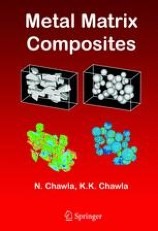
Metal Matrix Composites
Metal matrix composites (MMCs) have become real engineering materials. MMCs have gone from "niche" materials to several high performance applications in aerospace, electronic packaging, automotive, and recreational products. This text focuses on the synergistic relationships among processing, microstructure, and properties of metal matrix composites. An introductory chapter is followed by a chapter each on reinforcements and common matrix materials. A chapter on the very important topic of processing of MMC is then presented. This is followed by a chapter on interfaces in MMCs, their characterization and techniques to obtain interfacial properties. Next there are chapters on monotonic mechanical and physical properties; followed by cyclic fatigue, creep, and wear resistance. We conclude with a chapter on applications of MMCs. The book is well-suited for upper level undergraduate students, graduate students, and as general source of reference on the subject for the professionals in the field.

Metal Fatigue : What It Is, Why It Matters
This book presents important concepts in metal fatigue in a straightforward manner, for the benefit of readers who must understand more advanced documents on a wide range of metal fatigue topics.

Mechanical Behaviour of Engineering Materials : Metals, Ceramics, Polymers, and Composites
How do engineering materials deform when bearing mechanical loads? To answer this crucial question, the book bridges the gap between continuum mechanics and materials science. The different kinds of material deformation (elasticity, plasticity, fracture, creep, fatigue) are explained in detail. The book also discusses the physical processes occurring during the deformation of all classes of engineering materials (metals, ceramics, polymers, and composites) and shows how these materials can be strengthened to meet the design requirements. It provides the knowledge needed in selecting the appropriate engineering material for a certain design problem. The reader will thus learn how to critically employ design rules and thus to avoid failure of mechanical components.

Innovative Superhard Materials and Sustainable Coatings for Advanced Manufacturing ; Proceedings of the NATO Advanced Research Workshop on Innovative Superhard Materials and Sustainable Coating, Kiev, Ukraine,12 - 15 May 2004.
Modern industry imposes ever increasing requirements upon tools and tool materials as to the provision for performance under the conditions of high cutting speeds and dynamic loads as well as under intensive thermal and chemical interactions with workpiece materials. The industry demands a higher productivity in combination with the accuracy of geometry and dimensions of workpieces and quality of working surfaces of the machined pieces. These requirements are best met by the tool superhard materials (diamond and diamond-like cubic boron nitride). Ceramics based on silicon carbide, aluminum and boron oxides as well as on titanium, silicon and aluminum nitrides offer promise as tool materials. Tungsten-containing cemented carbides are still considered as suitable tool materials. Hi- hardness and high strength composites based on the above materials fit all the requirements imposed by machining jobs when manufacturing elements of machinery, in particular those operating under the extreme conditions of high temperatures and loads.

Hypoxia and Exercise
The 14th volume in the series will focus on cutting edge research at the interface of hypoxia and exercise. The work will cover the range from molecular mechanisms of muscle fatigue and muscle wasting to whole body exercise on the world’s highest mountains. State of the art papers on training at high altitude for low altitude athletic performance will also be featured.

High Temperature Mechanical Behavior of Ceramic-Matrix Composites
High Temperature Mechanical Behavior of Ceramic-Matrix Composites examines the behavior of CMCs at elevated temperature—outlining the latest developments in the field and presenting the results of recent research on different CMC characteristics, material properties, damage states, and temperatures. This up-to-date resource investigates the high-temperature behavior of CMCs in relation to first matrix cracking, matrix multiple cracking, tensile damage and fracture, fatigue hysteresis loops, stress-rupture, vibration damping, and more.

Handbook of cancer survivorship
This book responds to the diverse needs of survivors and their support communities by comprehensively addressing the major issues in the field, from the burden of survivorship to secondary prevention. Editor Michael Feuerstein, himself a cancer survivor, and sixty other top scientist-practitioners analyze in depth how survivors meet and manage the challenges of life after cancer, and what clinicians, researchers, and public health systems can do to ease the transition.

Globalisation, Poverty and Conflict : A Critical 'Development' Reader
Is ‘development’ passé? Is it merely a by-product or a ‘trickle down’ effect of economic growth, spurred by globalisation? Will poverty simply diminish with increased global markets? This state-of-the-art critical ‘development’ reader deals with these and related questions. Globalisation, Poverty and Conflict examines the inter-relationships between globalisation, poverty and conflict. It complements current debates in the field of development studies and, in an era in which development fatigue seems to have become more profound than ever before, it brings the importance of development once again to the forefront. Achieving the Millennium Development Goals by 2015 is a concrete target which many governments have agreed to work towards.Whether these goals can be realised is another issue. Nonetheless, the Millennium Development Goals have brought more focused attention to development in the past few years and renewed debate about the relationships between the process of globalisation and widespread poverty and the emergence of violent conflicts. The authors in this edited volume discuss these inter-related and highly controversial topical elements of development in a number of chapters organised around three sets of issues: (1) globalisation, inequality and poverty; (2) governance, civil society and poverty; and (3) resource degradation, institutions and conflict. The contributions represent current thinking on (and practice of) development policy, poverty reduction, the need for multi-level democratic institutions, and the containing and prevention of conflicts. The authors confront the predominant mainstream ideas on ‘development’ and propose alternatives.

Generalized Plasticity
The book is divided into five major parts: 1. Yield function and choice; 2. Constitutive relation; 3. Slip-line Field Theory for plane strain problems, Characteristics Field Theory for plane stress problems and Characteristics Field Theory for spatial axisymmetrical problems; 4. Plastic zone analysis at crack tip and fracture criterion for mixed mode crack; 5. Limit loads and shakedown loads for pressure vessel. Examples of applications and problems are given for most chapters.

Fuzzy Logic Applications in Engineering Science
Fuzzy logic is a relatively new concept in science applications. Hitherto, fuzzy logic has been a conceptual process applied in the field of risk management. Its potential applicability is much wider than that, however, and its particular suitability for expanding our understanding of processes and information in science and engineering in our post-modern world is only just beginning to be appreciated.

Fracture of Nano and Engineering Materials and Structures; Proceedings of the 16th European Conference of Fracture, Alexandroupolis, Greece, July 3-7, 2006
The 16th European Conference of Fracture (ECF16) was held in Greece, July, 2006. Emphasis was given to the failure of nanostructured materials and nanostructures including micro- and nano-electromechanical systems (MEMS and NEMS).

Fracture Mechanics of Ceramics ; Active Materials, Nanoscale Materials, Composites, Glass, and Fundamentals
The 8th International Symposium on fracture mechanics of ceramics was held in on the campus of the University of Houston, Houston, TX, USA, on February 25-28, 2003. With the natural maturing of the fields of structural ceramics, this symposium focused on nano-scale materials, composites, thin films and coatings as well as glass. The symposium also addressed new issues on fundamentals of fracture mechanics and contact mechanics, and a session on reliability and standardization.

Fracture Mechanics ; Vol.123 : An Introduction
The second edition of the book contains four new chapters in addition to the ten chapters of the first edition. The fourteen chapters of the book cover the basic principles and traditional applications, as well as the latest developments of fracture mechanics as applied to problems of composite materials, thin films, nanoindentation and cementitious materials. Thus the book provides an introductory coverage of the traditional and contemporary applications of fracture mechanics in problems of utmost technological importance.

Fatigue Science for Human Health
Fatigue is quite a familiar sensation, one that everyone is likely to have experienced. Its molecular and neural mechanisms have not yet been elucidated, however, probably because of the complicated nature of its causes. To provide a broad forum for discussion, the International Conference on Fatigue Science was organized, the first being held in 2002 in Sandhamn, Sweden, and the second in 2005 in Karuizawa, Japan. Subsequently it was decided that the papers presented at the two conferences should be collected and incorporated in this pioneering work, Fatigue Science for Human Health. The book summarizes fatigue researchers' achievements, explains the status of the research on fatigue, and presents perspectives on remedies for chronic fatigue and chronic fatigue syndrome. The result is an authoritative guide to recent progress in the molecular and neural mechanisms of fatigue and in the development of the ways to prevent and overcome fatigue and chronic fatigue.
