



الصفحة 1
الصفحة 1
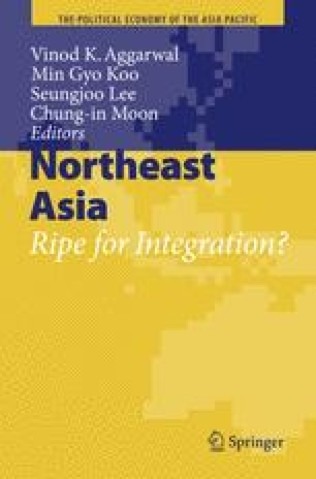
Northeast Asia : Ripe for Integration?
Can regional mechanisms better institutionalize the increasing complexity of economic and security ties among the countries in Northeast Asia? As the international state system undergoes dramatic changes in both security and economic relations in the wake of the end of the Cold War, the Asian financial crisis, and the attack of 9/11, this question is now at the forefront of the minds of both academics and policymakers. Still, little research has been done to integrate the analysis of security and economic analysis of changes in the region within a broader context that will give us theoretically-informed policy insights. Against this backdrop, this book investigates the origins and evolution of Northeast Asia's new institutional architecture in trade, finance, and security from both a theoretical and empirical perspective.

Nature Conservation : Concepts and Practice
This book provides a multi-disciplinary coverage of the broad fields of species, community and landscape conservation.

Future-Oriented Technology Analysis : Strategic Intelligence for an Innovative Economy
The application of foresight to address the challenges of uncertainty and rapid change has grown dramatically in the past decade. In that period, the techniques have been greatly refined and the scope has been broadened to encompass future-oriented technology analysis (FTA) and more recently, the concept and practice of strategic intelligence. FTA addresses directly the longer-term future through the active and continuous development of visions, and pathways to realise these visions. It is increasingly seen as a valuable management and policy tool complementing, and extending further into the future, classical strategy, planning, and decision-making approaches.

East Asian Economic Regionalism: Feasibilities and Challenges
Economic regionalism has become a worldwide phenomenon. Since the Asian financial crisis, East Asian countries are accelerating the ongoing market-driven economic integration as well as institutional economic integration. The question is whether East Asia can reach an East Asian FTA (EAFTA), which is the first step towards institutional economic integration. East Asian Economic Regionalism attempts to analyze the feasibilities of economic integration in East Asia and to discuss emerging economic integration efforts in East Asia with special reference to an East Asian FTA. Although economic integration is desirable economically, positions and approaches of each regional economy toward East Asian economic integration may differ depending on the circumstances of the countries concerned. East Asian Economic Regionalism provides diverse positions on East Asian economic integration by ASEAN countries, as well as the Northeastern countries of China, Japan and Korea. The volume also provides economic assessment of EAFTA and evaluates East Asian economic integration.

Direct and Large-Eddy Simulation VI ; Proceedings of the Sixth International ERCOFTAC Workshop on Direct and Large-Eddy Simulation, held at the University of Poitiers, September 12-14, 2005
this workshop addressed numerous theoretical and physical aspects of transitional and turbulent flows. At an applied level it contributed to the solution of problems related to energy production, transportation and the environment. Since the prediction and analysis of fluid turbulence and transition continues to challenge engineers, mathematicians and physicists, DLES-6 covered a large range of topics, from the more technical ones like numerical methods, initial and inflow conditions, the coupling of RANS and LES zones, subgrid and wall modelling to topics with a stronger focus on flow physics such as aero-acoustics, compressible and geophysical flows, flow control, multiphase flow and turbulent combustion, to quote only a few.

Cross Regional Trade Agreements : Understanding Permeated Regionalism in East Asia
An unacknowledged key feature of East Asian FTA diplomacy is the region's active cross-regional preferential trading relations. In sharp contrast to the Americas and Europe, where cross-regional initiatives gained strength after the consolidation of regional trade integration, East Asian governments negotiate trade deals with partners outside of their region at an early stage in their FTA policies. The book asks three main questions: Are there regional factors in East Asia encouraging countries to explore cross-regionalism early on? What are the most important criteria behind the cross-regional partner selection? How do cross-regional FTSs (CRTAs) influence their intra-regional trade initiatives? Through detailed country case studies from China, Japan, South Korea, Singapore, Thailand and Malaysia, we show the ways in which these governments seek to leverage their CRTAs in the pursuit of intra-regional trade integration objectives, a process that yields a much more permeated regionalism.

Anti Cancer medicines derived from plants
Cancer is a broad term. It describes the disease that results when cellular changes cause the uncontrolled growth and division of cells. Some types of cancer cause rapid cell growth, while others cause cells to grow and divide ata slower rate. Certain forms of cancer result in visible growths called tumors, while others, such as leukemia, do not. Most of the body’s cells have specific functions and fixed lifespans. While it may sound like a bad thing, cell death is part of a natural and beneficial phenomenon called apoptosis.

Algorithms and computation ; 15th international symposium, ISAAC 2004, Hong Kong, China, December 20-22, 2004, Proceedings
This volume contains the proceedings of the 15th Annual International Sym- sium on Algorithms and Computation (ISAAC 2004), held in Hong Kong, 2004. ISAAC is an annual international symposium that covers a wide range of topics,namelyalgorithmsandcomputation. aftar review process the committee selected 76 papers, the decisions being based on originality and relevance to the ?eld of algorithms and computation.
