



الصفحة 1
الصفحة 1

New challenges in software engineering ; Vol 1
Explores the key challenges shaping the future of software development, including automation, AI-driven development, security-focused engineering, resilient and autonomous architectures, business process optimization, cloud computing, microservices, high-performance distributed systems, and sustainable technologies. Software engineering is undergoing a constant transformation, driven by rapid technological advances and evolving market demands. additionally, it delves into the ethical considerations of AI, the evolution of intuitive user interfaces, and the importance of multidisciplinary collaboration.

Nanomedicine : Innovations, applications, and breakthroughs in the quest for health and medicine's future
Revolutionizing healthcare, by providing innovative solutions to some of the most challenging issues in medicine. This book provides an in-depth overview of nanoscale materials and devices that are advancing diagnostics, therapeutics, and personalized care in medical field. It focuses on nanomedicine’s impact on vaccine efficacy as well as innovative diagnosis and therapy for various type of cancer while addressing concerns about safety and toxicity. It examines how nanotechnology is enhancing drug delivery by precisely targeting medicines to specific cells or tissues, thereby increasing treatment efficacy with reduced side effects. Explores how nanoparticles are advancing medical imaging for earlier and more accurate disease detection, and how nanosensors allow real-time biomarker monitoring for faster and more reliable diagnoses. Additionally, it explores nanomedicine's role in managing cardiovascular diseases, improving bone health through nano-extracellular vesicles, and regenerative medicine, including ongoing clinical trials and ethical considerations.

e-Health Care in Dentistry and Oral Medicine: A Clinician’s Guide
Presents the state of the art in e-health care within dentistry and oral medicine (“e-oral health”) with the aim of acquainting dentists and other oral health care professionals with its uses and advantages, especially with regard to diagnosis. It will assist all who wish to learn about teledentistry protocols and the e-oral health branch or to implement e-oral health solutions and procedures in clinical practice. The book opens by discussing general aspects of e-oral health, including tools, networks, and the very important ethical considerations. The use and specific benefits of e-oral health technologies in the diagnosis of different conditions, orthodontic assessment, implantology evaluation, and caries prevention are then fully explained. Finally, examples are provided of the ways in which teledentistry functions in different countries on different continents. e-Oral health is a burgeoning field that encompasses teledentistry as well as other uses of information and communication technologies for oral health care purposes.

Digital platforms in finance and supply chain management : Governance, ethics, and industry 5.0
A comprehensive analysis of digital platforms as the driving force of the modern economy, exploring their evolution, governance, and integration across financial and supply chain ecosystems. It presents a synthesis of theories, strategic models, and empirical insights to address the complexities of platform economies, making it an essential resource for scholars, policymakers, and industry practitioners. It is structured around core principles of digital platforms, including their definition, key features, and transformative impact on value creation. It delves into governance and ethical considerations, examining global regulatory frameworks and the emerging paradigms of Industry 5.0, where digital platforms intersect with economic, social, and environmental sustainability. The theoretical foundations are rooted in network effects, New Economic Geography, Platform Economics, Agency Theory, and Systems Theory, offering a robust analytical framework for understanding scalability, competition, and strategic decision-making in platform ecosystems. Two important areas -finance and supply chains-are explored in depth.

Corporate governance : Evolving practices and emerging challenges ; Vol 21 : Business, management and economics
Provides a thorough analysis of the evolving dynamics of corporate gover- nance. the discussions encompass a broad range of issues, reflecting both the endur- ing foundations and the innovative approaches reshaping contemporary governance across various global contexts. the work begins by exploring the critical interplay between corporate social responsibility and corporate performance, examining trends across several economic sectors and geographic regions. this sets the stage for deeper inquiries into how different regulatory and cultural landscapes influence governance practices. particular emphasis is placed on the integration of environmental, social, and governance (ESG) factors, which are becoming increasingly significant in shap- ing corporate policies worldwide. the book also investigates how these practices are implemented in different industries and the emerging challenges that corporations face in adhering to these new standards.
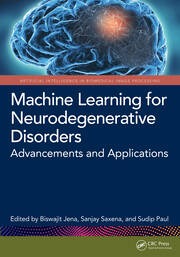
Machine learning for neurodegenerative disorders : advancements and applications
Explores the application of machine learning to the understanding, early diagnosis, and management of neurodegenerative disorders. With a specific focus on its role in ongoing clinical trials, the book covers essential topics such as data collection, pre-processing, feature extraction, model development, and validation techniques. It delves into the applications of neuroimaging techniques like magnetic resonance imaging (MRI), computed tomography (CT), and positron emission tomography (PET) in the diagnosis and understanding of neurodegenerative disorders. Additionally, the book examines various machine-learning algorithms employed for biomarker discovery in neurodegenerative disorders. It highlights the role of neuroinformatics and big data analysis in advancing the understanding and management of neurodegenerative disorders. Furthermore, the book reviews future prospects and presents the ethical considerations and regulatory challenges associated with implementing machine learning approaches in the diagnosis, treatment, and prevention of neurodegenerative disorders.

Bioethics in Law
The idea for Bioethics in Law began more than a decade ago, while I was studying social science and law. I was parti- larly interested in the collaborations that comprised social s- ence in law. Economic and social data in the pioneering Brandeis brief had been used to defend an early 20th-century labor law; surveys of consumer confusion had helped resolve trademark - fringement cases; psychologists’ predictions of future violence had informed capital sentencing decisions. Additionally, Kenneth Clark’s “doll studies,” cited by the Supreme Court in Brown v. Board of Education, had helped change the course of American 1 history.
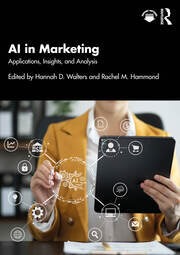
AI in marketing : Applications, insights, and analysis
AI in marketing equips students with the knowledge to understand the impact of artificial intelligence (AI) on marketing strategies, processes, and activities, empowering them to navigate the AI-driven marketing landscape confidently. divided into four parts, it provides a comprehensive exploration of AI's transformative role in marketing. the first part lays the groundwork, offering foundational insights into the intersection of AI and marketing. Part II explores the various applications of AI in marketing, and the tools marketers use to optimize their processes and deliver enhanced customer experiences. the third part focuses on leveraging AI for consumer insights, enabling marketers to craft data-driven strategies. the final part examines ethical considerations and the pedagogical integration of AI into marketing education.
