



الصفحة 1
الصفحة 1

Numerical solution of Variational Inequalities by Adaptive Finite Elements
Franz-Theo Suttmeier describes a general approach to a posteriori error estimation and adaptive mesh design for finite element models where the solution is subjected to inequality constraints. This is an extension to variational inequalities of the so-called Dual-Weighted-Residual method (DWR method) which is based on a variational formulation of the problem and uses global duality arguments for deriving weighted a posteriori error estimates with respect to arbitrary functionals of the error. In these estimates local residuals of the computed solution are multiplied by sensitivity factors which are obtained from a numerically computed dual solution. The resulting local error indicators are used in a feed-back process for generating economical meshes which are tailored according to the particular goal of the computation.

Numerical Mathematics and Advanced Applications ; Proceedings of ENUMATH 2005 the 6th European Conference on Numerical Mathematics and Advanced Applications, Santiago de Compostela, Spain, July 2005
This book include applications such as atmosphere and ocean, water pollution, electromagnetism, interface problems, waves, finance, heat transfer, unbounded domains, numerical linear algebra, convection-diffusion, fluid-structure, plates, solids, hyperbolic equations, multiphase flow, Navier-Stokes, singular perturbation problems, non linear PDE, control, parabolic equations, as well as methodologies such as a posteriori error estimates, discontinuous Galerkin methods, multiscale methods, optimization, adaptive methods, domain decomposition techniques, exponential integrators, hp-finite elements, level set methods, fractional step methods, penalty procedures, and finite volumes. The book gives an extensive overview of the most recent research in scientific computing, providing to the reader the latest developments concerning the mathematical issues and the applications of this active field of science.
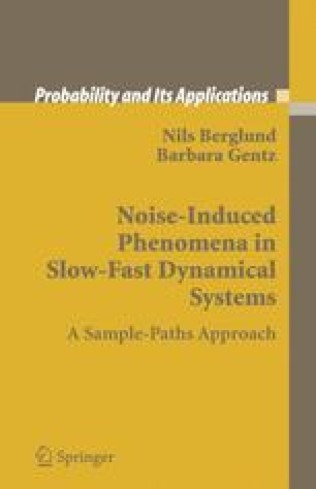
Noise-Induced Phenomena in Slow-Fast Dynamical Systems : A Sample-Paths Approach
Stochastic differential equations play an increasingly important role in modeling the dynamics of a large variety of systems in the natural sciences, and in technological applications. This book presents a new constructive approach to the quantitative description of solutions to systems of stochastic differential equations evolving on well-separated timescales. The method, which combines techniques from stochastic analysis and singular perturbation theory, allows the domains of concentration for typical sample paths to be determined, and provides precise estimates on the transition probabilities between these domains. In addition to the detailed presentation of the set-up and mathematical results, applications to problems in physics, biology, and climatology are discussed. The emphasis lies on noise-induced phenomena such as stochastic resonance, hysteresis, excitability, and the reduction of bifurcation delay.

Introduction to Probability with Statistical Applications
This textbook is an introduction to probability and statistics for non-mathematics majors who do not need the exhaustive detail and mathematical depth provided in more comprehensive treatments of the subject. The presentation covers the mathematical laws of random phenomena, including discrete and continuous random variables, expectation and variance, and common probability distributions such as the binomial, Poisson, and normal distributions. Main statistical concepts considered are point and interval estimates, hypothesis testing, power function, various statistical tests: z, t, chi-square and Kolmogorov-Smirnov.

Introduction to Bayesian Scientific Computing : Ten Lectures on Subjective Computing
Inverse problems are closely related to statistical inference problems, where the observations are used to infer on an underlying probability distribution. This connection between statistical inference and inverse problems is a central topic of the book. Inverse problems are typically ill-posed: small uncertainties in data may propagate in huge uncertainties in the estimates of the unknowns. To cope with such problems, efficient regularization techniques are developed in the framework of numerical analysis. The counterpart of regularization in the framework of statistical inference is the use prior information.

Integral closure : Rees algebras, multiplicities, algorithms
Integral Closure gives an account of theoretical and algorithmic developments on the integral closure of algebraic structures. These are shared concerns in commutative algebra, algebraic geometry, number theory and the computational aspects of these fields. The overall goal is to determine and analyze the equations of the assemblages of the set of solutions that arise under various processes and algorithms. It gives a comprehensive treatment of Rees algebras and multiplicity theory - while pointing to applications in many other problem areas. Its main goal is to provide complexity estimates by tracking numerically invariants of the structures that may occur.

Hypoelliptic estimates and spectral theory for Fokker-Planck operators and witten Laplacians
There has recently been a renewal of interest in Fokker-Planck operators, motivated by problems in statistical physics, in kinetic equations and differential geometry. Compared to more standard problems in the spectral theory of partial differential operators, those operators are not self-adjoint and only hypoelliptic. The aim of the analysis is to give, as generally as possible, an accurate qualitative and quantitative description of the exponential return to the thermodynamical equilibrium. While exploring and improving recent results in this direction this volume proposes a review of known techniques on: the hypoellipticity of polynomial of vector fields and its global counterpart; the global Weyl-Hörmander pseudo-differential calculus, the spectral theory of non-self-adjoint operators, the semi-classical analysis of Schrödinger-type operators.

Hierarchical Bayesian Optimization Algorithm : Toward a New Generation of Evolutionary Algorithms
This book provides a framework for the design of competent optimization techniques by combining advanced evolutionary algorithms with state-of-the-art machine learning techniques. The book focuses on two algorithms that replace traditional variation operators of evolutionary algorithms by learning and sampling Bayesian networks: the Bayesian optimization algorithm (BOA) and the hierarchical BOA (hBOA). BOA and hBOA are theoretically and empirically shown to provide robust and scalable solution for broad classes of nearly decomposable and hierarchical problems. A theoretical model is developed that estimates the scalability and adequate parameter settings for BOA and hBOA. The performance of BOA and hBOA is analyzed on a number of artificial problems of bounded difficulty designed to test BOA and hBOA on the boundary of their design envelope.

Handbook of Number Theory I
This handbook covers a wealth of topics from number theory, special attention being given to estimates and inequalities. As a rule, the most important results are presented, together with their refinements, extensions or generalisations. These may be applied to other aspects of number theory, or to a wide range of mathematical disciplines. Cross-references provide new insight into fundamental research.

Handbook of micrometeorology : A guide for surface flux measurement and analysis
The Handbook of Micrometeorology is the most up-to-date reference for micrometeorological issues and methods related to the eddy covariance technique for estimating mass and energy exchange between the terrestrial biosphere and the atmosphere. It is intended to provide micrometeorologists, ecosystem scientists, boundary-layer meteorologists, and students involved in micrometeorology with the state of science on measurement and analysis. The Handbook is the culmination of many detailed discussions of theory, analysis, and practical applications by the leading scientists in the field. It provides useful advice for bringing coherence to estimates of mass and energy exchange for understanding the role of the terrestrial biosphere in global environmental change.

Groundwater Recharge from Run-off, Infiltration and Percolation
This book first discusses the recharge fluxes relating both to the quantity and quality of groundwater. In order to face the threats to the water supply and to be able to maintain a sustainable water management policy, detailed knowledge is needed in between others on the surface to subsurface transformation link in the water cycle. Secondly, the presentation and comparison of both the traditional and modern approach to determine groundwater recharge is discussed. The traditional approach to determine groundwater recharge, is based on water balance estimates and hydraulic considerations, which yield instantaneous values at best but do not integrate the totality of recharge pathways in time and space. In contrast, environmental tracers do integrate these factors. Finally, the fate of groundwater recharge in the subsurface by hydraulic and geologic means is discussed in detail, in order to stimulate adapted groundwater management strategies and to better assess consequences of climate changes on groundwater resources as a whole.

Greenhouse gas emissions - fluxes and processes : Hydroelectric reservoirs and natural environments
In a time when an unquestionable link between anthropogenic emissions of greenhouse gases and climatic changes has finally been acknowledged and * widely documented through IPCC reports, the need for precise estimates of greenhouse gas (GHG) production rates and emissions from natural as well as managed ecosystems has risen to a critical level.

Functional Hemodynamic Monitoring
Hemodynamic monitoring is one of the major diagnostic tools available in the acute care setting to diagnose cardiovascular insufficiency and monitor changes over time in response to interventions. However, the rationale and efficacy of hemodynamic monitoring to affect outcome has come into question. We now have increasing evidence that outcome from critical illness can be improved by focused resuscitation based on existing hemodynamic monitoring, whereas non-specific aggressive resuscitation impairs survival. Thus, this book frames hemodynamic monitoring into a functional perspective wherein hemodynamic variables and physiology interact to derive performance and physiological reserve estimates that themselves drive treatment. This philosophy, as well as the limitations and applications of common and evolving hemodynamic measures and their focused use in the care of critically ill patients are discussed, relevant to one underlying truth: No monitoring device, no matter how simple or sophisticated, will improve patient-centered outcomes useless coupled to a treatment which, itself, improves outcome.

Formalizing the Shadow Economy in Serbia : Policy Measures and Growth Effects
The main objective of this book is to develop a strategy and policy measures to enhance the formalization of the shadow economy in order to improve the competitiveness of the economy and contribute to economic growth; it explores these issues with special reference to Serbia. The size and development of the shadow economy in Serbia and other Central and Eastern European countries are estimated using two different methods (the MIMIC method and household-tax-compliance method). Micro-estimates are based on a special survey of business entities in Serbia, which for the first time allows us to explore the shadow economy from the perspective of enterprises and entrepreneurs.

Explicit Stability Conditions for Continuous Systems : A Functional Analytic Approach
Explicit Stability Conditions for Continuous Systems deals with non-autonomous linear and nonlinear continuous finite dimensional systems. Explicit conditions for the asymptotic, absolute, input-to-state and orbital stabilities are discussed. This monograph provides new tools for specialists in control system theory and stability theory of ordinary differential equations, with a special emphasis on the Aizerman problem. A systematic exposition of the approach to stability analysis based on estimates for matrix-valued functions is suggested and various classes of systems are investigated from a unified viewpoint.

Estimates of cost of crime : History, methodologies, and implications
With the emergence and development of quantitative methods in economics and statistics, the exercise of calculating costs of crime became possible, In this book, it's argue that we can estimate costs of different crimes, and that such estimates are relevant for criminal law and crime policy. Notwithstanding the incommensurability of many consequences of crime, society every day makes numerous decisions how to tackle crime, and at least implicitly assesses the relative importance of the problem. Properly done costs of crime estimates make people’s evaluation more visible, and allow for more coherent public policy.

Environment Learning for Indoor Mobile Robots : A Stochastic State Estimation Approach to Simultaneous Localization and Map Building
This monograph covers theoretical aspects of simultaneous localization and map building for mobile robots, such as estimation stability, nonlinear models for the propagation of uncertainties, temporal landmark compatibility, as well as issues pertaining the coupling of control and SLAM. One of the most relevant topics covered in this monograph is the theoretical formalism of partial observability in SLAM. The authors show that the typical approach to SLAM using a Kalman filter results in marginal filter stability, making the final reconstruction estimates dependant on the initial vehicle estimates. However, by anchoring the map to a fixed landmark in the scene, they are able to attain full observability in SLAM, with reduced covariance estimates.

Economic spillovers, structural reforms and policy coordination in the Euro area
This book analyses economic interdependence in the Euro Area and provides estimates of the sign and size of economic spillovers and the impact of economic policy coordination concerning structural and budgetary policies on economic performance in the Euro Area. In the different chapters of the book, the following topics are studied: (i) the link between fiscal and monetary policies in the Euro Area; (ii) the link between public debt and long-term interest rates in the Euro Area; (iii) the link between budgetary stabilisation and the level of public debt in the Euro Area; (iv) the spillovers from structural reforms in the Euro Area, (v) the scope for the coordination of fiscal policies and of structural reforms in the Euro Area, and (vi) wage flexibility in the Euro Area.

Diophantine Approximation : Festschrift for Wolfgang Schmidt
This volume contains 22 research and survey papers on recent developments in the field of diophantine approximation. The first article by Hans Peter Schlickewei is devoted to the scientific work of Wolfgang Schmidt. Further contributions deal with the subspace theorem and its applications to diophantine equations and to the study of linear recurring sequences. The articles are either in the spirit of more classical diophantine analysis or of geometric or combinatorial flavor. In particular, estimates for the number of solutions of diophantine equations as well as results concerning congruences and polynomials are established. Furthermore, the volume contains transcendence results for special functions and contributions to metric diophantine approximation and to discrepancy theory.

Design Added Value : How Design Increases Value for Architects and Engineers
Enables architects, engineers, contractors and owner-clients of buildings to benefit from extraordinary design and construction features. It explains the rationale and motivation for D-AV methodology, outlines and illustrates this methodology with examples, provides complete and detailed examples of how the key analysis techniques work through historical case studies, and describes specific methods used in application of the D-AV methodology, such as Bayesian statistics, cost benefit analysis, pairwise comparison techniques, cognitive walkthroughs, and optimization.
