



الصفحة 1
الصفحة 1

Nuclear fusion research : Understanding plasma-Surface interactions
It became clear in the early days of fusion research that the effects of the containment vessel (erosion of "impurities") degrade the overall fusion plasma performance. Progress in controlled nuclear fusion research over the last decade has led to magnetically confined plasmas that, in turn, are sufficiently powerful to damage the vessel structures over its lifetime. This book reviews current understanding and concepts to deal with this remaining critical design issue for fusion reactors. It reviews both progress and open questions, largely in terms of available and sought-after plasma-surface interaction data and atomic/molecular data related to these "plasma edge" issues.

National Constitutions in European and Global Governance : Democracy, Rights, the Rule of Law: National Reports
It offers important insights into three areas. First, it explores how constitutions reflect the transfer of powers from domestic to European and global institutions. Secondly, it revisits substantive constitutional values, such as the protection of constitutional rights, the rule of law, democratic participation and constitutional review, along with constitutional court judgments that tackle the protection of these rights and values in the transnational context, e.g. with regard to the Data Retention Directive, the European Arrest Warrant, the ESM Treaty, and EU and IMF austerity measures. The responsiveness of the ECJ regarding the above rights and values, along with the standard of protection, is also assessed. Thirdly, challenges in the context of global governance in relation to judicial review, democratic control and accountability are examined. On a broader level, the contributors were also invited to reflect on what has increasingly been described as the erosion or ‘twilight’ of constitutionalism, or a shift to a thin version of the rule of law, democracy and judicial review in the context of Europeanisation and globalisation processes.

Musculoskeletal Sonography : Technique, Anatomy, Semeiotics and Pathological Findings in Rheumatic Diseases
Ultrasonography is effective in the evaluation of joint involvement in patients with rheumatic diseases, and may be useful in diagnosis and in monitoring the synovial inflammation by power Doppler technique, with great sensitivity in comparison with clinical examination. The high-resolution US combined with power Doppler technique is also able to detect the peripheral entheseal abnormality, the bone erosion and the tendon involvement. The purpose of this book is to elucidate the examination technique, the sonographic changes in musculoskeletal rheumatic involvement and the ultrasound assessment of joint rheumatic diseases. The atlas is enriched with several figures, in which the US picture is compared with that of conventional radiography, CT and MRI.

Modern Sports Dentistry
A one-stop reference that will assist primary care community dentists, sports physicians, athletic trainers, and emergency room physicians in meeting the needs of athletes when managing facial and dental trauma and sports-related oral diseases. The opening chapters provide a complete review of sports-related dentoalveolar trauma, with coverage of emergent care, the role of endodontics, surgical issues, and restorative considerations. Prevention of dental trauma by means of mouthguards is then examined, with attention to materials and design, public policy concerning the use of mouthguards, and the role of mouthguards in relation to the ever more pressing issue of concussion in sport. Dental erosion in athletes, for example due to energy drinks, is discussed, as are the possible sequelae of use of spit tobacco, performance-enhancing drugs, and ergogenic aids. The new topic of the potential value of dental appliances in enhancing sports performance is also addressed.

Microorganisms in soils : Roles in genesis and functions
The following key topics are covered: Microorganisms in bioerosion, humification, mineralization and soil aggregation; Microbial energetics and microbes in biogeochemical processes such as carbon and nitrogen cycles and phosphorus bio-availability; Interactions in the mycorrhizosphere, e.g. between mycorrhizal fungi and bacteria; Impact of microbes on plant nutrient cycling and the possible effects of transgenic rhizospheres on soil fungi; Functions of microbes in specific soil compartments such as soil surface or toxic metal polluted soils; Regulation of microbial activities in functional domains that are influenced by biotic or abiotic factors; Use of marker genes and isotopes as examples for modern techniques in soil microbiology.

Mesoscale Analysis of Hydraulics
Presents a series of complicated hydraulic phenomena and related mechanism of high-speed flows in head-head dam. According to the basic hydraulic theory, detailed experiments and numerical simulations, microscopic scale analysis on cavitation bubbles, air bubbles, turbulent eddy vortices and sand grains are examined systemically. These investigations on microscopic fluid mechanics, including cavitation erosion, aeration protection, air–water flow, energy dissipation and river-bed scouring, allow a deep understanding of hydraulics in high-head dams. This book provides reference for designers and researchers in hydraulic engineering, environment engineering and fluid mechanics.

Investigation and management of soft rock cliffs
Cliff recession and coastal landsliding of soft rock cliffs present significant threats to land use and development. Investigation and management of soft rock cliffs presents state-of-the-art guidance on how eroding cliffs can best be managed, stressing the need to consider both structural and non-structural solutions to cliff recession problems. This authoritative text outlines the investigation approaches, measurement and monitoring techniques, and prediction methods available for obtaining the necessary cliff recession information.

International conference on terrain and geohazard challenges facing onshore oil and gas pipelines : Evaluation, routing, resign, construction, operation ; Proceedings of a three day international conference on terrain and geohazard challenges facing onshore oil and gas pipelines, organised by the Institution of Civil Engineers in association with BP Exploration and held at the Institution of Civil Engineers, London, UK, on 2 – 4 June 2004
To access global oil and gas deposits, major pipelines must traverse remote regions with extreme terrains. There are a significant number of pipeline projects, active or planned, in tropical jungles, mountains and deserts, in permafrost and in areas of wetland. Each of these natural environments is associated with a range of geohazards, which may include landslides, soil erosion, karst, river migration, and seismic or volcanic activity. At the same time, society demands increasing availability and reliability of supply, together with improved environmental standards, all making for substantial challenges.

Immunosenescence
In this volume not only the mechanisms responsible for immune ageing in humans but consider what might be accomplished to redress the erosion of immune competence with age.

High-Latitude Bioerosion : The Kosterfjord Experiment
Bioerosion is the major force driving the degradation of marine skeletal carbonates and limestone coasts. A wide spectrum of mechanical and/or chemical boring, scraping or crushing organisms break down calcereous substrates, comprising various grazers, macroborers and especially microborers. Their traces on and within hard substrates are known from fossil carbonates as old as the Precambrian and serve as valuable palaeoenvironmental indicators. Bioerosion processes have been extensively studied in tropical seas, while corrsponding investigations from cold-temperate to polar settings remain sparse. For the first time, an experimental study yields insight into the pace of carbonate degradation and the chronology of boring community development along a bathymetric gradient in a high-latitude setting.

Granite genesis : in-situ melting and crustal evolution
In this book we suggest an alternative model for the origin of granite in terms of in-situ meltingintracrustal convection that physically determines the process from partial melting of mid-upper crustal rocks to formation of a convecting magma layer. We illustrate the model using the geological, geochemical and geophysical studies from Australia, North and South America, Europe and China, and conclude that heat convection within a crustal partial melting layer is essential for formation of granite magma and that without convection, partial melting of rocks produces migmatites rather than granites. Granite is layer-like within the crust, and shape and size of granite bodies reflect the geometric relationship between an irregular upper surface of the crystallised magma layer and erosion surface. Repeated melting of the crust generates downward-younging granite sequences. Chemical and isotopic compositions of granites indicate differentiation within the magma rather than different deep sources.

Fluid dynamics of cavitation and cavitating turbopumps
The book focuses on the fluid dynamics of cavitation with special reference to high power density turbopumps, where it represents the major source of performance and life degradation and often generates the conditions for the onset of dangerous fluid dynamic instabilities. To this purpose the first part of the book covers the more fundamental aspects of cavitation (nucleation, bubble dynamics, thermodynamic effects, cavitation erosion, stability of parallel bubbly flows) and the main kinds of cavitating flows (attached cavitation, cloud cavitation, supercavitation, ventilated supercavities, vortex cavitation, shear cavitation). The second part focuses on the hydrodynamics and instabilities of cavitating turbopumps (cavitation surge, rotating cavitation, higher order cavitation surge, rotordynamic whirl forces). Finally, the third part illustrates the alternative approaches for modeling and engineering simulation of cavitating flows.

Environmental change and human security : Recognizing and acting on hazard impacts
This book focuses on the linkage between human and environmental security and takes both a conceptual and a pragmatic approach to complex environmental issues (such as soil erosion, desertification, water degradation, demographic shifts, food security and agricultural prospects, urbanization trends, hazard-induced migrations) that affect human security. The book is the direct outcome of a NATO Advanced Research Workshop (ARW), sponsored by the Science for Peace and Security Programme (SPS), Salve Regina University, United Nations Environment Programme (UNEP) and the United States Environmental Protection Agency (EPA). The book summarizes the collective work of both natural and social science disciplines in regard to how best address, mitigate, adapt, or achieve resilience

Enhanced Methods in Computer Security, Biometric and Artificial Intelligence Systems
"Methods of Artificial Intelligence and Intelligent Agents" contains 13 contributions analyzing such areas of AI as fuzzy set theory, predicate logic, neural networks, clustering, data mining and others. It also presents applications of AI as possible solutions for problems like firm bankruptcy, soil erosion, flight control and others. "Information Technology Security" covers three important areas of security engineering in information systems: software security, public key infrastructure and the design of new cryptographic protocols and algorithms. "Biometric Systems" comprises 11 contributions dealing with face picture analysis and recognition systems. This chapter focuses on known methods of biometric problem solution as well as the design of new models.

Ecophysiology of High Salinity Tolerant Plants
Halophytes get increasing attention today because of the steady increase of the salinity in irrigation systems in the arid and semi-arid regions where the increasing population reaches the limits of freshwater availability.

Ecografia dellapparato osteoarticolare : Anatomia, semeiotica e quadri patologici = Ultrasound of the osteoarticular system: Anatomy, semeiotics and pathological pictures
The echography is useful in the valutazione of articolari pathology in peace with rheumatic malattia and, other than in the diagnosis, is effective in the monitoring with power Doppler of the synovite, with a higher sensitivity to all'esame clinical. The high resolution ultrasound, integrated with the power Doppler technique, even to the degree of individualizing the entheopathic anomaly, the osseous erosion and the tendine involvement. The objective of the operation is to present the technique of same, and progress of echography in muscoloscheletric rheumatic pathology and the diagnosis of ultrasound in articolare rheumatic pathology. L’iconography è arricchita with integrated imaging of ultrasound, conventional radiology, CT and MRI.

Eco-and ground bio-engineering : The use of vegetation to improve slope stability ; Proceedings of the 1st International Conference on Eco-Engineering 13-17 September 2004
In an era where climate change, natural catastrophes and land degradation are major issues, the conservation of soil and vegetation in mountainous or sloping regions has become an international priority. How to avoid substrate mass movement through landslides and erosion using sustainable and ecologically sound techniques is rapidly becoming a scientific domain where knowledge from many different fields is required. These proceedings bring together papers from geotechnical and civil engineers, biologists, ecologists and foresters, who discuss current problems in slope stability research, and how to address those problems using ground bio- and eco-engineering techniques.
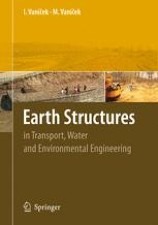
Earth Structures : In Transport, Water and Environmental Engineering
This book describes the principles of working with soil as a construction material, including two basic ways of treating it: geosynthetics and stabilization. The book discusses the design logic and ways to control Earth Structures, which differ significantly from other construction materials. Building with Earth involves greater uncertainty and risk, which means that there is a need for better design detailing and improvement in the quality of financial calculations. The general part of the book gives a detailed description of the principles of limit states according to Eurocode 7, after which geotechnical design is also described. Subsequent chapters concentrate on earth structures for transport, water, and environmental projects. The chapter on Earth Structures in transport engineering presents detailed coverage of limit states of stability and deformation. Earth Structures in water engineering prioritizes the limit state of internal erosion. Earth Structures in environmental engineering describes new designs, in which part of the structure is created from non-standard materials which are usually susceptible to internal collapse, double porosity, unsaturation, etc. It also focuses on protecting the surrounding environment from contamination.

Dryland Ecohydrology
By combining the analysis of biotic and abiotic components of terrestrial ecosystems, this volume provides a synthesis of material on arid and semiarid landscapes, which is currently scattered in a number of books and journal articles. The focus on water-limited ecosystems is motivated by their high sensitivity to daily, seasonal, and decadal perturbations in water availability, and by the ecologic, climatic, and economic significance of most of the world's drylands. Conceived as a tool for scientists working in the area of the earth and environmental sciences, this book presents the basic principles of eco-hydrology as well as a broad spectrum of topics and advances in this research field.

Digital Terrain Modelling : Development and Applications in a Policy Support Environment
This book presents a set of papers on Digital Terrain Modelling for Policy Support which aims to be informative and stimulating for both developers and users of digital terrain models. It should also be useful for professi- als who are interested in the wider aspects of the applications of terrain models in support for policies and decision making. There is an increasing demand for regional and continental scale data for use in environmental modelling and spatial analysis to support envir- mental policy development and implementation. Important environmental processes act at regional and continental scales, for example climatic change inducing floods and soil erosion, and management of these pr- esses for the sustainable development of society requires policies to be - plied at the corresponding scales. One of the most important factors inf- encing these environmental processes which act on the earth’s surface is the surface topography, hence the need for extensive, harmonised digital terrain models.
