



الصفحة 1
الصفحة 1

Institutional Dynamics in Environmental Governance
This book presents fresh analyses of a number of well-known cases, but does so from one comprehensive view, the so-called policy arrangement approach. Cases discussed range over organic farming, integrated water management, nature policy, cultural heritage policy, integrated region-oriented policy, corporate environmental management and target group policy, always in search of the commonality of experience and conclusions to be drawn in understanding the past and in formulating future perspectives.
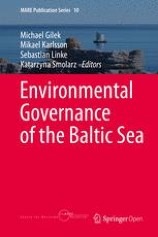
Environmental Governance of the Baltic Sea
This edited volume presents a comprehensive and coherent interdisciplinary analysis of challenges and possibilities for sustainable governance of the Baltic Sea ecosystem by combining knowledge and approaches from natural and social sciences. Focusing on the Ecosystem Approach to Management (EAM) and associated multi-level, multi-sector and multi-actor challenges, the book provides up-to-date descriptions and analyses of environmental governance structures and processes at the macro-regional Baltic Sea level.

Environmental Governance in Latin America
The multiple purposes of nature – livelihood for communities, revenues for states, commodities for companies, and biodiversity for conservationists – have turned environmental governance in Latin America into a highly contested arena. In such a resource-rich region, unequal power relations, conflicting priorities, and trade-offs among multiple goals have led to a myriad of contrasting initiatives that are reshaping social relations and rural territories. This edited collection addresses these tensions by unpacking environmental governance as a complex process of formulating and contesting values, procedures and practices shaping the access, control and use of natural resources. Contributors from various fields address the challenges, limitations, and possibilities for a more sustainable, equal, and fair development. In this book, environmental governance is seen as an overarching concept defining the dynamic and multi-layered repertoire of society-nature interactions, where images of nature and discourses on the use of natural resources are mediated by contextual processes at multiple scales.

Energy transition and energy democracy in East Asia
Provides down-to-earth information on what kind of actions are being taken by the Government, Local community, Businesses, Researchers, NGOs on the energy transition in this region. It gives an updated picture of the energy transition in the East Asian countries, where the economic growth, as well as CO2 emission growth, is significant.

Corporate governance : Evolving practices and emerging challenges ; Vol 21 : Business, management and economics
Provides a thorough analysis of the evolving dynamics of corporate gover- nance. the discussions encompass a broad range of issues, reflecting both the endur- ing foundations and the innovative approaches reshaping contemporary governance across various global contexts. the work begins by exploring the critical interplay between corporate social responsibility and corporate performance, examining trends across several economic sectors and geographic regions. this sets the stage for deeper inquiries into how different regulatory and cultural landscapes influence governance practices. particular emphasis is placed on the integration of environmental, social, and governance (ESG) factors, which are becoming increasingly significant in shap- ing corporate policies worldwide. the book also investigates how these practices are implemented in different industries and the emerging challenges that corporations face in adhering to these new standards.
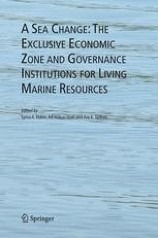
A Sea Change: The Exclusive Economic Zone and Governance Institutions for Living Marine Resources
A Sea Change in a Changing Sea The oceans, seas and coastal areas encompass over 70% of the earth’s surface. They are a critical driver of the earth’s hydrologic cycle and climate system, important for c- merce, transport, and tourism, a source of economically important living marine resources, minerals such as hydrocarbons, as well as new pharmaceutical compounds. The marine environment provides essential habitats for thousands of marine living 1 2 resources, which in turn contribute significantly to global food security, employment, 3 and trade. Overall, the sea’s contribution to human welfare, in terms of market and non-market resources and environmental services, has been estimated at US$21 trillion/year (Costanza, 2000). However, despite the importance of the ocean realm to humans, there is a growing sense that human impacts are destabilizing this system. Some experts believe that current fishing levels are approaching or exceeding the total 4 productivity of the ocean ecosystem (National Research Council, 1999).
