



الصفحة 1
الصفحة 1

Microplastic in the Environment : Pattern and Process
This book examines global plastic pollution, an issue that has become a critical societal challenge with implications for environmental and public health. This volume provides a comprehensive, holistic analysis on the plastic cycle and its subsequent effects on biota, food security, and human exposure. Importantly, global environmental change and its associated, systems-level processes, including atmospheric deposition, ecosystem complexity, UV exposure, wind patterns, water stratification, ocean circulation, etc., are all important direct and indirect factors governing the fate, transport and biotic and abiotic processing of plastic particles across ecosystem types.

Health of People, Health of Planet and Our Responsibility : Climate Change, Air Pollution and Health
This book not only describes the challenges of climate disruption, but also presents solutions. The challenges described include air pollution, climate change, extreme weather, and related health impacts that range from heat stress, vector-borne diseases, food and water insecurity and chronic diseases to malnutrition and mental well-being.

Gene drives at tipping points : Precautionary technology assessment and governance of new approaches to genetically modify animal and plant populations
This book reports on a pilot project aiming at collecting information on the socio-ecological risks that could arise in the event of an uncontrolled spread of genetically engineered organisms into the environment. The researchers will, for instance, be taking a closer look at genetically engineered oilseed rape, genetically engineered olive flies as well as plants and animals with so-called gene drives. The book mainly adresses researchers.

Environmental Health in Central and Eastern Europe
Complex chemical mixtures impact our health every day. In the United States, and also in Central and Eastern Europe, there are a number of locations where complex chemical mixtures have been released to environmental media. Although exposure to mixtures is common, minimal information exists to quantify these exposures, or to determine their impact on human or ecological receptors. These proceedings present some of the most current research conducted to quantify complex mixtures in the environment and investigate their potential impact on human health. Many of the manuscripts reported in these proceedings represent the most up-to-date measurements of population exposures in Central and Eastern Europe. These studies are of value to health and environmental professionals around the world as they develop strategies for assessing exposures, remediating contaminated environments, and improving public health.

Environmental health impacts of transport and mobility
Transport and mobility are essential parts of the current organization of society. Complex activities are interwoven in such a way that problems occurring from the actual process of constant movement cannot be separated, as they are so tightly interconnected. This book examines the health effects of transport and mobility by addressing the major issues related to the subject and analyzing their consequences. Thus not only are air pollution, noise, and sedentarism and its related endocrine problems discussed, but topics such as jet-lag, accidents and violent displacement are also addressed. The strength of this book over others in the field lies in its multidisciplinary approach to the issues by a number of experts in different scientific fields who are documenting the health effects of transport and mobility. Moreover, it enhances the understanding of the issues by integrating information from different geographical regions.
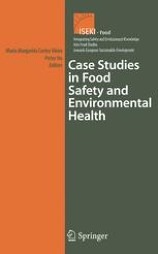
Case Studies in Food Safety and Environmental Health
The ISEKI-Food book series is a collection where various aspects of food safety and environmental issues are introduced and reviewed by scientists specializing in the field. In all of the books a special emphasis is placed on including case studies applicable to each specific topic. The books are intended for graduate students and senior level undergraduate students as well as professionals and researchers interested in food safety and environmental issues applicable to food safety.
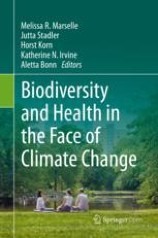
Biodiversity and health in the face of climate change
This book identifies and discusses biodiversity’s contribution to physical, mental and spiritual health and wellbeing. Furthermore, the book identifies the implications of this relationship for nature conservation, public health, landscape architecture and urban planning – and considers the opportunities of nature-based solutions for climate change adaptation. This transdisciplinary book will attract a wide audience interested in biodiversity, ecology, resource management, public health, psychology, urban planning, and landscape architecture. The emphasis is on multiple human health benefits from biodiversity - in particular with respect to the increasing challenge of climate change.
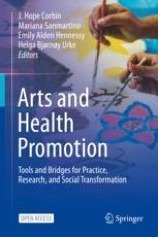
Arts and health promotion : Tools and bridges for practice, research, and social transformation
This book offers an overview of the beautiful, powerful, and dynamic array of opportunities to promote health through the arts from theoretical, methodological, pedagogical, and critical perspectives. This is the first-known text to connect the disparate inter-disciplinary literatures into a coherent volume for health promotion practitioners, researchers, and teachers. It provides a one-stop depository for using the arts as tools for health promotion in many settings and as bridges across communities, cultures, and sectors.

Architecture for residential care and ageing communities : Spaces for dwelling and healthcare
A guide to the planning, architecture, and design of schools that are healthy, stimulating, and will conserve energy and resources. Written with the needs of architects, construction professionals, educators, and school administration in mind, the book provides a road map for sustainable planning, design, construction, and operations.
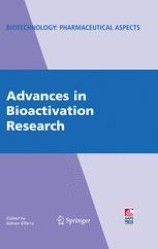
Advances in Bioactivation Research
This volume provides researchers with recent information on bioactivation reactions of drugs and toxicants. In other sections, focus is on recent applications of bioactivation research in pharmacology, toxicology, and environmental health sciences, where contributors demonstrate the integration of bioactivation research.
