



الصفحة 1
الصفحة 1

Ocean-atmosphere interactions of gases and particles
The oceans and atmosphere interact through various processes, including the transfer of momentum, heat, gases and particles. In this book leading international experts come together to provide a state-of-the-art account of these exchanges and their role in the Earth-system, with particular focus on gases and particles. Chapters in the book cover: i) the ocean-atmosphere exchange of short-lived trace gases; ii) mechanisms and models of interfacial exchange (including transfer velocity parameterisations); iii) ocean-atmosphere exchange of the greenhouse gases carbon dioxide, methane and nitrous oxide; iv) ocean atmosphere exchange of particles and v) current and future data collection and synthesis efforts.

Handbook of Biodegradable Materials
Discusses the recent advances in biodegradation technologies and highlights emerging sustainable materials, including environmentally friendly nano-based materials for replacing plastics. It is useful to scientists, engineers, biologists, medical doctors and provides alternative eco-friendly materials to replace the currently used ones with harmful impact on the environment and life. The chapters present different types of alternative materials in diverse areas, such as food packaging materials, materials for construction and agricultural materials. The principles and types of biodegration technologies are described in depth.

Fuel Oxygenates
purpose of this series on Environmental Chemistrytherefore, is to present a reasonably uniform view of various aspects of the chemistry of the environment and chemical reactions occurring in the environment. The industrial activities of man have given a new dimension to Envir- mental Chemistry. We have now synthesized and described over ?ve million chemical compounds and chemical industry produces about hundred and ?fty million tons of synthetic chemicals annually. We ship billions of tons of oil per year and through mining operations and other geophysical modi?cations, large quantities of inorganic and organic materials are released from their natural deposits.

Environmental Chemistry : Green Chemistry and Pollutants in Ecosystems
Environmental chemistry is a new, fast developing science aimed at deciphering fundamental mechanisms ruling the behaviour of pollutants in ecosystems. Applying this knowledge to current environmental issues leads to the remediation of environmental media, and to new, low energy, low emission, sustainable processes. This book describes the state-of-the-art advances regarding the pollution of water, soils, atmosphere, food and living organisms by toxic metals, fossil fuels, pesticides and other organic pollutants. Furthermore, the eco-toxicology section presents novel bio-assays to assess the toxicity of various pollutants such as dioxins and endocrine disrupters within complex media. The green chemistry section highlights novel chemical reactions based upon environmentally friendly conditions. The analytical chemistry section describes very sensitive methods which trace the fate of pollutants in complex ecosystems.

Ecological risks associated with the destruction of chemical weapons ; Proceedings of the NATO ARW on ecological risks associated with the destruction of chemical weapons, Lüneburg, Germany, from 22-26 October 2003
Chemical Weapons Convention after the First Review Conference -- Implementation of Russia’s Obligation to Destroy chemical Weapons in the Udmurt Republic -- The CWC after the Review Conference . Prof. Dr. Vladimir Mikhailovitsh Kolodkin , Prof. Dr.-Ing. Wolfgang Ruck 1 Institute of Natural and Technogenic Disasters, Udmurt State University, Izhevsk (Russia), 2 Institute of Ecology and Environmental Chemistry, University Lüneburg (Germany) During the Cold War a whole arsenal of deadly chemical weapons was allowed to build up on both sides of the ideological divide. Happily, today the problems are reversed. Expertise is now required in the field of safe and environment-friendly disposal of chemical weapons and cleaning up of contaminated sites all around the world, but not least in the ex-Soviet-led countries. In all, there were 57 participants, of which 11 dispatched from the TACIS project “The development of the chemical weapons” facility at the detached plant No 4 of OAO Khimprom, Novocheboksarsk.
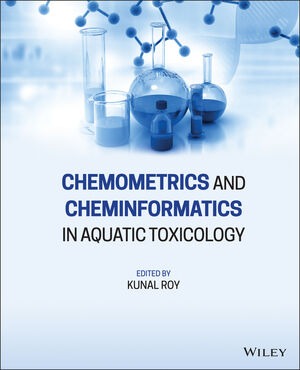
Chemometrics and Cheminformatics in Aquatic Toxicology
Chemometrics and Cheminformatics in Aquatic Toxicology delivers an exploration of the existing and emerging problems of contamination of the aquatic environment through various metal and organic pollutants, including industrial chemicals, pharmaceuticals, cosmetics, biocides, nanomaterials, pesticides, surfactants, dyes, and more. The book discusses different chemometric and cheminformatic tools for non-experts and their application to the analysis and modeling of toxicity data of chemicals to various aquatic organisms.
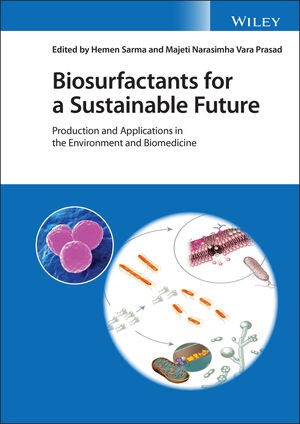
Biosurfactants for a sustainable future : Production and applications in the environment and biomedicine
The book emphasizes the different techniques that are used for the production of biosurfactants from microorganisms and their characterization. Various aspects of biosurfactants, including structural characteristics, developments, production, bio-economics and their sustainable use in the environment and biomedicine, are addressed, and the book also presents metagenomic strategies to facilitate the discovery of novel biosurfactants producing microorganisms.
