



الصفحة 1
الصفحة 1

Nonlinear Structural Engineering : With Unique Theories and Methods to Solve Effectively Complex Nonlinear Problems
This book is aiming to concentrate on the nonlinear static and dynamic analysis of structures and structural components that are widely used in everyday engineering applications. It approaches a nonlinear problem by mathematically converting it into an exact equivalent pseudolinear one, in contrast to commonly used approaches which are based on linear concepts. The new concepts, theories and methods introduced in this book, simplify a great deal the solution of the complex nonlinear problems, and also allow for the correct usage of the powerful existing linear methods of analysis.
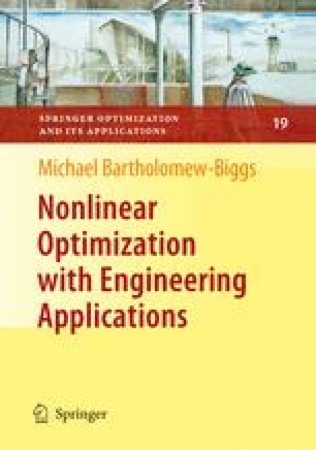
Nonlinear Optimization with Engineering Applications
This textbook examines a broad range of problems in science and engineering, describing key numerical methods applied to real life. The case studies presented are in such areas as data fitting, vehicle route planning and optimal control, scheduling and resource allocation, sensitivity calculations and worst-case analysis.

New Trends in Applied Artificial Intelligence ; 20th International Conference on Industrial, Engineering, and Other Applications of Applied Intelligent Systems. IEA/AIE 2007, Kyoto, Japan, June 26-29, 2007, Proceedings
The 20 International Conference on Industrial, Engineering and Other Applications of Applied Intelligent S- tems (IEA/AIE-2007) held in Kyoto, Japan presented such work performed by many scientists worldwide. The previous IEA/AIE conference held in Japan was the Ninth International Conference on Industrial and Engineering Applications of Arti?cial Intelligence and Expert systems (IEA/AIE-1996) in Fukuoka in 1996.

Natural Polysaccharides in Drug Delivery and Biomedical Applications
Provides a fundamental overview of natural polysaccharides, their sources, extraction methodologies, and characterizations. It covers specific natural polysaccharides and their effective application in drug delivery and biomedical use. Additionally, chapters in the book discuss key topics including the sources and extraction methodologies of natural polysaccharides, their role in tissue engineering applications, polysaccharide-based nanoparticles in biomedical applications, and their role in the delivery of anticancer drugs. Written by industry leaders and edited by experts, this book emphasizes recent advances made in the field.Natural Polysaccharides in Drug Delivery and Biomedical Applications provides academics, researchers, and pharmaceutical health care professionals with a comprehensive book on polysaccharides in pharmaceutical delivery process.

Multibody Dynamics : Computational Methods and Applications
This book contains the revised and extended versions of selected conference communications, representing the state-of-the-art in the advances on computational multibody models, from the most abstract mathematical developments to practical engineering applications. This book will be highly valuable for experienced researchers that want to keep updated on the details of the latest driving ideas in this field. It will also be of interest to researchers approaching the field for the first time, since it provides a useful overview of the most active areas and the efforts devoted by many prominent research groups worldwide.
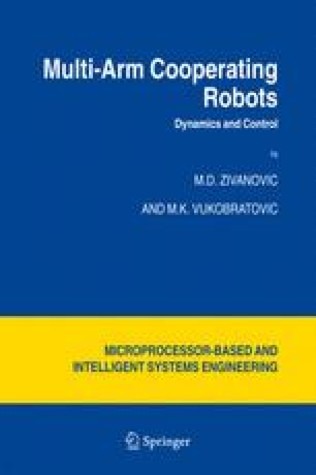
Multi-Arm Cooperating Robots : Dynamics and Control
This book will be useful to a wide audience of engineers, ranging from undergraduate and graduate students, new and advanced academic researchers, to practitioners (mechanical and electrical engineers, computer and system scientists). It is intended for readers whose work involves manufacturing, industrial, robotics, automation, computer and control engineering, and who wish to find out about this important new technology and its potential advantages for control engineering applications.
Meshfree Methods for Partial Differential Equations IV
The numerical treatment of partial differential equations with particle methods and meshfree discretization techniques is a very active research field both in the mathematics and engineering community. Due to their independence of a mesh, particle schemes and meshfree methods can deal with large geometric changes of the domain more easily than classical discretization techniques. Furthermore, meshfree methods offer a promising approach for the coupling of particle models to continuous models. This volume of LNCSE is a collection of the proceedings papers of the Fourth International Workshop on Meshfree Methods held in September 2007 in Bonn. The articles address the different meshfree methods (SPH, PUM, GFEM, EFGM, RKPM, etc.) and their application in applied mathematics, physics and engineering. The volume is intended to foster this very active and exciting area of interdisciplinary research and to present recent advances and results in this field.

Meshfree Methods for Partial Differential Equations II
A Particle Strategy for Solving the Fokker-Planck Equation Modelling the Fiber Orientation Distribution in Steady Recirculating Flows Involving Short Fiber Suspensions.- Extended Meshfree Method for Elastic and Inelastic Media.- Meshfree Petrov-Galerkin Methods for the Incompressible Navier-Stokes Equations.- The ?-shape Based Natural Element Method in Solid and Fluid Mechanics.- A Particle-Partition of Unity Method Part VI: A p-robust Multilevel Solver.- Enriched Reproducing Kernel Approximation: Reproducing Functions with Discontinuous Derivatives.- Reproducing Kernel Element Interpolation: Globally Conforming I m/C n/P k Hierarchies.- Multi-scale Analysis Using Two Influence Radii in EFGM.- Solution of a Dynamic Main Crack Interaction with a System of Micro-Cracks by the Element Free Galerkin Method.- Finite Cover Method for Physically and Geometrically Nonlinear Problems.- A Numerical Scheme for Solving Incompressible and Low Mach Number Flows by the Finite Pointset Method.- SPH Renormalized Hybrid Methods for Conservation Laws: Applications to Free Surface Flows.- Discontinuous Radial Basis Function Approximations for Meshfree Methods.- Treating Moving Interfaces in Thermal Models with the C-NEM.- Bridging Scale Particle and Finite Element Methods.

Introduction to PHP for Scientists and Engineers : Beyond JavaScript
This text presents key information needed to write your own online science and engineering applications, including reading, creating and manipulating data files stored as text on a server, thereby overcoming the limitations of a client-side language.

Intelligent Algorithms for Packing and Cutting Problem
Introduces intelligent solving algorithms for classical packing and cutting problem and their variants / Investigates novel methods, e.g. reinforcement learning algorithms, for rectangular and irregular packing problems / Presents practical engineering application cases in combination of theory and practice / investigates in detail the two-dimensional packing and cutting problems in the field of operations research and management science. It introduces the mathematical models and intelligent solving algorithms for these problems, as well as their engineering applications. Most intelligent methods reported in this book have already been applied in reality, which can provide reference for the engineers. The presented novel methods for the two-dimensional packing problem provide a new way to solve the problem for researchers interested in operations research or computer science. This book also introduces three new variants of packing problems and their solving methods, which offer a different research direction.

Innovations in Applied Artificial Intelligence ; 18th International Conference on Industrial and Engineering Applications of Artificial Intelligence and Expert Systems, IEA/AIE 2005, Bari, Italy, June 22-24, 2005, Proceedings
The contributions oriented to the technological aspects of AI and the quality of the papers are witness to a research activity clearly aimed at consolidating the theoretical results that have already been achieved. The c- ference program also included two invited lectures, by Katharina Morik and Roberto Pieraccini. Many people contributed in different ways to the success of the conference and to this volume. The authors who continue to show their enthusiastic interest in applied intelligence research are a very important part of our success. We highly appreciate the contribution of the members of the Program Committee, as well as others who reviewed all the submitted papers with eficiency and dedication.

Hybrid Systems : Computation and Control ; Vol.3927 ; 9th International Workshop, HSCC 2006, Santa Barbara, CA, USA, March 29-31, 2006, Proceedings
The focus is on modeling, analysis, and implementation of dynamic and reactive systems involving both discrete and continuous behaviors. Topics addressed include tools for analysis and verification, control and optimization, modeling, engineering applications, and new directions in language support and implementation.

Hybrid Systems : Computation and Control ; Vol. # 3414 ; 8th International Workshop, HSCC 2005, Zurich, Switzerland, March 9-11, 2005, Proceedings
Contains the proceedings of the 8th Workshop on Hybrid S- tems: Computation and Control(HSCC2005)heldinZurich, Switzerlandduring March 9-11, 2005. The annual workshop on hybrid systems attracts researchers from academia and industry interested in modeling, analysis, and implemen- tion of dynamic and reactive systems involving both discrete and continuous - haviors. This year's HSCC was technically co-sponsored by the IEEE Control Systems Society. The program consisted of 3 invited talks and 40 regular papers selected from 91 regular submissions. The program covered topics such as tools for analysis and verification, control and optimization, modeling, engineering applications, and emerging directions in programming language support and implementation. We would like to thank the Program Committee members and reviewers for an excellent job of evaluating the submissions and participating in the online Program Committee discussions.

High performance computing on vector systems 2006 ; Proceedings of the High Performance Computing Center Stuttgart, March 2006
With this second issue of "High Performance Computing on Vector Systems ~ Proceedings of the High Performance Computing Center Stuttgart" we con tinue our publication of most recent results in high performance computing and innovative architecture. Together with our book series on "High Perfor mance Computing in Science and Engineering'06 - Transactions of the High Performance Computing Center Stuttgart" this book gives an overview of the most recent developments in high performance computing and its use in scientific and engineering applications. This second issue covers presentations and papers given by scientists in two workshops held at Stuttgart and Tokyo in spring and summer 2006.

Geometric Modeling and Processing - GMP 2006 ; 4th International Conference, GMP 2006, Pittsburgh, PA, USA, July 26-28, 2006, Proceedings
This book constitutes the refereed proceedings of the 4th International Conference on Geometric Modeling and Processing, GMP 2006, held in Pittsburgh, PA, USA in July 2006. The 36 revised full papers and 21 revised short papers presented were carefully reviewed and selected from a total of 84 submissions. All current issues in the area of geometric modeling and processing are addressed and the impact in such areas as computer graphics, computer vision, machining, robotics, and scientific visualization is shown. The papers are organized in topical sections on shape reconstruction, curves and surfaces, geometric processing, shape deformation, shape description, shape recognition, geometric modeling, subdivision surfaces, and engineering applications.

Fuzzy Logic with engineering applications
Latest advances in the field including material on expansion of the MLFE method using genetic algorithms, cognitive mapping, fuzzy agent-based models and total uncertainty. Redundant or obsolete topics have been removed, resulting in a more concise yet inclusive text that will ensure the book retains its broad appeal at the forefront of the literature.

Fuzzy logic with engineering applications
With numerous examples and end-of-chapter problems, this book is essential reading for graduates and senior undergraduate students in civil, chemical, mechanical and electrical engineering as wells as researchers and practitioners working with fuzzy logic in industry.

Fuzzy Chaotic Systems : Modeling, Control, and Applications
"Fuzzy Chaotic Systems" provides original heuristic research achievements and insightful ideas on the interactions or intrinsic relationships between fuzzy logic and chaos theory. It presents the fundamental concepts of fuzzy logic and fuzzy control, chaos theory and chaos control, as well as thedefinition of chaos on the metric space of fuzzy sets. This monograph discusses and illustrates fuzzy modeling and fuzzy control of chaotic systems, synchronization, anti-control of chaos, intelligent digital redesign, spatiotemporal chaos and synchronization in complex fuzzy systems; as well as a practical application example of fuzzy-chaos-based cryptography. Like other very good books, this book may raise more questions than it can provide answers. It therefore generates a great potential to attract more attention to combine fuzzy systems with chaos theory and contains important seeds for future scientific research and engineering applications.

Fundamentals of Multibody Dynamics : Theory and Applications
This textbook—a result of the author’s many years of research and teaching—brings together diverse concepts of dynamics, combining the efforts of many researchers in the field of mechanics. Bridging the gap between dynamics and engineering applications such as microrobotics, virtual reality simulation of interactive mechanical systems, nanomechanics, flexible biosystems, crash simulation, and biomechanics, the book puts into perspective the importance of modeling in the dynamic simulation and solution of problems in these fields.

Finite element methods : Parallel-sparse statics and Eigen-Solutions
FEM, and the associated computer software are widely recognized as some of the most effective tools for solutions of large-scale engineering applications. Efficient equation and eigen-solvers play critical roles in solving these problems. Sparse matrix technologies have evolved and are now mature enough that all popular and commercialized FEM codes have inserted sparse solvers into their software. So far, however, few books include detailed discussion and explanation of sparse equation-solvers and Lanczos domain decomposition (DD) or finite element formulation for parallel computing purposes. The material in Finite Element Methods: Parallel-Sparse Statics and Eigen-Solutions has evolved over the past several years from the author's research work and his graduate courses.
