



الصفحة 1
الصفحة 1

Multiscale fatigue crack initiation and propagation of engineering materials ; Structural integrity and microstructural worthiness : Fatigue crack growth behaviour of small and large bodies
This book elucidates the correlation of fatigue crack growth data to multiscale cracking, particularly to the understanding of micrographs influenced by mechanical disturbance and thermodynamic variables. Attention is given to the interpretation of test data by fatigue crack growth rate using two empirical parameters in consistence with the fracture control methodology currently used by industry.
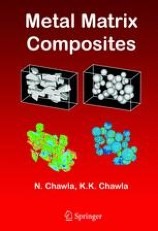
Metal Matrix Composites
Metal matrix composites (MMCs) have become real engineering materials. MMCs have gone from "niche" materials to several high performance applications in aerospace, electronic packaging, automotive, and recreational products. This text focuses on the synergistic relationships among processing, microstructure, and properties of metal matrix composites. An introductory chapter is followed by a chapter each on reinforcements and common matrix materials. A chapter on the very important topic of processing of MMC is then presented. This is followed by a chapter on interfaces in MMCs, their characterization and techniques to obtain interfacial properties. Next there are chapters on monotonic mechanical and physical properties; followed by cyclic fatigue, creep, and wear resistance. We conclude with a chapter on applications of MMCs. The book is well-suited for upper level undergraduate students, graduate students, and as general source of reference on the subject for the professionals in the field.

Mechanical Behaviour of Engineering Materials : Metals, Ceramics, Polymers, and Composites
How do engineering materials deform when bearing mechanical loads? To answer this crucial question, the book bridges the gap between continuum mechanics and materials science. The different kinds of material deformation (elasticity, plasticity, fracture, creep, fatigue) are explained in detail. The book also discusses the physical processes occurring during the deformation of all classes of engineering materials (metals, ceramics, polymers, and composites) and shows how these materials can be strengthened to meet the design requirements. It provides the knowledge needed in selecting the appropriate engineering material for a certain design problem. The reader will thus learn how to critically employ design rules and thus to avoid failure of mechanical components.

Introduction to materials science for engineers
Provides balanced, current treatment of the full spectrum of engineering materials, covering all the physical properties, applications and relevant properties associated with engineering materials. It explores all of the major categories of materials while also offering detailed examinations of a wide range of new materials with high-tech applications.

Fuel Cell Technology : Reaching Towards Commercialization
The Engineering Materials and Processes series focuses on all forms of materials and the processes used to synthesise and formulate them as they relate to the various engineering disciplines.The series deals with a diverse range of materials: ceramics, metals (ferrous and non-ferrous), semiconductors, composites, polymers biomimetics, etc. Each monograph in the series is written by a specialist and demonstrates how enhancements in materials and the processes associated with them can improve performance in the field of engineering in which they are used.

Fracture of Nano and Engineering Materials and Structures; Proceedings of the 16th European Conference of Fracture, Alexandroupolis, Greece, July 3-7, 2006
The 16th European Conference of Fracture (ECF16) was held in Greece, July, 2006. Emphasis was given to the failure of nanostructured materials and nanostructures including micro- and nano-electromechanical systems (MEMS and NEMS).

Experimental analysis of nano and engineering materials and structures ; Proceedings of the 13th international conference on experimental mechanics, Alexandroupolis, Greece, July 1-6, 2007
ICEM13 focused on all aspects of experimental mechanics of solids with emphasis on mechanical characterization and testing at the micro and nano scale levels. The technical program of ICEM13 was the product of hard work and devotion of more than 100 world leading experts. This volume contains two-page abstracts of the 482 papers presented at ICEM13. The accompanying CD contains the full length papers. The abstracts of the fifteen plenary lectures are included in the beginning of the book. The remaining 467 abstracts are arranged in 23 tracks and 28 special symposia/sessions with 225 and 242 abstracts, respectively. The papers of the tracks have been contributed from open call, while the papers of the symposia/sessions have been solicited by the respective organizers.

Computational Mechanics of Composite Materials : Sensitivity, Randomness and Multiscale Behaviour
The Engineering Materials and Processes series focuses on all forms of materials and the processes used to synthesise and formulate them as they relate to the various engineering disciplines. The series deals with a diverse range of materials: ceramics; metals (ferrous and non-ferrous); semiconductors; composites, polymers biomimetics etc. Each monograph in the series will be written by a specialist and will demonstrate how enhancements in materials and the processes associated with them can improve performance in the field of engineering in which they are used.
Materials for Information Technology : Devices, Interconnects and Packaging
The Engineering Materials and Processes series focuses on all forms of materials and the processes used to synthesise and formulate them as they relate to the various engineering disciplines.
Materials for civil and construction engineers in SI Units
For courses in Civil Engineering Materials, Construction Materials, and Construction Methods & Materials offered in Civil, Environmental, or Construction engineering departments. Civil and Construction Engineering Materials: Properties, Uses, and Evaluations Materials for Civil and Construction Engineers helps students understand and select the materials involved in supporting the infrastructure needs of society--from buildings, to water and treatment distribution systems, to dams, highways, and airport pavements. By gaining a deep understanding of material behavior and the material selectio
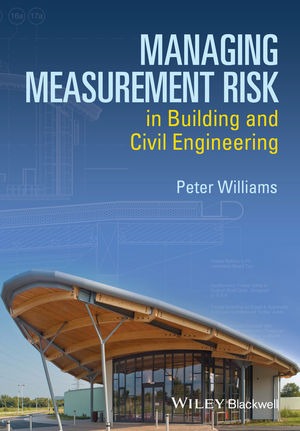
Managing Measurement Risk in Building and Civil Engineering
Managing Measurement Risk in Building and Civil Engineering will help all those who use measurement in their work or deal with the output from the measurement process, to understand not only the ‘ins and outs’ of measuring construction work but also the relationship that measurement has with contracts, procurement, claims and post-contract control in construction. The book is for quantity surveyors, engineers and building surveyors but also for site engineers required to record and measure events on site with a view to establishing entitlement to variations, extras and contractual claims.
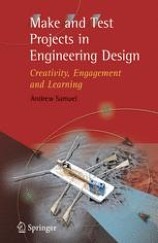
Make and Test Projects in Engineering Design : Creativity, Engagement and Learning
This is a book about the invention and testing of ideas. By describing how to generate engaging problem situations for engineering students to solve it inspires original currents of thought. This is the first book that formalises an important aspect of early learning in engineering design.
Civil Engineering Materials for Transportation Infrastructure
Includes the fundamental mechanical and physical properties of materials; properties, tests, and gradation designs of aggregates; production, composition, hydration, properties, and tests of lime and cement; composition, tests, and design of cement concrete; mechanisms, properties, and design of inorganic binder stabilized material; properties, tests, and grading of asphalt; composition, properties, tests, and designs of asphalt mixture; and properties, treatments, tests, and selections of steel.
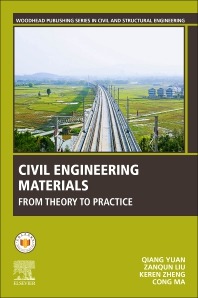
Civil engineering materials : From theory to practice ; 1st ed.
Presents the state-of-the-art in civil engineering materials, including the fundamental theory of materials needed for civil engineering projects and unique insights from decades of large-scale construction in China. The title includes the latest advances in new materials and techniques for civil engineering, showing the relationship between composition, structure and properties, and covering ultra-high-performance concrete and self-compacting concrete developed in China. This book provides comprehensive coverage of the most commonly used, most advanced materials for use in civil engineering. This volume consists of eight chapters covering the fundamentals of materials, inorganic cementing materials, Portland cement concrete, bricks, blocks and building mortar, metal, wood, asphalt and polymers.
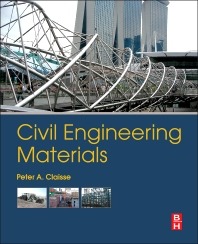
Civil engineering materials
Concentrates on demonstrating methods to obtain, analyse and use information rather than focusing on presenting large amounts of data. Beginning with basic properties of materials, it moves on to more complex areas such as the theory of concrete durability and corrosion of steel.

Advances in civil engineering materials : Selected articles from the 6th International Conference on architecture and civil engineering (ICACE 2022), August 2022, Kuala Lumpur, Malaysia
Presents selected articles from the 6th International Conference on Architecture and Civil Engineering 2022 (ICACE 2022), held in Malaysia. Written by leading researchers and industry professionals, the papers highlight recent advances and addresses current issues in the fields of civil engineering and architecture.
