



الصفحة 1
الصفحة 1

New Results in Numerical and Experimental Fluid Mechanics VI ; Contributions to the 15th STAB/DGLR Symposium Darmstadt, Germany, 2006
The volume gives a broad overview over the ongoing work in this field in Germany, with the topics being high-aspect ratio wings, low aspect-ratio wings, bluff bodies, laminar flow control and transition, active flow control, hypersonic flows, aeroelasticity, aeroacoustics, mathematical fundamentals/ numerical simulation, physical fundamentals, and facilities.
Mechanics of Materials
Provides a review of statics, covering the topics needed to begin the study of mechanics of materials including free-body diagrams, equilibrium, trusses, frames, centroids, and distributed loads. It presents the foundations and applications of mechanics of materials with emphasis on visual analysis, using sequences of figures to explain concepts and giving detailed explanations of the proper use of free-body diagrams. The Cauchy tetrahedron argument is included, which allows determination of the normal and shear stresses on an arbitrary plane for a general state of stress. An optional chapter discusses failure and modern fracture theory, including stress intensity factors and crack growth.

Introduction to Physics and Chemistry of Combustion : Explosion, Flame, Detonation
Most of the material covered in this book deals with the fundamentals of chemistry and physics of key processes and fundamental mechanisms for various combustion and combustion-related phenomena in gaseous combustible mixture. It provides the reader with basic knowledge of burning processes and mechanisms of reaction wave propagation
Introduction to finite element analysis : A textbook for engineering students
Covers the basic concepts and applications of finite element analysis. It is specifically aimed at introducing this advanced topic to undergraduate-level engineering students and practicing engineers in a lucid manner. It also introduces a structural and heat transfer analysis software FEASTSMT which has wide applications in civil, mechanical, nuclear and automobile engineering domains.

Handbook of ocean wave energy
This book offers a concise, practice-oriented reference-guide to the field of ocean wave energy. The ten chapters highlight the key rules of thumb, address all the main technical engineering aspects and describe in detail all the key aspects to be considered in the techno-economic assessment of wave energy converters. Written in an easy-to-understand style, the book answers questions relevant to readers of different backgrounds, from developers, private and public investors, to students and researchers. It is thereby a valuable resource for both newcomers and experienced practitioners in the wave energy sector.

Future space-transport-system components under high thermal and mechanical loads : results from the DFG Collaborative Research Center TRR40
This book presents the findings of Collaborative Research Center Transregio 40 (TRR40), initiated in July 2008 and funded by the German Research Foundation (DFG). Gathering innovative design concepts for thrust chambers and nozzles, as well as cutting-edge methods of aft-body flow control and propulsion-component cooling, it brings together fundamental research undertaken at universities, testing carried out at the German Aerospace Center (DLR) and industrial developments from the ArianeGroup

Fundamentals of fluid mechanics : For scientists and engineers
Provides a coherent and structured overview of fluid mechanics, a discipline concerned with many natural phenomena and at the very heart of the most diversified industrial applications and human activities.

Fluid Mechanics : An Introduction to the Theory of Fluid Flows
Advancements of fluid flow measuring techniques and of computational methods have led to new ways to treat laminar and turbulent flows. These methods are extensively used these days in research and engineering practise. This also requires new ways to teach the subject to students at higher educational institutions in an introductory manner. The book provides the knowledge to students in engineering and natural science needed to enter fluid mechanics applications in various fields. Analytical treatments are provided, based on the Navier-Stokes equations. Introductions are also given into numerical and experimental methods applied to flows. The main benefit the reader will derive from the book is a sound introduction into all aspects of fluid mechanics covering all relevant subfields.

Flowing Matter
This book presents an introduction to selected research topics in the broad field of flowing matter, including the dynamics of fluids with a complex internal structure -from nematic fluids to soft glasses- as well as active matter and turbulent phenomena. Flowing matter is a subject at the crossroads between physics, mathematics, chemistry, engineering, biology and earth sciences, and relies on a multidisciplinary approach to describe the emergence of the macroscopic behaviours in a system from the coordinated dynamics of its microscopic constituents. Depending on the microscopic interactions, an assembly of molecules or of mesoscopic particles can flow like a simple Newtonian fluid, deform elastically like a solid or behave in a complex manner. When the internal constituents are active, as for biological entities, one generally observes complex large-scale collective motions. Phenomenology is further complicated by the invariable tendency of fluids to display chaos at the large scales or when stirred strongly enough. This volume presents several research topics that address these phenomena encompassing the traditional micro-, meso-, and macro-scales descriptions, and contributes to our understanding of the fundamentals of flowing matter.

Computational Science and High Performance Computing III ; The 3rd Russian-German Advanced Research Workshop, Novosibirsk, Russia, July 23 - 27, 2007
This volume contains 18 contributions to the Third Russian-German Advanced Research Workshop on Computational Science and High Performance Computing presented in July 2007 at Novosibirsk, Russia.
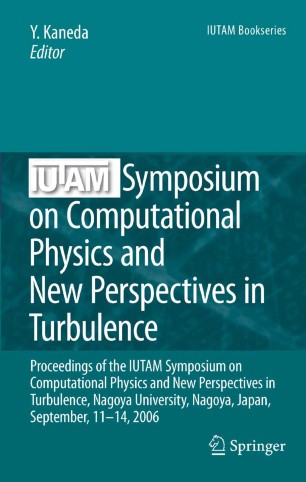
IUTAM Symposium on Computational Physics and New Perspectives in Turbulence ; Proceedings of the IUTAM Symposium on Computational Physics and New Perspectives in Turbulence, Nagoya University, Nagoya, Japan, September, 11-14, 2006
Leading experts in turbulence were brought together at this Symposium to exchange ideas and discuss, in the light of the recent progress in computational methods, new perspectives in our understanding of turbulence. The Symposium also fostered a vigorous interaction between those who pursue computations, and those concerned with developments in experiment and theory.

Chemical Reactor Modeling : Multiphase Reactive Flows
Chemical Reactor Modeling closes the gap between Chemical Reaction Engineering and Fluid Mechanics. It presents the fundamentals of the single-fluid and multi-fluid models for the analysis of single- and multiphase reactive flows in chemical reactors with a chemical reactor engineering rather than mathematical bias.

Advances in Hybrid RANS-LES Modelling : Papers contributed to the 2007 Symposium of Hybrid RANS-LES Methods, Corfu, Greece, 17-18 June 2007
This volume contains papers contributed to the Second Symposium on Hybrid RANS-LES Methods, held in Corfu, Greece, 17-18 June 2007. These include Unsteady RANS and LES, Improved DES Methods, Hybrid RANS-LES Methods, Embedded LES, DES-related Numerical Issues, Performance of the New SAS Model, as well as Industrial Applications of DES.
Adaptive-robust control with limited knowledge on systems dynamics : An artificial input delay approach and beyond
investigates the role of artificial input delay in approximating unknown system dynamics, referred to as time-delayed control (TDC), and provides novel solutions to current design issues in TDC. Its central focus is on designing adaptive-switching gain-based robust control (ARC) for a class of Euler–Lagrange (EL) systems with minimal or no knowledge of the system dynamics parameters. The newly proposed TDC-based ARC tackles the commonly observed over- and under-estimation issues in switching gain. The consideration of EL systems lends a practical perspective on the proposed methods, and each chapter is supplemented by relevant experimental data
