



الصفحة 1
الصفحة 1

Introduction to Permanent Plug and Abandonment of Wells
This book offers a timely guide to challenges and current practices to permanently plug and abandon hydrocarbon wells. With a focus on offshore North Sea, it analyzes the process of plug and abandonment of hydrocarbon wells through the establishment of permanent well barriers.

Hydrogen Technology : Mobile and Portable Applications
This book presents the current state of the hydrogen economy with the focus on applications in the automotive technology and industry - Where are we in the implementation of hydrogen economy? What are the perspectives? Which are the directions to develop this field? This book answers these questions by compiling reviews from internationally recognized researchers.

Global energy supply and emissions : An interdisciplinary view on effects, restrictions, requirements and options
offers an authoritative analysis of the state-of-the art in energy and climate research and policy. It starts by describing the current status of technologies that are expected to have an influence on the energy systems of the future. For an adequate evaluation, it presents the latest findings on the effects of energy supply and consumption as well as of the emissions on both the environment and people’s health. This is followed by an extensive discussion of the economic and social problems related to climate change, the need for energy transitions, and other issues that may require public investment and international agreements. reviews the problem of energy policy from a global perspective, providing readers with the technical, political, economic and ethical background needed to understand the current situation and work at better solutions for a sustainable, just and prospering world.

Energy Justice Across Borders
This book unites the fields of energy justice and comparative philosophy to provide an overarching global perspective and approach to applying energy ethics. We contribute to this purpose in four sections: setting the scene, practice, applying theory to practice, and theoretical approaches.

Energy Demand Challenges in Europe : Implications for policy, planning and practice
This book examines the role of citizens in sustainable energy transitions across Europe. It explores energy problem framing, policy approaches and practical responses to the challenge of securing clean, affordable and sustainable energy for all citizens, focusing on households as the main unit of analysis. The book revolves around ten contributions that each summarise national trends, socio-material characteristics, and policy responses to contemporary energy issues affecting householders in different countries, and provides good practice examples for designing and implementing sustainable energy initiatives. Prominent concerns include reducing carbon emissions, energy poverty, sustainable consumption, governance, practices, innovations and sustainable lifestyles.

Energy branding : Harnessing consumer power
Demonstrating the potential of building strong brands in the energy sector, This book explores the challenges of shifting the perception of energy from a commodity business into a consumer brand. Energy suppliers are increasingly being met with skepticism, indicating the need for a greater focus on marketing and branding in the energy industry. The author examines both perspectives of energy as a commodity business and a consumer brand, as well as the perception of energy consumers across Europe. Topics discussed include green energy, the liberalisation of the electricity industry, and the relationship between consumers and executives in the energy market.

Energy and Sustainable Futures : Proceedings of 2nd ICESF 2020
This book presents papers displayed in the 2nd International Conference on Energy and Sustainable Futures (ICESF 2020), co-organised by the University of Hertfordshire and the University Alliance DTA for Energy.

Enabling Sustainable Energy Transitions : Practices of legitimation and accountable governance
This book reframes sustainable energy transitions as being a matter of resolving accountability crises. It demonstrates how the empirical study of several practices of legitimation can analytically deconstruct energy transitions, and presents a typology of these practices to help determine whether energy transitions contribute to sustainability.
Climate Change and Energy Pathways for the Mediterranean : Workshop Proceedings, Cyprus
This the workshop proceedings present an overview of the implications of climate change for the eastern Mediterranean and the impact of climate change response on regional economic activity, particularly in the hydrocarbon industry.
China's Energy Revolution in the Context of the Global Energy Transition
This book is an encyclopaedic analysis of the current and future energy system of the world’s most populous country and second biggest economy. What happens in China impacts the planet. In the past 40 years China has achieved one of the most remarkable economic growth rates in history. Its GDP has risen by a factor of 65, enabling 850,000 people to rise out of poverty.
China’s Gas Development Strategies
This book is open access under a CC BY 4.0 license. This book examines how China can increase the share of natural gas in its energy system. China’s energy strategy has global ramifications and impact, and central to this strategy is the country’s transition from coal to gas. The book presents the culmination of a two-year collaboration between the Development Research Center of the State Council (DRC) and Shell.

Carbon Pricing in Japan
This book evaluates, from an economic perspective, various measures introduced in Japan to prevent climate change. Although various countries have implemented such policies in response to the pressing issue of climate change, the effectiveness of those programs has not been sufficiently compared.
Biofuels, Solar and Wind as Renewable Energy Systems : Benefits and Risks
With shortages of fossil energy, especially oil and natural gas, and heavy biomass energy use occurring in both developed and developing countries, a major focus has developed worldwide on renewable energy systems. Renewable energy systems include wind power, biomass, photovoltaics, hydropower, solar thermal, thermal ponds, and biogas. Currently, a heavy focus is on biofuels made from crops, such as corn, sugarcane, and soybeans, for use as renewable energy sources. Wood and crop residues also are being used as fuel. Though it may seem beneficial to use renewable plant materials for biofuel, the use of crop residues and other biomass for biofuels raises many concerns about major environmental problems, including food shortages and serious destruction of vital soil resources.

Bioeconomy and Global Inequalities Socio-Ecological Perspectives on Biomass Sourcing and Production
This book explores bioeconomy and bioenergy policies across South America, Asia and Europe. It discusses how a transition away from a fossil and towards a bio-based economic order alters, reinforces and challenges socio-ecological inequalities. A series of conceptual discussions and case studies with a multidisciplinary background in the Social Science illuminate how the deployment of biomass sources from the agricultural and forestry sectors affect societal changes concerning knowledge production, land and labour relations, political participation and international trade
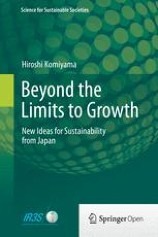
Beyond the limits to growth : New ideas for sustainability from Japan
This book offers an optimistic view of the future and provides a road map for societies to get there. Drawing upon extensive research and many years as a thought leader in environmental and sustainability issues in Japan and internationally, Hiroshi Komiyama analyzes the most pressing challenges to the attainment of sustainability of economically advanced nations and argues forcefully for Japan to lead them out of the present dilemma through active promotion of creative consumer and societal demand. He shows how an active industry–government–academic partnership can provide the environment needed to promote such new creative demand and illustrates its potential through presentation of a Platinum Society Network that was launched on a regional basis in Japan in 2010 to facilitate the solution of common issues through the exchange of information and ideas.
