



الصفحة 1
الصفحة 1

Neural networks and deep learning
Covers both classical and modern models in deep learning. The primary focus is on the theory and algorithms of deep learning. The theory and algorithms of neural networks are particularly important for understanding important concepts, so that one can understand the important design concepts of neural architectures in different applications. Why do neural networks work? When do they work better than off-the-shelf machine-learning models? When is depth useful? Why is training neural networks so hard? What are the pitfalls? The book is also rich in discussing different applications in order to give the practitioner a flavor of how neural architectures are designed for different types of problems.

Negotiation agent
Negor is an eCommerce AI chatbot that increases sales by engaging with the user much like a salesperson when you walk into a store. This conversational eCommerce approach allows companies to overcome sales obstacles, recommend products for cross- or up-sells, and reduce support tickets all while being available 24/7. E-commerce is a way to make the customers' buying experience more seamless and interactive while helping to offer bargaining features, which are familiar in traditional stores. In addition, the Chatbot is used to negotiate the best price for the customer and the best deal for the seller.

Multiplication of RNA Plant Viruses
Biochemical studies on plant virus RNA replication have advanced considerably since 2000, primarily because of new genetic, molecular, biochemical, and enzymatic studies. Certain virus-encoded essential proteins, nucleotide sequence motifs, and RNA secondary structures are central to virus RNA replication, which has a number of stages.

Modern Genome Annotation : The Biosapiens Network
An accurate description of current scientific developments in the field of bioinformatics and computational implementation is presented by research of the BioSapiens Network of Excellence. Bioinformatics is essential for annotating the structure and function of genes, proteins and the analysis of complete genomes and to molecular biology and biochemistry. Included is an overview of bioinformatics, the full spectrum of genome annotation approaches including; genome analysis and gene prediction, gene regulation analysis and expression, genome variation and QTL analysis, large scale protein annotation of function and structure, annotation and prediction of protein interactions, and the organization and annotation of molecular networks and biochemical pathways. Also covered is a technical framework to organize and represent genome data using the DAS technology and work in the annotation of two large genomic sets: HIV/HCV viral genomes and splicing alternatives potentially encoded in 1% of the human genome.

Modern deep learning for tabular data : Novel approaches to common modeling problems
Synthesizes and presents novel deep learning approaches to a seemingly unlikely domain - tabular data. Whether for finance, business, security, medicine, or countless other domain, deep learning can help mine and model complex patterns in tabular data - an incredibly ubiquitous form of structured data. Part I of the book offers a rigorous overview of machine learning principles, algorithms, and implementation skills relevant to holistically modeling and manipulating tabular data. Part II studies five dominant deep learning model designs - Artificial Neural Networks, Convolutional Neural Networks, Recurrent Neural Networks, Attention and Transformers, and Tree-Rooted Networks - through both their 'default' usage and their application to tabular data. Part III compounds the power of the previously covered methods by surveying strategies and techniques to supercharge deep learning systems: autoencoders, deep data generation, meta-optimization, multi-model arrangement, and neural network interpretability.

Introduction to Machine Learning with Applications in Information Security
Provides a classroom-tested introduction to a wide variety of machine learning and deep learning algorithms and techniques, reinforced via realistic applications. The book is accessible and doesn't prove theorems, or dwell on mathematical theory. The goal is to present topics at an intuitive level, with just enough detail to clarify the underlying concepts. The book covers core classic machine learning topics in depth, including Hidden Markov Models (HMM), Support Vector Machines (SVM), and clustering. Additional machine learning topics include k-Nearest Neighbor (k-NN), boosting, Random Forests, and Linear Discriminant Analysis (LDA). The fundamental deep learning topics of backpropagation, Convolutional Neural Networks (CNN), Multilayer Perceptrons (MLP), and Recurrent Neural Networks (RNN) are covered in depth. A broad range of advanced deep learning architectures are also presented, including Long Short-Term Memory (LSTM), Generative Adversarial Networks (GAN), Extreme Learning Machines (ELM), Residual Networks (ResNet), Deep Belief Networks (DBN), Bidirectional Encoder Representations from Transformers (BERT), and Word2Vec.
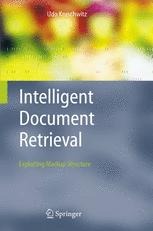
Intelligent Document Retrieval : Exploiting Markup Structure
Collections of digital documents can nowadays be found everywhere in institutions, universities or companies. Examples are Web sites or intranets. But searching them for information can still be painful. Searches often return either large numbers of matches or no suitable matches at all. Such document collections can vary a lot in size and how much structure they carry. What they have in common is that they typically do have some structure and that they cover a limited range of topics. The second point is significantly different from the Web in general. The type of search system that we propose in this book can suggest ways of refining or relaxing the query to assist a user in the search process. In order to suggest sensible query modifications we would need to know what the documents are about. Explicit knowledge about the document collection encoded in some electronic form is what we need. However, typically such knowledge is not available. So we construct it automatically.

Hearing faces
Our project aims to aid deaf-mute people by tracking hand movements of the deaf-mute person for word level American Sign Language using WLASL model that include 2D CNN -3D CNN and RNN networks training on WLASL large video dataset, then generating the corresponding text and analyzing the person's facial gestures to generate information related to the tone of voice that is most appropriate to the person's age, gender, and race through MTCNN network algorithm that training on generated dataset by us depending on blending VOXCELEB dataset and VGGFACE dataset .

Hands-on question answering systems with BERT : Applications in neural networks and natural language processing
Begins with an overview of the technology landscape behind BERT. It takes you through the basics of NLP, including natural language understanding with tokenization, stemming, and lemmatization, and bag of words. Next, you’ll look at neural networks for NLP starting with its variants such as recurrent neural networks, encoders and decoders, bi-directional encoders and decoders, and transformer models. Along the way, you’ll cover word embedding and their types along with the basics of BERT. After this solid foundation, you’ll be ready to take a deep dive into BERT algorithms such as masked language models and next sentence prediction. You’ll see different BERT variations followed by a hands-on example of a question answering system. You will: Examine the fundamentals of word embeddings / Apply neural networks and BERT for various NLP tasks / Develop a question-answering system from scratch / Train question-answering systems for your own data

Handbook Of Mathematical Models For Languages And Computation
Introduces a variety of concepts in discrete mathematics and mathematical modeling for languages and computation. The authors pay special attention to the implementation of mathematical concepts to explain clearly how to encode them in computational practice. All computer programs are written in C#. The theory of computation is used to address challenges arising in many computer science areas such as artificial intelligence, language processors, compiler writing, information and coding systems, programming language design, computer architecture and more. To grasp topics concerning this theory readers need to familiarize themselves with its computational and language models, based on concepts of discrete mathematics including sets, relations, functions, graphs and logic.

Graph-based representations in pattern recognition ; 5th IAPR International Workshop, GbRPR 2005, Poitiers, France, April 11-13, 2005, Proceedings
Many vision problems have to deal with di?erent entities (regions, lines, line junctions, etc.) and their relationships. These entities together with their re- tionships may be encoded using graphs or hypergraphs. The structural inf- mation encoded by graphs allows computer vision algorithms to address both the features of the di?erent entities and the structural or topological relati- ships between them. Moreover, turning a computer vision problem into a graph problem allows one to access the full arsenal of graph algorithms developed in computer science. The Technical Committee (TC15, http://www.iapr.org/tcs.html) of the IAPR (International Association for Pattern Recognition) has been funded in order to federate and to encourage research work in these ?elds. Among its - tivities, TC15 encourages the organization of special graph sessions at many computer vision conferences and organizes the biennial workshop GbR.

FitBuddy : An artificial intelligence powered personal trainer
FitBuddy App is a sports application that employs artificial intelligence in its job as a personal trainer that enables users to exercise anywhere with convenience, tremendous benefit, and high accuracy. The user can exercise with or without weights, in addition to cycling and running. The user must first provide the application with the personal data it has asked for in order to create an appropriate sports program for the user. After that, the user may explore the sports program's weeks and day's sections.

Dr.phone
Dr phone is a software system that helps in talking with the doctor automatically and easily without the need to go to the doctor's clinic to diagnose the patient's condition. our application presents an available platform to make a video call between the doctor and the patient according to the patient’s needs. The system accepts the patient’s request after choosing an available doctor andthen waits for the doctor to accept his request, if there is no doctor available, the system performs an AI chatbot to the patient's need to give him the appropriate diagnosis. when the call finished the doctor represents medical record including the medicine and the analytics and record the next appointment if it’s needed then send them to the patient's email, the patient also can see the nearest pharmacies or labs according to his location, and finally the patient rates the doctor after the call is finished then payment by his available wallet.

Development and characterization of a dispersion-encoded method for low-coherence interferometry
This book discusses an extension to low-coherence interferometry by dispersion-encoding. The approach is theoretically designed and implemented for applications such as surface profilometry, polymeric cross-linking estimation and the determination of thin-film layer thicknesses. During a characterization, it was shown that an axial measurement range of 79.91 µm with an axial resolution of 0.1 nm is achievable. Simultaneously, profiles of up to 1.5 mm in length were obtained in a scan-free manner. This marked a significant improvement in relation to the state-of-the-art in terms of dynamic range.

Deep Learning-Based Face Analytics
Provides an overview of different deep learning-based methods for face recognition and related problems. Specifically, the authors present methods based on autoencoders, restricted Boltzmann machines, and deep convolutional neural networks for face detection, localization, tracking, recognition, etc. The authors also discuss merits and drawbacks of available approaches and identifies promising avenues of research in this rapidly evolving field.

Deep learning architecture and application
As one of the fastest-growing topics in machine learning, deep learning algorithms have achieved unprecedented success in recent years. Novel paradigms (such as contrastive learning and few-shot learning) in deep learning and rising neural network architectures (e.g., transformer and masked autoencoder) are dramatically changing the field of data-driven algorithms. More importantly, deep learning models are redefining the next generation of industrial applications spanning image recognition, speech processing, language translation, healthcare, and other sciences. For example, recent advances in deep representation learning are allowing us to learn about protein 3D structures, which sheds new light on fundamental medicine and biology along with potentially bringing in billions of dollars (e.g., in the pharmaceutical market).

Deep learning approach for text summarization
Machine learning and deep learning, as we know, have started ruling over almost every field in the computing industry and so, has revolutionized the process of text summarization too. Automatic text summarization is an advancing realm of the natural language processing research in which concise textual summaries are generated from lengthy input documents. Extensive research has been carried out on how automatic summarization can be prosecuted through various extractive and abstractive techniques. In this paper, we address all the approaches to text summarization and present the modus operandi of an Architecture called Encoder Decoder, under the machine learning approach.

Data and Text Processing for Health and Life Sciences
This book is a step-by-step introduction on how shell scripting can help solve many of the data processing tasks that Health and Life specialists face everyday with minimal software dependencies. The examples presented in the book show how simple command line tools can be used and combined to retrieve data and text from web resources, to filter and mine literature, and to explore the semantics encoded in biomedical ontologies. To store data this book relies on open standard text file formats, such as TSV, CSV, XML, and OWL, that can be open by any text editor or spreadsheet application.

Crowd investment platform
Investment platforms are challenging the grip of massive business on the venture sector and are providing new means of power to the crowds. It is of no surprise that new and interesting equity sharing platforms are now disrupting the convention practices of the market. There are a number of concerns that the user faces, including legal, commercial and security concerns, as well as concerns about trusting these platforms in investment operations, especially in the financial transfer process between the user and companies. We built a site that reduces the presence of these concerns and protects the user from fraud, as we store money transfers and investment operations between users and companies or users and other users within a smart contract that brings them together and the amount that will be invested in the blockchain that encodes this contract and makes it public only to its owners.
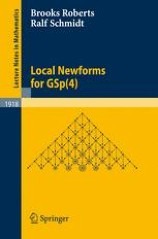
Local Newforms for GSp(4)
Local Newforms for GSp(4) describes a theory of new- and oldforms for representations of GSp(4) over a non-archimedean local field. This theory considers vectors fixed by the paramodular groups, and singles out certain vectors that encode canonical information, such as L-factors and epsilon-factors, through their Hecke and Atkin-Lehner eigenvalues. While there are analogies to the GL(2) case, this theory is novel and unanticipated by the existing framework of conjectures. An appendix includes extensive tables about the results and the representation theory of GSp(4).
