



الصفحة 1
الصفحة 1

Numerical Mathematics and Advanced Applications ENUMATH 2019 ; European Conference, Egmond aan Zee, The Netherlands, September 30 - October 4
It contians basic aspects and new trends in numerical mathematics and scientific and industrial applications, all examined at the highest level of international expertise.
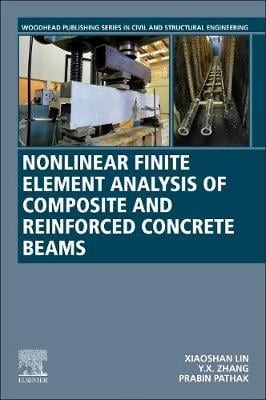
Nonlinear finite element analysis of composite and reinforced concrete beams
Nonlinear Finite Element Analysis of Composite and Reinforced Concrete Beams presents advanced methods and techniques for the analysis of composite and FRP reinforced concrete beams. The title introduces detailed numerical modeling methods and the modeling of the structural behavior of composite beams, including critical interfacial bond-slip behavior. It covers a new family of composite beam elements developed by the authors. Other sections cover nonlinear finite element analysis procedures and the numerical modeling techniques used in commercial finite element software that will be of particular interest to engineers and researchers executing numerical simulations.

Modern Construction Handbook
Tried and tested component details, examples focusing on sustainability and energy consumption, and an update on finite element analysis (FEA) and computational fluid dynamics (CFD) introduced in the last edition set new standards for this handbook which serves as a foundational textbook in many architecture courses
Introduction to finite element analysis : A textbook for engineering students
Covers the basic concepts and applications of finite element analysis. It is specifically aimed at introducing this advanced topic to undergraduate-level engineering students and practicing engineers in a lucid manner. It also introduces a structural and heat transfer analysis software FEASTSMT which has wide applications in civil, mechanical, nuclear and automobile engineering domains.

Inelastic analysis of solids and structures
This book presents computational procedures for the stress integration of inelastic constitutive relations within the incremental-iterative finite element analysis and general strain-driven problems of solids and structures.

Handbook of Practical X-Ray Fluorescence Analysis
X-Ray Fluorescence analysis (XRF) is a reliable multi-elemental and nondestructive analytical method widely used in research and industrial applications. This practical handbook provides self-contained modules featuring XRF instrumentation, quantification methods, and most of the current applications. The book gives a survey of the theoretical fundamentals, analytical instrumentation, software for data processing, various excitation regimes including gracing incidents and microfocus measurements, quantitative analysis, applications in routine and micro analysis, mineralogy, biology, medicine, criminal investigations, archeology, metallurgy, abrasion, microelectronics, environmental air and water analysis. It gives the basic knowledge on this technique, information on analytical equipment and guides the reader to the various applications.

Finite Elements in Structural Analysis : Theoretical Concepts and Modeling Procedures in Statics and Dynamics of Structures
Introduces the basic concepts of the finite element method in the static and dynamic analysis of beam, plate, shell and solid structures, discussing how the method works, the characteristics of a finite element approximation and how to avoid the pitfalls of finite element modeling. Presenting the finite element theory as simply as possible, the book allows readers to gain the knowledge required when applying powerful FEA software tools. Further, it describes modeling procedures, especially for reinforced concrete structures, as well as structural dynamics methods, with a particular focus on the seismic analysis of buildings, and explores the modeling of dynamic systems. Featuring numerous illustrative examples, the book allows readers to easily grasp the fundamentals of the finite element theory and to apply the finite element method proficiently.

Finite element analysis in geotechnical engineering ; Vol.1 : Theory
Provides the reader with a detailed insight into the use of the finite element method in geotechnical engineering. As specialist knowledge required to perform geotechnical finite element analysis is not normally part of a single engineering degree course, this lucid work will prove invaluable. It brings together essential information presented in a manner understandable to most engineers. Volume 1 presents the theory, assumptions and approximations involved in finite element analysis

Finite element analysis in geotechnical engineering : Vol.2 : Application
Provides the reader with a detailed insight into the use of the finite element method in geotechnical engineering. As specialist knowledge required to perform geotechnical finite element analysis is not normally part of a single engineering degree course, this lucid work will prove invaluable. It brings together essential information presented in a manner understandable to most engineers. Volume 2 concentrates on its practical applications.

Finite element analysis for design engineers
Finite Element Analysis (FEA) has been widely implemented by the automotive industry as a productivity tool for design engineers to reduce both development time and cost. This essential work serves as a guide for FEA as a design tool and addresses the specific needs of design engineers to improve productivity.

Finite Element Analysis for Civil Engineering with DIANA Software
Introduces readers to the finite element analysis software DIANA (DIsplacement ANAlyzer) and its applications in civil engineering. Developed by TNO Corporation in the 1970s, DIANA is frequently used in civil engineering and engineering mechanics. This book presents a simplified overview of the basic background theory to help beginners master the software quickly. It also discusses GUI operation and the command console in Python language, and includes examples involving classical modeling operations to help readers review each section.

Finite element analysis for building assessment : Advanced use and practical recommendations
Existing structures represent a heterogeneous category in the global built environment as often characterized by the presence of archaic materials, damage and disconnections, uncommon construction techniques and subsequent interventions throughout the building history. In this scenario, the common linear elastic analysis approach adopted for new buildings is incapable of an accurate estimation of structural capacity, leading to overconservative results, invasive structural strengthening, added intervention costs, excessive interference to building users and possible losses in terms of aesthetics or heritage values. For a rational and sustainable use of the resources, this book deals with advanced numerical simulations, adopting a practical approach to introduce the fundamentals of Finite Element Method, nonlinear solution procedures and constitutive material models.

Finite element analysis and design of steel and steel–concrete composite bridges
The book’s eight chapters begin with an overview of the various forms of modern steel and steel-concrete composite bridges, current design codes (American, British, and Eurocodes), nonlinear material behavior of the bridge components, and applied loads and stability of steel and steel-concrete composite bridges. This is followed by self-contained chapters concerning design examples of steel and steel-concrete composite bridge components as well as finite element modeling of the bridges and their components. The final chapter focuses on finite element analysis and the design of composite highway bridges with profiled steel sheeting.

Excavations and Foundations in Soft Soils
The book is about soft soil engineering and is intended to serve the practicing as well as the research engineers. The planning, design and construction of exca- tions and foundations in soft to very soft soils is always a difficult and challanging assignment to engineers. The authors have tried to address some of these problems and challenges in this book. Beside the state of the art of soft soils, authors own research results and expe- ences from practical projects are presented in the book. Special emphasis is also given among others on the presentation of several case studies coresponding to each topic treated in the book as well as a summary of the experiences in the - termination of soil parameters for finite element analysis of geotechnical pr- lems. The book is illustrated by a wealth of photographs and diagrams.

Discrete Element Analysis Methods of Generic Differential Quadratures
This book presents numerical differential quadrature (DQ) - based methods recently developed by the author. Their ability for solving generic scientific and engineering problems is demonstrated. These methods are the generic differential quadrature, the extended differential quadrature and the related discrete element analysis methods. These novel numerical techniques are both efficient and reliable. They are suitable for developing solution algorithms for various computational mechanics problems with arbitrarily complex geometry. This is shown for several comprehensive examples such as bars and beams, trusses, frames, general field problems, elasticity problems or bending of plates.

Computer Aided Engineering Design
This book goes into mathematical foundations and the core subjects of CAED without allowing itself to be overshadowed by computer graphics. It is written in a logical and thorough manner for use mainly by senior and graduate level students as well as users and developers of CAD software. The book covers (a) The fundamental concepts of geometric modeling so that a real understanding of designing synthetic surfaces and solid modeling can be achieved. (b) A wide spectrum of CAED topics such as CAD of linkages and machine elements, finite element analysis, optimization. (c) Application of these methods to real world problems.

Computational methods for nanoscale applications : Particles, plasmons and waves
Computational Methods for Nanoscale Applications: Particles, Plasmons and Waves presents new perspectives on modern nanoscale problems where fundamental science meets technology and computer modeling. This book describes well-known computational techniques such as finite-difference schemes, finite element analysis and Ewald summation, as well as a new finite-difference calculus of Flexible Local Approximation MEthods (FLAME) that qualitatively improves the numerical accuracy in a variety of problems. Application areas in the book include long-range particle interactions in homogeneous and heterogeneous media, electrostatics of colloidal systems, wave propagation in photonic crystals, photonic band structure, plasmon field enhancement, and metamaterials with backward waves and negative refraction.
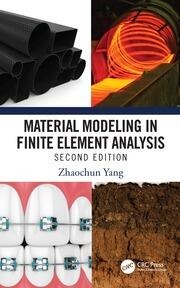
Material Modeling in Finite Element Analysis
Presents some specific problems including the metal-forming process, combustion room, Mullins effect of rubber tires, viscoelasticity of liver soft tissues, small punch test, tunnel excavation, slope stability, concrete slump test, orthodontic wire, and piezoelectric microaccelerometer.
Boundary Element Analysis : Mathematical Aspects and Applications
This volume contains eleven state of the art contributions on boundary integral equation and boundary element methods. Beside some historical and more analytical aspects in the formulation and analysis of boundary integral equations also modern fast boundary element methods are described and analyzed from a mathematical point of view. In addition, engineering and industrial applications of those methods are presented showing the ability of state of the art boundary element methods to solve challenging problems from different fields of applications. This book is addressed to researchers, graduate students and practitioners working on and using boundary element methods. All contributions also show the great achievements of interdisciplinary research between mathematicians and engineers, with direct applications in industry.

Bone remodeling and osseointegration of implants
Provides an insight into the latest advances in bone fracture healing and remodeling algorithm and their incorporation into patient-specific finite element models and the use of machine learning and artificial intelligence to predict the bone regeneration and osseointegration process with a certain degree of accuracy. It also examines the applications of numerical models to simulate the fracture healing process, which may prove to be advantageous in determining the optimal mechanical-based treatment or reconstruction after an accident or illness.
