



الصفحة 1
الصفحة 1

Online Investing on the Australian Sharemarket : How to Research, Trade and Invest in Shares and Securities Online
Offers step-by-step guidance on choosing an online broker, accessing and making best use of online share investing resources, planning trades, identifying profit-making opportunities, timing of and placing online orders, managing investment risks, and much more.

Online Business Security Systems
On-Line Business Security Systems, a professional book, applies the concept of synchronization to security of global heterogeneous and hetero-standard systems by modeling the relationship of risk access spots (RAS) between advanced and developing economy's network platforms. The proposed model is more effective at securing the electronic security gap between these economies in real life applications.

One-Dimensional Nanostructures
One-dimensional (1D) nanostructures, including nanowires, nanotubes and quantum wires, have been regarded as the most promising building blocks for nanoscale electronic and optoelectronic devices. Worldwide efforts in both the theory and the experimental investigation of growth, characterization and applications of 1D nanostructures have resulted in a mature, multidisciplinary field. In this book, a wealth of state-of-the-art information offers the opportunity to uncover the underlying science from diverse perspectives. Leading researchers elucidate the synthesis and properties of 1D nanostructures for various morphologies and compositions (semiconductor, metal, carbon, etc.) as well as their considerable impact on spintronics, information storage, and the design of field-effect transistors.
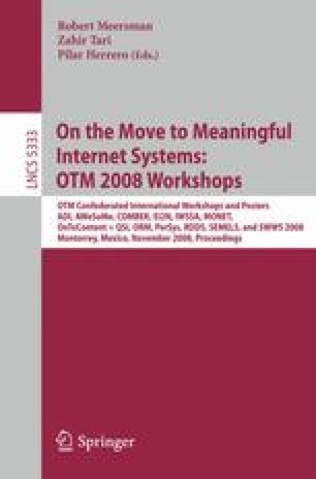
On the move to meaningful internet systems : OTM 2008 Workshops ; OTM Confederated International Workshops and Posters, ADI, AWeSoMe, COMBEK, EI2N, IWSSA, MONET, OnToContent + QSI, ORM, PerSys, RDDS, SEMELS, and SWWS 2008, Monterrey, Mexico, November 9-14, 2008. Proceedings
This volume constitutes the refereed proceedings of 13 international workshops held as part of OTM 2008 in Monterrey, Mexico, in November 2008.The 106 revised full papers presented were carefully reviewed and selected from a total of 171 submissions to the workshops. The volume starts with 19 additional revised poster papers of the OTM 2008 main conferences CoopIS and ODBASE. Topics of the workshop papers are ambient data integration (ADI 2008), agents and web services merging in distributed environment (AWeSoMe 2008), community-based evolution of knowledge-intensive systems (COMBEK 2008), enterprise integration, interoperability and networking (EI2N 2008), system/software architectures .

Ocean Wave Energy : Current Status and Future Prespectives
The authors of this reference provide an updated and global view on ocean wave energy conversion for wave energy developers as well as for students and professors. The book is orientated to the practical solutions that this new industry has found so far and the problems that any device needs to face. It describes the actual principles applied to machines that convert wave power in electricity. Additionally, an historical review, state of the art of modern systems, a full scale prototype experience, and future perspectives are given.

Numerical Methods for Nonsmooth Dynamical Systems : Applications in Mechanics and Electronics
This book concerns the numerical simulation of dynamical systems whose trajectories may not be differentiable everywhere. They are named nonsmooth dynamical systems. They make an important class of systems, firstly because of the many applications in which nonsmooth models are useful, secondly because they give rise to new problems in various fields of science. Usually nonsmooth dynamical systems are represented as differential inclusions, complementarity systems, evolution variational inequalities, each of these classes being itself split into several subclasses.

Numerical Continuation Methods for Dynamical Systems : Path following and boundary value problems
The book opens with a foreword by Herbert B. Keller and lecture notes by Sebius Doedel himself that introduce the basic concepts of numerical bifurcation analysis. The other chapters by leading experts discuss continuation for various types of systems and objects and showcase examples of how numerical bifurcation analysis can be used in concrete applications. Topics that are treated include: interactive continuation tools, higher-dimensional continuation, the computation of invariant manifolds, and continuation techniques for slow-fast systems, for symmetric Hamiltonian systems, for spatially extended systems and for systems with delay. Three chapters review physical applications: the dynamics of a SQUID, global bifurcations in laser systems, and dynamics and bifurcations in electronic circuits.
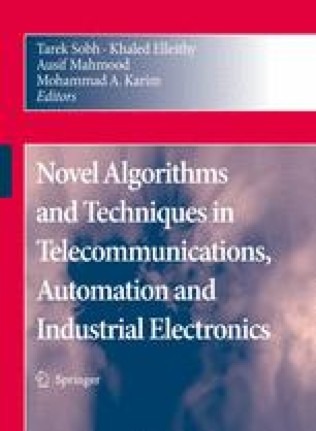
Novel algorithms and techniques In telecommunications, automation and industrial electronics
Novel Algorithms and Techniques in Telecommunications, Automation and Industrial Electronics includes a set of rigorously reviewed world-class manuscripts addressing and detailing state-of-the-art research projects in the areas of Industrial Electronics, Technology & Automation, Telecommunications and Networking.

Nonlinear Optimization with Financial Applications
The book introduces the key ideas behind practical nonlinear optimization. Computational finance—an increasingly popular area of mathematics degree programmes—is combined here with the study of an important class of numerical techniques. The essentials of most currently popular algorithms are described and their performance is demonstrated on a range of optimization problems arising in financial mathematics. Theoretical convergence properties of methods are stated and formal proofs are provided in enough cases to be instructive rather than overwhelming. Practical behaviour of methods is illustrated by computational examples and discussions of efficiency, accuracy and computational costs. Supporting software for the examples and exercises is available

Nonlinear Optical Crystals : A Complete Survey
Nonlinear optical crystals are widely used in modern optical science and technology for frequency conversion of laser light, i.e. to generate laser radiation at any specific wavelength in visible, UV or IR spectral regions. This unrivalled reference book contains the most complete and up-to-date information on properties of nonlinear optical crystals. It includes: * Database of 63 common and novel nonlinear optical crystals * Periodically-poled and self-frequency-doubling materials * Full description of linear and nonlinear optical properties * Significant amount of crystallophysical, thermophysical, spectroscopic, electro-optic and magneto-optic information * 7 mini-reviews on novel applications, such as deep-UV light generation, terahertz-wave generation, ultrashort laser pulse compression, photonic band-gap crystals, x3 nonlinearity, etc. * More than 1500 different references with full titles It is a vital source of information for scientists and engineers dealing with modern applications of nonlinear optical crystals in quantum electronics, photonics, optoelectronics and laser physics.

Nonlinear dynamics in complex systems via fractals and fractional calculus
Current advances in the knowledge of nonlinear dynamical networks, systems and processes, as well as their unified repercussions, allow us to include some typical complex natural phenomena, from the nanoscale to an extra-galactic scale, in an unitarian comprehensive manner. In other words, the physical, biological and financial data, as well as technological ones (mechanical or electronic devices), of complex systems available today can be managed by the same unique conceptual approach, both analytically and through a computer simulation, using effective nonlinear dynamics procedures. This volume collected some important advances in the fields of fractal curves, fractal analysis and fractional calculus, as well as new solutions of fractal differential equations.

Nonequilibrium Carrier Dynamics in Semiconductors ; Proceedings of the 14th International Conference, July 25-29, 2005, Chicago, USA
International experts gather every two years at this established conference to discuss recent developments in theory and experiment in non-equilibrium transport phenomena. These developments have been the driving force behind the spectacular advances in semiconductor physics and devices over the last few decades. Originally known as "Hot Carriers in Semiconductors," the 14th conference in the series covered a wide spectrum of traditional topics dealing with non-equilibrium phenomena, ranging from quantum transport to optical phenomena in mesoscopic and nano-scale structures. Particular attention was given this time to emerging areas of this rapidly evolving field, with many sessions covering terahertz devices, high field transport in nitride semiconductors, spintronics, molecular electronics, and bioelectronics applications.

Nonblocking Electronic and Photonic Switching Fabrics
This state-of-the-art survey of switching fabric architectures gives special attention to combinatorial properties of switching fabrics – nonblockingness and rearrangeability. Also describing control algorithms proposed to control different architectures.

Next-Generation FTTH Passive Optical Networks : Research Towards Unlimited Bandwidth Access
Dense FTTH Passive Optical Networks (PONs) is a cost efficient way to build fibre access, and international standards (G/E-PON) have been already launched, leading to new set of telecom products for mass deployment. However, these systems only make use of less than 1% of the optical bandwidth; thus, relevant research is taking place to maximize the capacity of these systems, with the latest opto-electronic technologies, demonstrating that the huge bandwidth available through the fibre access can be exploited in a cost efficient and reliable manner.
New Trends and Technologies in Computer-Aided Learning for Computer-Aided Design ; IFIP International Working Conference: EduTech 2005, Perth, Australia, October 20-21, 2005
Computation and communication technologies underpin work and development in many different areas. Among them, Computer-Aided Design of electronic systems and E-Learning technologies are two areas which are different but share many concerns. The design of CAD and E-Learning systems already touches on a number of parallels, such as system interoperability, user interfaces, standardization, EML-based formats, reusability aspects (of content or designs), and intellectual property rights. Furthermore, the teaching of Design Automation tools and methods is particularly amenable to a distant or blended learning setting, and implies the interconnection of typical CAD tools, such as simulators or synthesis tools, with e-learning tools. There are many other aspects in which synergy can be found when using E-Learning technology for teaching and learning technology. This workshop, sponsored by IFIP WG 10.5 Design and Engineering of Electronic Systems in cooperation with IFIP WG 3.6 Distance Education, will explore the interrelationship between these two subjects, where Computer-Aided Design meets Computer-Aided Learning. New Trends and Technologies in Computer-Aided Learning for Computer-Aided Design documents recent approaches and results presented at the EduTech 2005 Workshop, which was held in October 2005 in Perth, Australia and sponsored by the International Federation for Information Processing (IFIP). The topics chosen for this working conference are very timely: learning environments, tools and applications for education, education technologies and trends, and teaching in the hardware design area.

New Carbon Based Materials for Electrochemical Energy Storage Systems : Batteries, Supercapacitors and Fuel Cells
This NATO-ARW volume contains a diverse collection of papers addressing the role of carbon in some key electrochemical systems, both conventional and emerging. These papers discuss the latest issues associated with development, synthesis, characterization and use of new advanced carbonaceous materials for electrochemical energy storage. Such systems include: metal-air primary and rechargeable batteries, fuel cells, supercapacitors, cathodes and anodes of lithium-ion and lithium polymer rechargeable batteries, as well as nanocarbon materials of the future.

Neuronal cell death : Methods and protocols
Covers comprehensive methods on ways to assess structural and ultrastructural changes in the mitochondria, cytoskeleton, and microglia using state-of-the-art microscopy techniques including super-resolution imaging, electron microscopy, and ultra-high field MRI. The chapters in this book cover topics such as analysis of neurodegeneration in the post-mortem characterization of preclinical animal models, in vivo modeling in cell death in different model systems and brain organoids, single cell clonal analysis using Mosaic Analysis with Double Markers in genetic mouse models, and genome and proteomic methods for analysis of mRNA dynamics and quantitation of targeted peptides.

Neural Preprocessing and Control of Reactive Walking Machines: Towards Versatile Artificial Perception-Action Systems
This book presents biologically inspired walking machines interacting with their physical environment. It describes how the designs of the morphology and the behavior control of walking machines can benefit from biological studies. The purpose of this book is to develop a modular structure of neural control generating different reactive behaviors of the physical walking machines, to analyze the neural mechanisms underlying the reactive behaviors, and to demonstrate the sensor fusion technique leading to smooth switching between appropriate behaviors, like obstacle avoidance and sound tropism.

Networked Neighbourhoods : The Connected Community in Context
The setting for this book is the networked community. The treatment of the subject matter is broad and interdisciplinary, with contributions from computer science, sociology, design, human factors and communication technology. The chapter contributors, drawn from across Europe and North America, offer a varied prospectus of commentary, critique, sociological enquiry, technological development and research findings, which provides a rounded account of the progressive intermingling of social and electronic networks.

Netter's essential histology with correlated histopathology
Concise and easy to use, it integrates gross anatomy and embryology with classic histology slides and state-of-the-art scanning electron microscopy, offering a clear, visual understanding of this complex subject. Additional histopathology images, more clinical boxes, and new histopathology content ensure that this textbook-atlas clearly presents the most indispensable histologic concepts and their clinical relevance. Helps you recognize both normal and diseased structures at the microscopic level with the aid of succinct explanatory text as well as numerous clinical boxes. Features more histopathology content and additional clinical boxes to increase your knowledge of pathophysiology and clinical relevance. Includes high-quality light and electron micrographs, including enhanced and colorized electron micrographs that show ultra-structures in 3D, side by side with classic Netter illustrations that link your knowledge of anatomy and cell biology to what is seen in the micrographs.
