



الصفحة 1
الصفحة 1
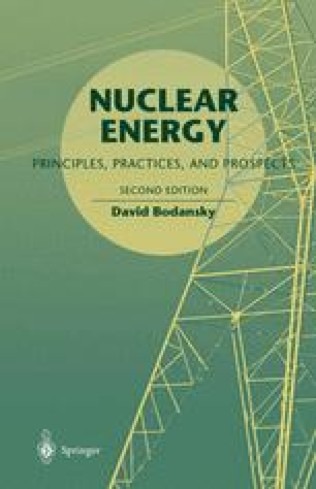
Nuclear Energy : Principles, Practices, and Prospects
The world faces serious difficulties in obtaining the energy that will be needed in coming decades for a growing population, especially given the problem of climate change caused by fossil fuel use. This book presents a view of nuclear energy as an important carbon-free energy option. It discusses the nuclear fuel cycle, the types of reactors used today and proposed for the future, nuclear waste disposal, reactor accidents and reactor safety, nuclear weapon proliferation, and the cost of electric power. To provide background for these discussions, the book begins with chapters on the history of the development and use of nuclear energy, the health effects of ionizing radiation, and the basic physics principles of reactor operation. The text has been rewritten and substantially expanded for this edition, to reflect changes that have taken place in the eight years since the publication of the first edition and to provide greater coverage of key topics. These include the Yucca Mountain repository plans, designs for next-generation reactors, weapons proliferation and terrorism threats, the potential of alternatives to nuclear energy, and controversies about low-level radiation.

Methods and Models in Transport and Telecommunications : Cross Atlantic Perspectives
One aspect of the new economy is a transition to a networked society, and the emergence of a highly interconnected, interdependent and complex system of networks to move people, goods and information. An example of this is the in creasing reliance of networked systems (e. g. , air transportation networks, electric power grid, maritime transport, etc. ) on telecommunications and information in frastructure. Many of the networks that evolved today have an added complexity in that they have both a spatial structure , they are located in physical space but also an a spatial dimension brought on largely by their dependence on infor mation technology. They are also often just one component of a larger system of geographically integrated and overlapping networks operating at different spatial levels. An understanding of these complexities is imperative for the design of plans and policies that can be used to optimize the efficiency, performance and safety of transportation, telecommunications and other networked systems. In one sense, technological advances along with economic forces that encourage the clustering of activities in space to reduce transaction costs have led to more efficient network structures.

Energy and American Society – Thirteen Myths
This book takes on a central quandary in the study of energy and environmental policy: What myths continue to exist in American culture concerning energy, the environment, and society? It enrolls twenty-four of the nation’s top experts working on energy policy in industry, government laboratories, utilities, nonprofit organizations, and universities to debunk and contextualize thirteen energy myths relating to electric power, renewable energy, energy efficiency, transportation, and climate change. While the book focuses on the American experience, it will be of interest to those working in the fields of energy policy, energy and the environment, and technology assessment worldwide.

eIoT : The Development of the Energy Internet of Things in Energy Infrastructure
This book explores the collision between the sustainable energy transition and the Internet of Things (IoT). In that regard, this book’s arrival is timely. Not only is the Internet of Things for energy applications, herein called the energy Internet of Things (eIoT), rapidly developing but also the transition towards sustainable energy to abate global climate is very much at the forefront of public discourse. It is within the context of these two dynamic thrusts, digitization and global climate change, that the energy industry sees itself undergoing significant change in how it is operated and managed. The goal of this book is to provide a single integrated picture of how eIoT can come to transform our energy infrastructure. This book links the energy management change drivers mentioned above to the need for a technical energy management solution. It, then, describes how eIoT meets many of the criteria required for such a technical solution.

Critical Infrastructures at Risk : Securing the European Electric Power System
This book explores the potential risks and vulnerabilities of the European electricity infrastructure, other infrastructures and our society as whole increasingly depend on. The work was initiated by the need to verify the potential effects of the ongoing market and technical transformation of the infrastructure, which is fundamentally changing its operation and performance. The final aim is to set the basis for an appropriate industrial and political European-wide response to the risk challenges.
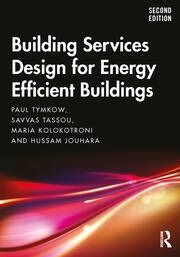
Building Services Design for Energy Efficient Buildings
"The following issues are addressed: background issues on climate change, whole-life performance and design collaboration / generic strategies for energy efficient, low-carbon design / health and wellbeing and post occupancy evaluation / building ventilation / air conditioning and HVAC system selection / thermal energy generation and distribution systems / low-energy approaches for thermal control / electrical systems, data collection, controls and monitoring / building thermal load assessment / building electric power load assessment / space planning and design integration with other disciplines."
Atmospheric Icing of Power Networks
Atmospheric ice takes a wide range of fascinating forms, all beautiful in their own ways but many posing severe risk to the security of overhead networks for electric power, communications and other systems. This book documents the fundamentals of atmospheric icing and surveys the state of the art in eight chapters, each written by a team of experienced and internationally renowned experts.

Applied Mathematics for Restructured Electric Power Systems : Optimization, Control, and Computational Intellige
Discusses the use of applied mathematics to solve challenging power system problems. This book covers such areas as: control, optimization, and computational intelligence. It follows a three-part format: a description of an important power system problem or problems; the practice and/or particular research approaches; and, research directions.
Analysis, Control and Optimization of Complex Dynamic Systems
Analysis, Control and Optimization of Complex Dynamic Systems gathers in a single volume a spectrum of complex dynamic systems related papers written by experts in their fields, and strongly representative of current research trends. Complex systems present important challenges, in great part due to their sheer size which makes it difficult to grasp their dynamic behavior, optimize their operations, or study their reliability. Yet, we live in a world where, due to increasing inter-dependencies and networking of systems, complexity has become the norm. With this in mind, the volume comprises two parts. The first part is dedicated to a spectrum of complex problems of decision and control encountered in the area of production and inventory systems. The second part is dedicated to large scale or multi-agent system problems occurring in other areas of engineering such as telecommunication and electric power networks, as well as more generic context.
