



الصفحة 1
الصفحة 1
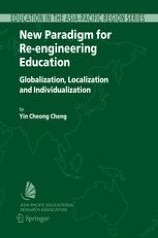
New Paradigm for Re-engineering Education : Globalization, Localization and Individualization
In response to the challenges of globalization and local development, educational reforms are inevitably becoming one of the major trends in the Asia-Pacific Region or other parts of the world. Based on the most recent research and international observations, this book aims to present a new paradigm including various new concepts, frameworks and theories for reengineering education. It can provide educators, school leaders and practitioners, educational officials, change agents, researchers, and policy-makers with a comprehensive new perspective to implement educational reforms, enhance leadership, and change school management in a context of globalization, localization and individualization.

Mathematics Education in East Africa : Towards Harmonization and Enhancement of Education Quality
In the increasingly global and technological world mathematics is seen as a significant gatekeeper of opportunities for social and economic advancement and mobility. Hence, countries and development agencies in the broader sub-Saharan Africa region are looking towards increasing access to relevant and high-quality secondary education as a lever towards economic development. Policy makers and other key decision makers in education look towards improvement in mathematics teaching and learning as a key focus in education reform. In the East Africa region also a number of initiatives have been taken at the national level in the respective countries to improve the quality of mathematics education. This book provides an in-depth comparative analysis of the developments and issues in mathematics education in Kenya, Tanzania, Rwanda and Uganda, and advances our understanding of the state of secondary mathematics education in East Africa.

International Handbook on Globalisation, Education and Policy Research : Global Pedagogies and Policies
The aim of this Handbook is to present a global overview of developments in education and policy change during the last decade. It has the objective of providing both a strategic education policy statement on recent shifts in education and policy research globally and offers new approaches to further exploration, development and improvement of education and policy making.attempts to address some of the above issues and problems confronting educators and policy makers globally. Different articles seek to conceptualize the on-going problems of education policy formulation and implementation, and provide a useful synthesis of the education policy research conducted in different countries, and practical implications.
International handbook of urban education
An important focus of the International Handbook of Urban Education will be the interrogation of both the social and political factors that lead to different problem posing and subsequent solutions within each region. An important question to be answered, for example, is what it takes in terms of resources, political will and policy actions to improve urban education.

Implementing deeper learning and 21st Century education reforms : Building an education renaissance after a global pandemic
This book is a comparative analysis of recent large scale education reforms that broadened curriculum goals to better prepare students for the 21st century. The book examines what governments actually do when they broaden curriculum goals, with attention to the details of implementation.
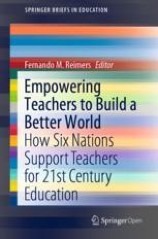
Empowering teachers to build a better world : How six nations support teachers for 21st Century education
This book presents a comparative study on how large-scale professional development programs for teachers are designed and implemented. Around the world, governments and educators are recognizing the need to educate students in a broad range of higher order cognitive skills and socio-emotional competencies

Education to Build Back Better : What Can We Learn from Education Reform for a Post-pandemic World
This book examines the implications of the COVID-19 Pandemic for education systems and argues that major education reforms will be necessary, particularly in the Global South, to address the learning loss caused by the pandemic. To inform those reforms, knowledge about the implementation reforms in the Global South is necessary, and such knowledge is seriously lacking as the existing literature on the implementation of educational change focused principally in reforms in countries in the Global North. This book contributes to address this gap by examining five major education reforms in India, Egypt, Taiwan, Vietnam, and Senegal, and by presenting two novel approaches to climate change education using a bottoms up strategy of reform.
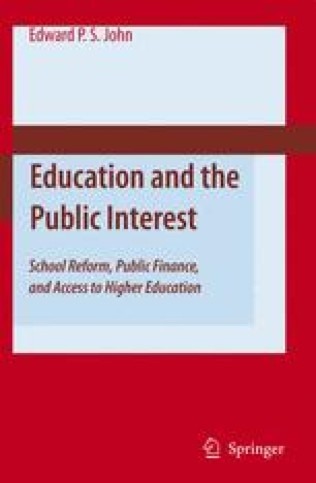
Education and the Public Interest : School Reform, Public Finance, and Access to Higher Education
Economic globalization has been accompanied by implementation of education reforms linked to accountability and public finance schemes that emphasize student choice in schools and student loans in higher education. In the U.S. these reforms are rationalized based on intermediate variables. the reforms rationalized based on this research are seldom evaluated in relation to outcomes . In Education and the Public Interest the editor re-examines the political rationales for these reforms.This volume undertakes a comparative study of the states in the U.S. to examine how education reforms influence student achievement, high school graduation, and college access; and finance schemes influence college access.

Education and Social Justice
The book explores the problematic relationship between education, social justice and the State, against the background of comparative education research. Social justice is an attempt to answer the following question: How can we contribute to the creation of a more equitable, respectful, and just society for everyone? The creation of a more equitable, respectful, and just society for everyone is a dream for all empowering and egalitarian pedagogues. But it will remain a mere hollow rhetoric, or magic words, unless we debate more vigorously social inequality in the global culture. The book critiques the existing status quo of stratified school systems, and the unequal disctribution of cultural capital and value added schooling.

Education and Social Inequality in the Global Culture
The book critically examines the overall interplay between globalisation, social inequality and education. It draws upon recent studies in the areas of globalisation, educational inequalities and the role of the State. It explores conceptual frameworks and methodological approaches applicable in the research covering the State, globalisation, social stratification and education. It demonstrates the neo-liberal ideological imperatives of education and policy reforms, and illustrates the way the relationship between the State and education policy affects current models and trends in education reforms and schooling globally. Various book chapters critique the dominant discourses and debates pertaining to the newly constructed and re-invented models of neo-liberal ideology in education, set against the current climate of growing social stratification and unequal access to quality education for all.
Decentralisation and Privatisation in Education : The Role of the State
The book examines the overall interplay between privatisation, decentralisation and the role of the state. The authors draw upon recent studies in the areas of decentralisation, privatisation and the role of the state in education. By referring to Bourdieu’s call for critical policy analysts to engage in a ‘critical sociology’ of their own contexts of practice, and poststructuralist and postmodernist pedagogy, this collection of book chapters demonstrate how central discourses surrounding the debate of privatisation, decentralisation and the role of the state are formed in the contexts of dominant ideology, power, and culturally and historically derived perceptions and practices.

Creating the European Area of Higher Education : Voices from the Periphery
This volume brings together a group of higher education researchers across Europe and looks into the implementation of the Bologna Process in the countries often attributed a peripheral status. Although it is also obvious that if the Process has a center, it stands external to higher education systems and universities it concerns. One can possibly find it either in Brussels or across the Atlantic in the United States, internationally perceived as the main competitor to European higher education. In addition to cultural and political issues the European higher education project faces in various countries, the volume pays particular attention to the role of students as well as the changing position of the intellectuals under its impact.

Computational Turbulent Incompressible Flow: Applied Mathematics : Body and Soul 4
This is Volume 4 of the book series of the Body & Soul mathematics education reform program, and presents a unified new approach to computational simulation of turbulent.
Learning through Community : Exploring Participatory Practices
A collection of case studies that explore the learning that people do through community engagement. Developed within a network of Canadian researchers and their community partners, it explores learning that is organized by the learners themselves, collectively, rather than as individuals. Reflecting the contributors’ political priorities, the volume begins with groups that are highly marginalized in our society: immigrant women, sex trade workers, senior citizens, garment workers, women doing community economic development, and people who identify with disability and anti-poverty movements.
Learning and Teaching for the Twenty-first Century : Festschrift for Professor Phillip Hughes
This book stresses learning and teaching, rather than teaching and learning. The contention of the contributors is that the focus in all educational endeavours should not be primarily on teachers and teaching, but on learners; how to best facilitate learning, in the most effective, enjoyable, relevant and cost-effective ways for learners, whether they be children, youth or adults. The focus is therefore on how learning can be enhanced, through effective teaching; and how individuals can be best prepared to be excellent teachers.
Audacious Education Purposes : How Governments Transform the Goals of Education Systems
This book offers a comparative study of eight ambitious national reforms that sought to create opportunities for students to gain the necessary breath of skills to thrive in a rapidly changing world.

Adequacy, Accountability, and the Future of Public Education Funding
This book is about public education reform and the future of pubHc education funding. Given the many articles, books, and conferences that have focused on the issue of public education reform, it is reasonable to ask whether the world needs still another volume on this subject. In my defense, I would argue that, although there is a large literature on public education reform, there is precious little that tries to sketch the big picture. Too often, both in research and in practice, it is easy to lose sight of the forest, for all the focus on the individual trees. While such detailed analysis is of critical value, that value derives both from its specificity and from its ability to fit into a larger, coherent whole.
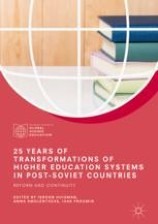
25 Years of Transformations of Higher Education Systems in Post-Soviet Countries : Reform and Continuity
A result of the first ever study of the transformations of the higher education institutional landscape in fifteen former USSR countries after the dissolution of the Soviet Union in 1991. It explores how the single Soviet model that developed across the vast and diverse territory of the Soviet Union over several decades has evolved into fifteen unique national systems, systems that have responded to national and global developments while still bearing some traces of the past. The book is distinctive as it presents a comprehensive analysis of the reforms and transformations in the region in the last 25 years; and it focuses on institutional landscape through the evolution of the institutional types established and developed in Pre-Soviet, Soviet and Post-Soviet time. It also embraces all fifteen countries of the former USSR, and provides a comparative analysis of transformations of institutional landscape across Post-Soviet systems.
