



الصفحة 1
الصفحة 1
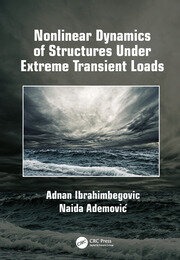
Nonlinear Dynamics of Structures Under Extreme Transient Loads
Covers model building for different engineering structures and provides detailed presentations of extreme loading conditions. A number of illustrations are given quantifying; a plane crash or explosion induced impact loading, the effects of strong earthquake motion, and the impact and long-duration effects of strong stormy winds—along with a relevant framework for using modern computational tools. The book considers the levels of reserve in existing structures, and ways of reducing the negative impact of high-risk situations by employing sounder design procedures.

Multiscale Biomechanics and Tribology of Inorganic and Organic Systems : In memory of Professor Sergey Psakhie
This book gathers authoritative contributions concerning multiscale problems in biomechanics, geomechanics, materials science and tribology. It is written in memory of Sergey Grigorievich Psakhie to feature various aspects of his multifaceted research interests, ranging from theoretical physics, computer modeling of materials and material characterization at the atomic scale, to applications in space industry, medicine and geotectonics, and including organizational, psychological and philosophical aspects of scientific research and teaching as well

Mud volcanoes, geodynamics and seismicity ; Proceedings of the NATO Advanced Research Workshop on mud volcanism, geodynamics and seismicity, Baku, Azerbaijan, from 20 to 22 May 2003
PURPOSE OF PRESENT BOOK During the period May 19-26, 2003 the NATO Advanced Research Workshop (ARW) “Mud volcanism, Geodynamics and Seismicity” was held in Baku. Participants iscussed about different geodynamic features of mud volcanism and participated to field trips oriented to a better knowledge of mud volcanic features. The Meeting focused on many features of mud volcanism occurrence and related geodynamic topics. The purpose of present book is to collect contributions discussed during the Meeting and to fill a marked editorial gap on mud volcanism.

Modelling Critical and Catastrophic Phenomena in Geoscience : A Statistical Physics Approach
This book presents a broad survey of models for critical and catastrophic phenomena in the geosciences, with strong emphasis on earthquakes. It assumes the perspective of statistical physics, which provides the theoretical frame for dealing with complex systems in general. This volume addresses graduate students wishing to specialize in the field and researchers working or interested in the field having a background in the physics, geosciences or applied mathematics.

Model tests and numerical simulations of liquefaction and lateral spreading ; LEAP-UCD-2017
This book presents work collected through the Liquefaction Experiments and Analysis Projects (LEAP) in 2017. It addresses the repeatability, variability, and sensitivity of lateral spreading observed in twenty-four centrifuge model tests on mildly sloping liquefiable sand.

Microearthquake Seismology and Seismotectonics of South Asia
This volume comprehensively deals with plate tectonics and seismic waves in general and earthquake monitoring by permanent and temporary networks for active fault mapping, aftershock, swarm and induced seismicity investigations in interplate collision and subduction zones and in intraplate shield region.

Medium-Range Weather Prediction : The European Approach
The European Centre for Medium-Range Weather Forecasts is widely acknowledged to be a world leader in the field of numerical weather prediction." "This authoritative and readable book tells the interesting story of how the Centre was conceived in the confusing and difficult political period of the 1960s in Europe. It summarises the political, scientific, technical and financial discussions that led to its establishment, and how it came to be built 60 km west of London, England.

Mathematics and Mechanics of Granular Materials
Granular or particulate materials arise in almost every aspect of our lives, including many familiar materials such as tea, coffee, sugar, sand, cement and powders. At some stage almost every industrial process involves a particulate material, and it is usually the cause of the disruption to the smooth running of the process. In the natural environment, understanding the behaviour of particulate materials is vital in many geophysical processes such as earthquakes, landslides and avalanches. This book is a collection of current research from some of the major contributors in the topic of modelling the behaviour of granular materials. Papers from every area of current activity are included, such as theoretical, numerical, engineering and computational approaches. This book illustrates the numerous diverse approaches to one of the outstanding problems of modern continuum mechanics.

Ionospheric Precursors of Earthquakes
Changes included changing my career from the field of space plasma physics to Earth sciences and geophysics, and changes in my personal life giving me h- piness and compliance in my present family.

International Perspectives on Natural Disasters : Occurrence, Mitigation, and Consequences
Reports of natural disasters fill the media with regularity. Places in the world are affected by natural disaster events every day. Such events include earthquakes, cyclones, tsunamis, wildfires – the list could go on for considerable length. In the 1990s there was a concentrated focus on natural disaster information and mitigation during the International Decade for Natural Disasters Reduction (IDNDR). The information was technical and provided the basis for major initiatives in building structures designed for seismic safety, slope stability, severe storm warning systems, and global monitoring and reporting. Mitigation, or planning in the event that natural hazards prevalent in a region would suddenly become natural disasters, was a major goal of the decade-long program. During the IDNDR, this book was conceptualized, and planning for its completion began.

Historical Seismology : Interdisciplinary Studies of Past and Recent Earthquakes
Modern seismology has faced new challenges in the study of earthquakes and their physical characteristics. This volume is dedicated to the use of new approaches and presents a state of the art in historical seismology. Selected historical and recent earthquakes are chosen to document and constrain related seismic parameters using updated methodologies in the macroseismic analysis, field observations of damage distribution and tectonic effects, and modelling of seismic waveforms. A critical re-evaluation of historical accounts and early seismograms provides us with the basis for a realistic seismic hazard assessment.

Historic construction and conservation : Materials, Systems and Damage
Takes a modern approach to the meaning of a heritage structure and its conservation. The historical evolution of conservation is briefly addressed, considering prominent individuals and cases; along with the history of construction, focusing on materials and related structural elements, with insight on the sizing rules adopted by masons. This explains structural decisions made during the construction process and allows comparison of scientific theories from the 18th century to modern understanding of limit analysis. Damage and collapse mechanisms for masonry construction, as the most widespread structural form for historical buildings, is described. Excess permanent loading and settlement is differentiated from environmental and anthropogenic actions such as earthquake or incorrect intervention.

Geotechnical Engineering for Disaster Mitigation and Rehabilitation ; Proceedings of the 2nd International Conference GEDMAR08, Nanjing, China 30 May – 2 June, 2008
"Geotechnical Engineering for Disaster Mitigation and Rehabilitation" presents the latest developments and case studies in the field. All contributions to this proceedings were rigorously reviewed to cover the newest developments in disasters related to earthquakes, landslides and slopes, soil dynamics, risk assessment and management, disaster mitigation and rehabilitation, and others.
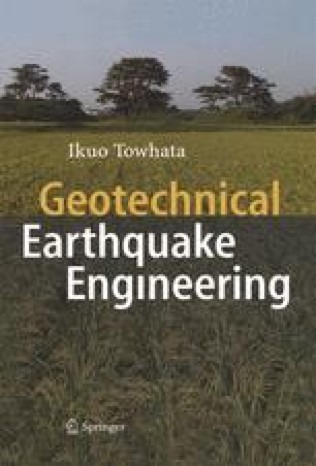
Geotechnical Earthquake Engineering
This book presents all issues of earthquake geotechnical engineering in a comprehensive way. It summarizes the present knowledge on earthquake hazards and their causative mechanisms, experimental studies on nonlinear complex soil behaviour, an analysis to predict ground behaviour during earthquakes, field studies to determine nature of real ground as input data for analysis, and damage mitigation technologies.
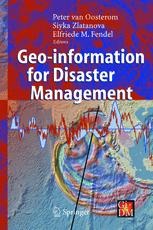
Geo-information for Disaster Management
Geo-information technology offers an opportunity to support disaster management: industrial accidents, road collisions, complex emergencies, earthquakes, fires, floods and similar catastrophes (for example the recent huge disaster with the Tsunami in South-East Asia on 26 December 2004). Access to needed information, facilitation of the interoperability of emergency services, and provision of high-quality care to the public are a number of the key requirements. The book provides a broad overview of the (geo-information) technology, software, systems needed, used and to be developed for disaster management. The book provokes a wide discussion on systems and requirements for use of geo-information under time and stress constraints and unfamiliar situations, environments and circumstances.

Fundamentals of Structural Dynamics : Theory and Computation
Emphasizes numerical methods, nonlinear response of structures, and the analysis of continuous systems (e.g., wave propagation). Fundamentals of Structural Dynamics: Theory and Computation builds the theory of structural dynamics from simple single-degree-of-freedom systems through complex nonlinear beams and frames in a consistent theoretical context supported by an extensive set of MATLAB codes that not only illustrate and support the principles, but provide powerful tools for exploration. The book is designed for students learning structural dynamics for the first time but also serves as a reference for professionals throughout their careers.

Fossil earthquakes : The formation and preservation of pseudotachylytes
This book encompass the principl results of field investigations, analyses of meso-scale and micro-scale textures and structures, laboratory experiments, chemical analyses, conceptual fault models, as well as the implications of fault related pseudotachylyte an its related fault rocks for our understanding of earthquakes. We hope that this book helps to bridge the gap between seismology and geology and that it encourages further studies of earthquake and seismic faulting processes.

Extreme Man-Made and Natural Hazards in Dynamics of Structures
The present threat of the terrorist attacks or accidental explosions, the climate change which brings strong stormy winds or yet the destructive earthquake motion that occurs in previously inactive regions or brings about tsunamis, are a few examples of the kind of applications we seek to address in this work.
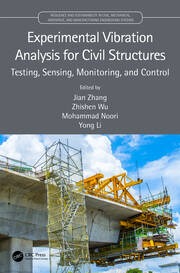
Experimental vibration analysis for civil structures : Testing, sensing, monitoring, and control
Covers a wide range of topics in the areas of vibration testing, instrumentation, and analysis of civil engineering and critical infrastructure. It explains how recent research, development, and applications in experimental vibration analysis of civil engineering structures have progressed significantly due to advancements in the fields of sensor and testing technologies, instrumentation, data acquisition systems, computer technology, computational modeling and simulation of large and complex civil infrastructure systems. The book also examines how cutting-edge artificial intelligence and data analytics can be applied to infrastructure systems.

Essential cob construction : A guide to design, engineering and building
Presents both hands-on and rigorous technical information on how to build code compliant, low-embodied carbon, and fire- and earthquake-resistant buildings from cob--a mix of clay, sand and straw. The definitive cob guide for engineers, architects, designers, contractors, and owner-builders.
