



الصفحة 1
الصفحة 1

Multi-Source National Forest Inventory : Methods and Applications
The book describes in detail the full MS-NFI process, and the input data used – including field data, satellite images, and digital map data, as well as coarse-scale variation of forest variables. It also presents comprehensive information on the types of outputs which can be derived, including maps and statistics, describing, for example, stock volumes and development, dominant tree species, age-class distribution, and large and small-scale variation. The book will provide an invaluable resource for those involved in forest inventory, including government departments and bodies involved in forest policy, management and monitoring, forest managers, and researchers and graduate students interested in forest inventory, modelling and analysis. It will find an additional market among those interested in Earth observation, ecology and broader areas of environmental and natural resource management.

Flood Risk Management : Hazards, Vulnerability and Mitigation Measures
Floods are of increasing public concern world-wide due to increasing damages and unacceptably high numbers of injuries. Previous approaches of flood protection led to limited success especially during recent extreme events. Therefore, an integrated flood risk management is required which takes into consideration both the hydrometeorogical and the societal processes. Moreover, real effects of risk mitigation measures have to be critically assessed. The book draws a comprehensive picture of all these aspects and their interrelations. It furthermore provides a lot of detail on earth observation, flood hazard modelling, climate change, flood forecasting, modelling vulnerability, mitigation measures and the various dimensions of management strategies. In addition to local and regional results of science, engineering and social science investigations on modelling and management, transboundary co-operation of large river catchments are of interest.

Earth Observation with CHAMP : Results from Three Years in Orbit
In the summer of 2000 the German geo-research satellite CHAMP was launched into orbit. Its innovative payload arrangement and the low initial orbit allow CHAMP to simultaneously collect and almost continuously analyse precise data relating to gravity and magnetic fields at low altitude. In addition, CHAMP also measures the neutral atmosphere and ionosphere using GPS techniques. Three years after launch, more than 200 CHAMP investigators and co-investigators from all over the world met at the GeoForschungsZentrum in Potsdam to present and discuss the results derived from the extensive data sets of the mission. The main outcome of this expert meeting is summarized in this volume. The book offers a comprehensive insight into the present status of the exploitation of CHAMP data for Earth system research and practical applications in geodesy, geophysics and meteorology.
Earth observation science and applications for risk reduction and enhanced resilience in Hindu Kush Himalaya Region : A decade of experience from SERVIR
This book is a consolidation of lessons learnt and experiences gathered from our efforts to utilise Earth observation (EO) science and applications to address environmental challenges in the Hindu Kush Himalayan region.
Earth Observation Open Science and Innovation
The digital transformation is revolutionizing our ability to monitor our planet and transforming the way we access, process and exploit Earth Observation data from satellites.This book reviews these megatrends and their implications for the Earth Observation community as well as the wider data economy. It provides insight into new paradigms of Open Science and Innovation applied to space data, which are characterized by openness, access to large volume of complex data, wide availability of new community tools, new techniques for big data analytics such as Artificial Intelligence, unprecedented level of computing power, and new types of collaboration among researchers, innovators, entrepreneurs and citizen scientists. In addition, this book aims to provide readers with some reflections on the future of Earth Observation, highlighting through a series of use cases not just the new opportunities created by the New Space revolution, but also the new challenges that must be addressed in order to make the most of the large volume of complex and diverse data delivered by the new generation of satellites.

Earth Observation of Global Change : The Role of Satellite Remote Sensing in Monitoring the Global Environment
Global Change is increasingly considered a critical topic in environmental research. Remote sensing methods provide a relevant tool to monitor global variables, since they offer a systematic coverage of the Earth Surface, at different spatial, spectral and temporal resolutions. The data provided by Earth Observation Satellites are being operationally used for monitoring atmospheric conditions, ice sheets and glaciar movements, crop dynamism and land use changes, deforestation and desertification processes, as well as water conditions. The book includes an analysis of the leading missions in global Earth observation, and then reviews the main fields in which remote sensing methods are providing vital data for global change studies.

Manual of Digital Earth
This book offers a summary of the development of Digital Earth over the past twenty years. By reviewing the initial vision of Digital Earth, the evolution of that vision, the relevant key technologies, and the role of Digital Earth in helping people respond to global challenges, this publication reveals how and why Digital Earth is becoming vital for acquiring, processing, analysing and mining the rapidly growing volume of global data sets about the Earth.
Big Data in Bioeconomy : Results from the European DataBio Project
This book presents the comprehensive outcome of The European DataBio Project, which examined new data-driven methods to shape a bioeconomy. These methods are used to develop new and sustainable ways to use forest, farm and fishery resources.
Advances in Land Remote Sensing : System, Modeling, Inversion and Application
It systematically summarizes the past achievements and identifies the frontier issues as the research agenda for the near future. It covers all aspects of land remote sensing, from sensor systems, physical modeling, inversion algorithms, to various applications. The papers on remote sensing system evaluate the capabilities of different sensor systems for estimating key land surface variables and how they can best be improved and integrated effectively in the future.
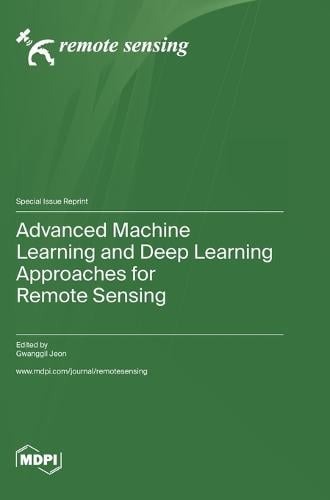
Advanced machine learning and deep learning approaches for remote sensing
Provides research on how technologies such as artificial intelligence-based machine learning and deep learning can be applied to remote sensing. Through this, we can see the process of solving the existing problems of image and image signal processing for remote sensing. These techniques are computationally intensive and require the help of high-performance computing devices. With the development of devices such as GPUs, remote sensing technology, and aerial sensing technology, it is possible to monitor the Earth with high-resolution images and to obtain vast amounts of Earth observation data. The papers published in this reprint describe recent advances in big data processing and artificial intelligence-based technologies for remote sensing technology.
