



الصفحة 1
الصفحة 1

Ocean-atmosphere interactions of gases and particles
The oceans and atmosphere interact through various processes, including the transfer of momentum, heat, gases and particles. In this book leading international experts come together to provide a state-of-the-art account of these exchanges and their role in the Earth-system, with particular focus on gases and particles. Chapters in the book cover: i) the ocean-atmosphere exchange of short-lived trace gases; ii) mechanisms and models of interfacial exchange (including transfer velocity parameterisations); iii) ocean-atmosphere exchange of the greenhouse gases carbon dioxide, methane and nitrous oxide; iv) ocean atmosphere exchange of particles and v) current and future data collection and synthesis efforts.

Observation of the Earth System from Space
A special highlight is the - termination of seasonal gravity variations caused by changes in continental water masses. For GOCE, to be launched in 2006, new gravity field analysis methods are under development and integrated into the ESA processing s- tem. 200,000 GPS radio occultation pro?les, observed by CHAMP, have been processed on an operational basis. They represent new and excellent inf- mation on atmospheric refractivity, temperature and water vapor. These new developments require geodetic space techniques (such as VLBI, SLR, LLR, GPS) to be combined and synchronized as if being one global instrument.

Non-equilibrium Thermodynamics and the Production of Entropy: Life, Earth, and Beyond
The present volume studies the application of concepts from non-equilibrium thermodynamics to a variety of research topics. Emphasis is on the Maximum Entropy Production (MEP) principle and applications to Geosphere-Biosphere couplings. Written by leading researchers form a wide range of background, the book proposed to give a first coherent account of an emerging field at the interface of thermodynamics, geophysics and life sciences.
Neoproterozoic Geobiology and Paleobiology
The Neoproterozoic Era (1000-542 million years ago) is a geological period of dramatic climatic change and important evolutionary innovations. Repeated glaciations of unusual magnitude occurred throughout this tumultuous interval, and various eukaryotic clades independently achieved multicellularity, becoming more complex, abundant, and diverse at its termination. Animals made their first debut in the Neoproterozoic too. The intricate interaction among these geological and biological events is a centrepiece of Earth system history, and has been the focus of geobiological investigations in recent decades. The purpose of this volume is to present a sample of views and visions among some of the growing numbers of Neoproterozoic workers. The contributions represent a cross section of recent insights into the field of Neoproterozoic geobiology.

Impact Tectonics
This volume is the 8th in a series of impact books resulting from the activities of the scientific program "Response of the Earth System to Impact Processes" (IMPACT), by the European Science Foundation. The book resulted from an international meeting at Mora, Sweden, which was held as part of the IMPACT program. The papers cover various structural geologic, geochemical, and geophysical topics on research of asteroid impact structures on Earth and Mars.
Hydrogeophysics
This ground-breaking work is the first to cover the fundamentals of hydrogeophysics from both the hydrogeological and geophysical perspectives. A series of hydrogeophysical case studies illustrate hydrogeophysical approaches for mapping hydrological units, estimation of hydrogeological parameters, and monitoring of hydrogeological processes.

Global Change and the Earth System : A Planet Under Pressure
The interactions between environmental change and human societies have a long, complex history spanning many millennia, but these have changed fundamentally in the last century. Human activities are now so pervasive and profound that they are altering the Earth in ways which threaten the very life support system upon which humans depend. This book describes what is known about the Earth System and the impact of changes caused by humans. It considers the consequences of these changes with respect to the stability of the Earth System and the well-being of humankind; as well as exploring future paths towards Earth System science in support of global sustainability.

Fractal Behaviour of the Earth System
In this volume a collection of - pers considers the fractal behavior of the Earth's continental crust. Surface gravity anomalies are known to exhibit power-law spectral behavior under a wide range of conditions and scales. La Manna utilize multifractal models to explain the behavior of well logs from the main KTB borehole in Germany.

Forest and Rangeland Soils of the United States Under Changing Conditions : A Comprehensive Science Synthesis
This book synthesizes leading-edge science and management information about forest and rangeland soils of the United States. It offers ways to better understand changing conditions and their impacts on soils, and explores directions that positively affect the future of forest and rangeland soil health.

Earth System Science in the Anthropocene : Emerging Issues and Problems
Earth System Science in the Anthropocene aims to provide an in-depth perspective and update on special topics in Global Environmental Change in relation to Human Security. It gives an overview on the new Joint Projects of the four International Global Change Programmmes and on research efforts in Germany. It is also an up-to-date report on emerging necessities in Global Environmental Change research as well as suggestions for its future development.

Earth Observation with CHAMP : Results from Three Years in Orbit
In the summer of 2000 the German geo-research satellite CHAMP was launched into orbit. Its innovative payload arrangement and the low initial orbit allow CHAMP to simultaneously collect and almost continuously analyse precise data relating to gravity and magnetic fields at low altitude. In addition, CHAMP also measures the neutral atmosphere and ionosphere using GPS techniques. Three years after launch, more than 200 CHAMP investigators and co-investigators from all over the world met at the GeoForschungsZentrum in Potsdam to present and discuss the results derived from the extensive data sets of the mission. The main outcome of this expert meeting is summarized in this volume. The book offers a comprehensive insight into the present status of the exploitation of CHAMP data for Earth system research and practical applications in geodesy, geophysics and meteorology.
Earth Observation Open Science and Innovation
The digital transformation is revolutionizing our ability to monitor our planet and transforming the way we access, process and exploit Earth Observation data from satellites.This book reviews these megatrends and their implications for the Earth Observation community as well as the wider data economy. It provides insight into new paradigms of Open Science and Innovation applied to space data, which are characterized by openness, access to large volume of complex data, wide availability of new community tools, new techniques for big data analytics such as Artificial Intelligence, unprecedented level of computing power, and new types of collaboration among researchers, innovators, entrepreneurs and citizen scientists. In addition, this book aims to provide readers with some reflections on the future of Earth Observation, highlighting through a series of use cases not just the new opportunities created by the New Space revolution, but also the new challenges that must be addressed in order to make the most of the large volume of complex and diverse data delivered by the new generation of satellites.

Demystifying Climate Models : A Users Guide to Earth System Models
This book demystifies the models we use to simulate present and future climates, allowing readers to better understand how to use climate model results. In order to predict the future trajectory of the Earth’s climate, climate-system simulation models are necessary. When and how do we trust climate model predictions? The book offers a framework for answering this question. It provides readers with a basic primer on climate and climate change, and offers non-technical explanations for how climate models are constructed, why they are uncertain, and what level of confidence we should place in them. It presents current results and the key uncertainties concerning them. Uncertainty is not a weakness but understanding uncertainty is a strength and a key part of using any model, including climate models.

Data assimilation fundamentals : A unified formulation of the state and parameter estimation problem
This textbook's significant contribution is the unified derivation of data-assimilation techniques from a common fundamental and optimal starting point, namely Bayes' theorem. Unique for this book is the "top-down" derivation of the assimilation methods. It starts from Bayes theorem and gradually introduces the assumptions and approximations needed to arrive at today's popular data-assimilation methods. This strategy is the opposite of most textbooks and reviews on data assimilation that typically take a bottom-up approach to derive a particular assimilation method.

Coupled Models for the Hydrological Cycle : Integrating Atmosphere, Biosphere and Pedosphere
Hydrologists, climatologists, soil scientists and environmental engineers are frequently asked to analyse complex environmental problems. It is becoming increasingly apparent that these problems usually involve feedbacks between atmospheric, ecological, and hydrological systems, as well as human society. It is often the feedbacks between systems that are of greatest interest because they may produce unanticipated responses. That is why coupling of different compartments of the Earth system has emerged as a general challenge to the modelling community. This book considers an array of state-of-the-art coupling and modelling concepts. First the relevant Earth system cycles are presented, followed by a discussion on scale issues and multiple equilibria. Inter- and intra-compartmental coupling is addressed, along with a debate on non-linearities and questions of parameterisation. Several applications are presented, where a focus is on cases where the hydrological cycle plays a central role.

Coastal Fluxes in the Anthropocene : The Land-Ocean Interactions in the Coastal Zone Project of the International Geosphere-Biosphere Programme
In global coastal zones, the major fabric of goods and services for human welfare as well as global changes are extraordinarily visible. They are shaped by natural Earth systems processes on a planetary scale, which are reflected in a continuously adapting coastal environment. Now, in the "Anthropocene", human society is a greater catalyst for change - impacting and modifying coastal processes. This book synthesizes knowledge on coastal and riverine material fluxes, biogeochemical processes and indications of change, and the human influence, before looking at future research and management needs. It is a milestone rather than a destination on the journey which continues under the new International Geosphere-Biosphere Programme (IGBP), the International Human Dimensions Programme on Global Environmental Change (IHDP) and the LOICZ II (Land-Ocean Interactions in the Coastal Zone) Project.
Marine carbon biogeochemistry : A primer for earth system scientists
This book discusses biogeochemical processes relevant to carbon and aims to provide with insight into the functioning of marine ecosystems. A carbon centric approach has been adopted, but other elements are included where relevant or needed. The book focuses on concepts and quantitative understanding of primary production, organic matter mineralization and sediment biogeochemistry. The impact of biogeochemical processes on inorganic carbon dynamics and organic matter transformation are also discussed.

Manual of Digital Earth
This book offers a summary of the development of Digital Earth over the past twenty years. By reviewing the initial vision of Digital Earth, the evolution of that vision, the relevant key technologies, and the role of Digital Earth in helping people respond to global challenges, this publication reveals how and why Digital Earth is becoming vital for acquiring, processing, analysing and mining the rapidly growing volume of global data sets about the Earth.
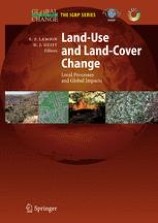
Land-Use and Land-Cover Change : Local Processes and Global Impacts
The book presents recent estimates of the rates in changes of major land classes such as forest, cropland and pasture. Among the causative mechanisms behind land change, synergetic factor combinations are found to be more common than single key factor explanations. Aggregated globally, multiple impacts of local land changes are shown to significantly affect central aspects of Earth System functioning. Innovative developments and applications in the fields of modeling and scenario construction are presented. Finally, conclusions are drawn about the most pressing implications for the design of appropriate intervention policies, and on new directions and frontiers of research.
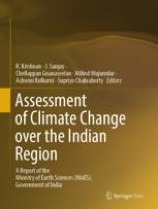
Assessment of climate change over the Indian Region : A report of the Ministry of Earth Sciences (MoES), Government of India
Discusses the impact of human-induced global climate change on the Indian subcontinent and regional monsoon, the adjoining Indian Ocean and the Himalayas. It also examines the regional climate change projections based on the climate models used by the IPCC Fifth Assessment Report (AR5) and national climate change modeling studies using the IITM Earth System Model (ESM) and CORDEX South Asia datasets
