



الصفحة 1
الصفحة 1

Simulation Approaches in Transportation Analysis : Recent Advances and Challenges
Focuses on the latest advanced research on modeling as well as applications of transport simulation, including simulation of vehicle movements on the road, dynamic simulation of traffic flow on transport networks, and simulation of the movement of people in an urban area. Models from the three continents of Europe, North America, and Asia are discussed in detail. Research issues and future directions of transport simulation development are systematically addressed. It is the first book to thoroughly discuss global developments and the broad issues of transport simulation. The book will be useful for researchers and graduate students to understand the application of simulation in transport analysis and future research needs. Practitioners will find the book useful for practical issues such as the applicability of simulation methods, their reproducibility, and output interpretation.

High performance computing for drug discovery and biomedicine
Explores the application of high-performance computing (HPC) technologies to computational drug discovery (CDD) and biomedicine. Collects CDD approaches that, together with HPC, can revolutionize and automate drug discovery process, such as knowledge graphs, natural language processing (NLP), Bayesian optimization, automated virtual screening platforms, alchemical free energy workflows, fragment-molecular orbitals (FMO), HPC-adapted molecular dynamic simulation (MD-HPC), and the potential of cloud computing for drug discovery. And delves into computational algorithms and workflows for biomedicine, featuring an HPC framework to assess drug-induced arrhythmic risk, digital patient applications relevant to the clinic, virtual human simulations, cellular and whole-body blood flow modeling for stroke treatments, prediction of the femoral bone strength from CT data, and many more subjects.

Fundamentals of Multibody Dynamics : Theory and Applications
This textbook—a result of the author’s many years of research and teaching—brings together diverse concepts of dynamics, combining the efforts of many researchers in the field of mechanics. Bridging the gap between dynamics and engineering applications such as microrobotics, virtual reality simulation of interactive mechanical systems, nanomechanics, flexible biosystems, crash simulation, and biomechanics, the book puts into perspective the importance of modeling in the dynamic simulation and solution of problems in these fields.

Digital transformation in semiconductor manufacturing ; Proceedings of the 1st and 2nd European advances in digital transformation Conference, EADTC 2018, Zittau, Germany and EADTC 2019, Milan, Italy
This book reports on cutting-edge electrical engineering and microelectronics solutions to foster and support digitalization in the semiconductor industry.

Contributions to Simulation Speed-Up : Rare Event Simulation and Short-Term Dynamic Simulation for Mobile Network Planning
Eugen Lamers explains the principle of simulation speed-up in general, demonstrates the technique RESTART for the simulation of rare events, and addresses its efficiency on distributed systems.

Computational Techniques for Voltage Stability Assessment and Control
The key concepts of both saddle node and Hopf bifurcation are covered. These are illustrated with the differential-algebraic equation (DAE) model of the system. The model is complex enough to include Load Tap-Changing transformers as well as HVDC models. The dynamic model of the generating unit includes the exciter since it plays a crucial role in voltage stability. A promising decoupled dynamic simulation technique is introduced for time domain analysis. Computational Techniques for Voltage Stability Assessment and Control provides the computational tools and algorithms needed for development of on-line voltage security assessment
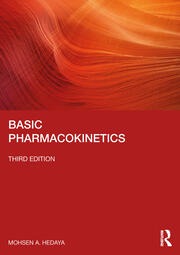
Basic pharmacokinetics
Introduces basic pharmacokinetic concepts to beginner learners to help them understand the absorption, distribution, metabolism, and excretion of drugs. Accompanying the book is a website with self-instructional tutorials and pharmacokinetic and pharmacokinetic-pharmacodynamic simulations, allowing visualization of concepts for enhanced comprehension. This learning tool received an award from the American Association of Colleges of Pharmacy for innovation in teaching, making it a valuable supplement to this essential text.

Advances in visual computing ; 4th International symposium, ISVC 2008, Las Vegas, NV, USA, December 1-3, 2008. Proceedings, Part II
The two volume set LNCS 5358 and LNCS 5359 constitutes the refereed proceedings of the 4th International Symposium on Visual Computing, ISVC 2008, held in Las Vegas, NV, USA, in December 2008.

Advances in visual computing ; 4th International Symposium, ISVC 2008, Las Vegas, NV, USA, December 1-3, 2008. Proceedings, Part I
The two volume set LNCS 5358 and LNCS 5359 constitutes the refereed proceedings of the 4th International Symposium on Visual Computing, ISVC 2008, held in Las Vegas, NV, USA, in December 2008.
