



الصفحة 1
الصفحة 1

National reflections on the Netherlands didactics of mathematics : Teaching and learning in the context of realistic mathematics education
This book, inspired by the ICME 13 Thematic Afternoon on “European Didactic Traditions”, consists of 17 chapters, in which educators from the Netherlands reflect on the teaching and learning of mathematics in their country and the role of the Dutch domain-specific instruction theory of Realistic Mathematics Education.

Money and debt : The public role of banks
This book from the Netherlands Scientific Council for Government Policy explains how money creation and banking works, describes the main problems of the current monetary and financial system and discusses several reform options. This book systematically evaluates proposals for fundamental monetary reform, including ideas to separate money and credit by breaking up banks, introducing a central bank digital currency, and introducing public payment banks. By drawing on these plans, the authors suggest several concrete reforms to the current banking system with the aim to ensure that the monetary system remains stable, contributes to the Dutch economy, fairly distributes benefits, costs and risks, and enjoys public legitimacy. This systematic approach, and the accessible way in which the book is written, allows specialized and non-specialised readers to understand the intricacies of money, banking, monetary reform and financial innovation, far beyond the Dutch context.

Modern Actuarial Risk Theory : Using R
"The book gives a comprehensive survey of non-life insurance mathematics. … Originally written for use with the actuarial science programs at the Universities of Amsterdam and Leuven, it is now in use at many other universities as well as for the non-academic actuarial education program organized by the Dutch Actuarial Society. The methods presented can not only be used in non-life insurance, but also in other branches of actuarial science, as well as in actuarial practice. (Pavel Stoynov, Zentralblatt MATH, Vol. 1148, 2008). This book gives an introduction to non-life insurance mathematics. … Throughout the book, the software R is used for the implementation of the techniques presented. One finds also many exercises with hints for their solution in an appendix.

Mixed Hodge Structures
The text of this book has its origins more than twenty- ve years ago. In the seminar of the Dutch Singularity Theory project in 1982 and 1983, the second-named author gave a series of lectures on Mixed Hodge Structures and Singularities, accompanied by a set of hand-written notes. The publication of these notes was prevented by a revolution in the subject due to Morihiko Saito: the introduction of the theory of Mixed Hodge Modules around 1985. Understanding this theory was at the same time of great importance and very hard, due to the fact that it uni es many di erent theories which are quite complicated themselves: algebraic D-modules and perverse sheaves. The present book intends to provide a comprehensive text about Mixed Hodge Theory with a view towards Mixed Hodge Modules.

Ethnic Identity, Social Mobility and the Role of Soulmates
Based on a study among higher-educated adult children of lower-class Turkish and Moroccan immigrants in the Netherlands, this open access book explores processes of identification among social climbers with ethnic minority backgrounds. Using both survey data and open interviews with these ‘minority climbers’, the study details the contextual and temporal nature of identification. The results illustrate how ethnicity is contextual but have tangible and inescapable effects at the same time. Also the findings call for a more reflexive use of terms like ethnic ingroup/outgroup and bonding/bridging. Overall, the book helps us understand the emergence of middle-class segments that articulate their minority identities and as such it will be of great interest to academics, policy makers and all those interested in processes of integration and/or diversity.

Economic Liberalization and Integration Policy : Options for Eastern Europe and Russia
The authors of this book analyze the dynamics of macroeconomic and structural developments in Eastern Europe and Russia, with special attention paid to problems of international and national integration, "Dutch disease" and natural resource dependency, and distortions in institutional reforms. The analysis also sheds light on how these problems have implications for cooperation among OECD-countries. A critical focus is on institutional adjustment and learning, human capital formation, trade and foreign investment.

Current Themes in Theoretical Biology : A Dutch Perspective
The present volume originated in 2001 when we, together with our publishing editors at (then) Kluwer Academic Publishers, realized that the th following year the 50 volume of our journal Acta Biotheoretica would see the light. We felt that this milestone should not pass unnoticed and that the appropriate way to mark it would be the publication of a special volume of papers on theoretical biology. While editing this book during 2003 and early 2004, we realized that another milestone was not far off: in 2005 it will be 70 years ago that the journal was founded. We hope that the book lying before you will serve well to mark both events. The papers collected here have been written on invitation by representatives of the theoretical biology community in The Netherlands. They are intended to reflect the entire spectrum of topics on which Acta Biotheoretica publishes, ranging from philosophy of biology on one end to mathematical biology on the other. All chapters (except our own introductory one) have been peer reviewed according to the standards that are maintained with respect to regular submissions to Acta Biotheoretica.

Costs and Benefits of Collective Pension Systems
The Dutch pension system is often praised as one of the best in the world: it is efficient, it provides certainty to participants and it preserves cohesion and solidarity among workers and pensioners. This book presents these benefits in detail. It also discusses the aspects of the system that are less favourable.
Coming to Terms with Superdiversity: The Case of Rotterdam
This book discusses Rotterdam as clear example of a superdiverse city that is only reluctantly coming to terms with this new reality. Rotterdam, as is true for many post-industrial cities, has seen a considerable backlash against migration and diversity: the populist party Leefbaar Rotterdam of the late Pim Fortuyn is already for many years the largest party in the city. At the same time Rotterdam has become a majority minority city where the people of Dutch descent have become a numerical minority themselves. The book explores how Rotterdam is coming to terms with superdiversity, by an analysis of its migration history of the city, the composition of the migrant population and the Dutch working class population, local politics and by a comparison with Amsterdam and other cities. As such it contributes to a better understanding not just of how and why super-diverse cities emerge but also how and why the reaction to a super-diverse reality can be so different.
Competencies, Higher Education and Career in Japan and the Netherlands
This book investigates how social and cultural factors affect the education, training and career development of graduates of higher education in Japan and the Netherlands. Despite their different historical paths, both countries are now subject to the common pressure of globalization. As a result, the higher education sector in both countries is becoming more universal and available to a larger population, and the economy and society are becoming increasingly knowledge-intensive. The aim of this book is to explore how Dutch and Japanese graduates choose and develop their careers in reference to the above-mentioned challenges. It is based on a unique data set consisting of surveys held among graduates 3 and 8 years after leaving higher education.
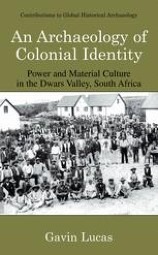
An Archaeology of Colonial Identity : Power and Material Culture in the Dwars Valley, South Africa
This book is the based on the work of many people, and while I discuss many of them in the general context of this book in Chapter 1. The backbone of the book is based on a project, 'Farm Lives' conducted between 1999 and 2002, funded exclusively by the McDonald Institute for Archaeolog-ical Research at the University of Cambridge.
