



الصفحة 1
الصفحة 1

Handbook of Drug Monitoring Methods : Therapeutics and Drugs of Abuse
In Handbook of Drug Monitoring Methods: Therapeutics and Drug Abuse, authors discuss the different analytical techniques used in today’s practice of therapeutic drug monitoring and drugs of abuse as well as alcohol testing with relevant theory, mechanism, and in-depth scientific discussion on each topic.

Good pharmacovigilance practice (GVP) : Focus on risk mangement plan (RMP)
Pharmacovigilance which is the science and activities relating to the detection, assessment, understanding and prevention of adverse drug reactions or any other possible drug related problems and Risk Management Strategies which provides a structured and coherent approach to identifying, assessing and managing risk and builds in a process for regularly updating and reviewing the assessment based on new developments or actions taken, conference provides the foundation for strong strategic planning and practical decision-making in pharmacovigilance programs. Stakeholders from medicines research, global regulation, and healthcare will join together to analyse the challenges for safety and pharmacovigilance efforts in this uncertain environment and examine effective strategies for addressing gaps and needs.

Fundamentals of analytical toxicology : Clinical and forensic ; 2nd ed.
An integrated introduction to the analysis of drugs, poisons, and other foreign compounds in biological and related specimens. Assuming only basic knowledge of analytical chemistry, this invaluable guide helps trainee analytical toxicologists understand the principles and practical skills involved in detecting, identifying, and measuring a broad range of compounds in various biological samples. Clear, easy-to-read chapters provide detailed information on topics including sample collection and preparation, spectrophotometric and luminescence techniques, liquid and gas-liquid chromatography, and mass spectrometry including hyphenated techniques. Focuses on analytical, statistical, and pharmacokinetic principles / Describes basic methodology, including colour tests and immunoassay and enzyme-based assays / Outlines laboratory operations, such as method validation, quality assessment, staff training, and laboratory accreditation / Follows IUPAC nomenclature for chemical names and recommended International Non-proprietary Name (rINN) for drugs and pesticides / Includes discussion of 'designer drugs' (novel pharmaceutical substances NPS)

Coagulation system as a drug target
The coagulation pathway is a cascade of events that leads to hemostasis. The intricate pathway allows for healing and prevention of spontaneous bleeding. Measurement and monitoring of anticoagulation levels and concentrations by parameters in certain situations. There are many medications for coagulation.

Clinical pharmacy education, practice and research clinical pharmacy, drug information, pharmacovigilance, pharmacoeconomics and clinical research
Stresses educational approaches that empower pharmacists with patient care and research competencies. The learning objectives and writing style of the book focus on clarifying the concepts comprehensively for a pharmacist, from regular patient counseling to pharmacogenomics practice. It covers all interesting topics a pharmacist should know. This book serves as a basis to standardize and coordinate learning to practice, explaining basics and using self-learning strategies through online resources or other advanced texts. With an educational approach, it guides pharmacy students and pharmacists to learn quickly and apply. Clinical Pharmacy Education, Practice and Research provides an essential foundation for pharmacy students and pharmacists globally.
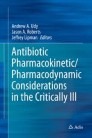
Antibiotic pharmacokinetic : Pharmacodynamic considerations in the critically Ill
Provides unique insights into the issues that drive modified dosing regimens for antibiotics in the critically ill. Leading international authors provide their commentary alongside a summary of existing evidence on how to effectively dose antibiotics. Severe infection frequently necessitates admission to the intensive care unit (ICU). Equally, nosocomial sepsis often complicates the clinical course in ICU. Early, appropriate application of antibiotic therapy remains a cornerstone of effective management. However, this is challenging in the critical care environment, given the significant changes in patient physiology and organ function frequently encountered. Being cognisant of these factors, prescribers need to consider modified dosing regimens, not only to ensure adequate drug exposure, and therefore the greatest chance of clinical cure, but also to avoid encouraging drug resistance.

A short guide to clinical pharmacokinetics
Consists of seven chapters that cover various aspects of pharmacokinetics and its clinical applications. The chapters are structured to provide clear objectives and keywords are bolded throughout the text to facilitate understanding. The topics covered include the significance of pharmacokinetics in clinical practice, factors affecting pharmacokinetic parameters, pharmacokinetic drug interactions, therapeutic drug monitoring, dosage adjustment in different population groups, the influence of hepatic diseases on pharmacokinetics and the impact of pharmacogenomics on pharmacokinetics and pharmacodynamics.
