



الصفحة 1
الصفحة 1
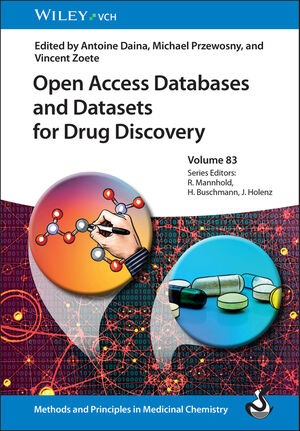
Open access databases and datasets for drug discovery
With an overview of 90 freely accessible databases and datasets on all aspects of drug design, development, and discovery, Open Access Databases and Datasets for Drug Discovery is a comprehensive guide to the vast amount of “free data” available to today’s pharmaceutical researchers. The applicability of open-source data for drug discovery and development is analyzed, and their usefulness in comparison with commercially available tools is evaluated. The most relevant databases for small molecules, drugs and druglike substances, ligand design, protein 3D structures (both experimental and calculated), and human drug targets are described in depth, including practical examples of how to access and work with the data. The first part is focused on databases for small molecules, followed by databases for macromolecular targets and diseases. The final part shows how to integrate various open-source tools into the academic and industrial drug discovery and development process.

New Drug Development for Known and Emerging Viruses
This book discusses the entire field of antiviral drug discovery and development from a medicinal chemistry perspective, focusing on antiviral drugs, targets, and viral disease mechanisms. It provides an outlook on emerging pathogens such as Ebola, Zika, West Nile, Lassa, and includes a chapter on SARS Coronoavirus-2 causing the present pandemic.

Metabolome Analyses : Strategies for Systems Biology
Metabolome Analyses is intended as a follow-up to Metabolic Profiling: Its Role in Biomarker Discovery and Gene Function Analysis (Kluwer, 2003). That text offered guidelines to currently available technology, bioinformatics and databases. Evidence was presented showing metabolic profiling as a valuable addition to genomics and proteomics strategies devoted to drug discovery and development. This book focuses on how metabolic profiling is being more comprehensively integrated with the other "omics" technologies. It provides more practical applications of such "panomics" or "Systems Biology" approaches. The expanding use of mass spectrometry as a measurement technology in metabolic profiling is addressed through demonstrated applications. The integration of metabolic profiling and proteomics is probably most developed for plant-based studies, which was not addressed in Volume 1. Other areas related to metabolic profiling continue to show significant development. These include database strategies and an increased acceptance by the pharmaceutical industry of metabolic profiling. Also covered is the use of in silico metabolic networks. Again the focus is primarily on the pharmaceutical industry but the importance of metabolic profiling to studies on human nutrition (a burgeoning area) is discussed.

Imaging in Drug Discovery and Early Clinical Trials
Efficient tools for the selection and validation of drug targets both at the preclinical and clinical level are required. Non-invasive imaging and in particular molecular imaging methods are becoming essential technologies to support drug discovery and dvelopment. Imaging provides structural, functional, metabolic and molecular readouts that are being applied to characterize a disease phenotype (diagnosis), to elucidate molecular mechanisms involved, to evaluate drug efficacy and safety, and to identify potential biomarkers of the drug's mechanism-of-action, efficacy and safety. Non-invasive imaging techniques constitute a bridge between preclinical and clinical drug evaluation. In this monograph the contribution of imaging modalities to the various stages of drug discovery and development, from early target validation to their use in clinical development programs, is described. Chapters are devoted to the description of the drug discovery process as such, to the various imaging modalities being used both preclinically and clinically, to applications of imaging during the optimization of a lead compound (addressing issues such as bioavailability and efficacy) and during the drug safety evaluation.

Drugs and a methodological compendium : From bench to bedside
Provides a meticulous view on methodological drug discovery and development insights from bench to bedside. Focus on computational modus operandi, pharmacological optimization approaches, modern high-throughput screening methods and in-vitro procedures, role of structural biologists in drug discovery and development, medicinal chemistry approaches for drug design, formulation and drug delivery, in-vivo evaluations of candidate molecules, clinical trial procedures and others. Covers specific case studies, regulatory approval proceedings, and industrial view point alongside the aforementioned conceptual layout. And at the same time, the volume integrates medical, biological, medicinal, pharmacological and computational streams, and it is suggested as an ideal guideline to a wide audience including molecular biologists, biochemist, pharmacologists, medicinal chemist, toxicologists, drug discovery and development researchers, and all other students interested in these disciplines.

Drug discovery and development
Presents up-to-date scientific information for maximizing the ability of a multidisciplinary research team to discover and bring new drugs to the marketplace. It explores many scientific advances in new drug discovery and development for areas such as screening technologies, biotechnology approaches, and evaluation of efficacy and safety of drug candidates through preclinical testing. This book also greatly expands the focus on the clinical pharmacology, regulatory, and business aspects of bringing new drugs to the market and offers coverage of essential topics for companies involved in drug development. Historical perspectives and predicted trends are also provided.

Drug delivery approaches and nanosystems ; Vol.1 : Novel drug carriers
Presents a full picture of the state-of-the-art research and development in drug delivery systems using nanotechnology and its applications. It addresses the ever-expanding application of nanotechnology or nano-sized materials in the medical field and the real-world challenges and complexities of current drug delivery methodologies and techniques.

Drug delivery : An integrated clinical and engineering approach
Offers a much needed comprehensive overview and patient-oriented approach for enhanced drug delivery optimization and advancement. Starting with an introduction to the subject and pharmacokinetics, it explores advances for such topics as oral, gastroretentive, intravitreal, and intrathecal drug delivery, as well as insulin delivery, gene delivery, and biomaterials-based delivery systems. It also describes drug delivery in cancer, cardiac, infectious diseases, airway diseases, and obstetrics and gynecology applications.

Drug Addiction : From Basic Research to Therapy
Drug Addiction: From Basic Research to Therapy provides a comprehensive overview of physiological, biochemical, genetic and behavioral pathways underlying drug addiction. Focusing on fundamental neurophysiological processes that overlap between drug addiction and other CNS disorders, this volume covers the translation of basic research into novel therapies, not only of drug addiction but a spectrum of related CNS disorders, including pain. Chapters are written by leading scientists with widely ranging expertise in synthetic and computational chemistry, molecular biology, genetics, neurosciences, drug discovery and development, drug targeting, and quantitative therapeutics, providing an unprecedented overview of a complex field of high societal signficance.

Deoxynucleoside Analogs in Cancer Therapy
Emerging as an important new volume in the renowned Cancer Drug Discovery and Development™ series, Deoxynucleoside Analogs in Cancer Therapy expertly summarizes the current status of development and application of deoxynucleoside analogs. Authoritative up-to-date reviews are presented by scientists well known in their specific areas and all contributions include valuable sound advice on structure and topics. Organized into several sections, the first part covers general aspects of drug uptake and metabolism and explains how novel technology has enabled a rapid expansion of this field. The second part is concerned with a number of specific drugs including cytarabine, gemcitabine, troxacitabine, clofarabine and Ara-G. The final section covers pharmacokinetics, prodrugs, and specific applications such as radiosensitization, gene therapy, and the use of deoxynucleoside analogs as tracers

Contemporary Accounts in Drug Discovery and Development
Drug discovery is a lengthy and complex process that typically involves identifying an unmet medical need, determining a biological target, chemical library screening to identify a lead, chemical optimization, preclinical studies and clinical trials. This process often takes many years to complete, and relies on practitioners’ knowledge of chemistry and biology, but also—and perhaps more importantly—on experience. Improving the success rate in discovery and development through a thorough knowledge of drug discovery principles and advances in technology is critical for advancement in the field.
Machine learning and deep learning in medical data analytics and healthcare applications
Introduces and explores a variety of schemes designed to empower, enhance, and represent multi-institutional and multi-disciplinary machine learning (ML) and deep learning (DL) research in healthcare paradigms. Serving as a unique compendium of existing and emerging ML/DL paradigms for the healthcare sector, this book demonstrates the depth, breadth, complexity, and diversity of this multi-disciplinary area. It provides a comprehensive overview of ML/DL algorithms and explores the related use cases in enterprises such as computer-aided medical diagnostics, drug discovery and development, medical imaging, automation, robotic surgery, electronic smart records creation, outbreak prediction, medical image analysis, and radiation treatments.

Clinical biochemistry and drug development : From fundamentals to output
Focuses on clinical biochemistry fundamentals, cell culture techniques, and drug discovery and development concepts. It deals with three different fields of clinical research: cell culture, clinical biochemistry, and drug discovery and development.

Chemistry for pharmacy students : General, organic and natural product chemistry ; 2nd ed.
Opens with an overview of the general aspects of chemistry and their importance to modern life, with emphasis on medicinal applications. The text then moves on to discuss the concepts of atomic structure and bonding and the fundamentals of stereochemistry and their significance to pharmacy in relation to drug action and toxicity. Various aspects of organic functional groups, organic reactions, heterocyclic chemistry, nucleic acids and their pharmaceutical importance are then covered in subsequent chapters, with the final chapter dealing with drug discovery and development, and natural product chemistry. Provides a student-friendly introduction to the main areas of chemistry required by pharmacy degree courses. Written at a level suitable for non-chemistry students in pharmacy, but also relevant to those in life sciences, food science, and the health sciences Includes learning objectives at the beginning of each chapter Focuses on the physical properties and actions of drug molecules
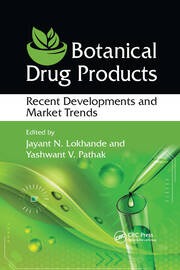
Botanical drug products : Recent developments and market trends
Botanicals, which have been part of human food and medicine for thousands of years, are perceived as being safer than synthetic pharmaceuticals. The global botanical drug market was expected to reach $26.6 billion by 2017. In terms of FDA regulations, botanical drugs are no different from non-botanical products, having to meet the safety and effectiveness standards of a new drug in accordance. This book comprises a complete start-to-end process from drug-idea conception, to drug development process.

Biomarkers in drug discovery and development : A handbook of practice, application, and strategy
Discusses biomarker characterization and validation and applications throughout drug discovery and development. Explains where proper use of biomarkers can substantively impact drug development timelines and costs, enable selection of better compounds and reduce late stage attrition, and facilitate personalized medicine. Helps readers get a better understanding of biomarkers and how to use them, for example which are accepted by regulators and which still non-validated and exploratory. Updates developments in genomic sequencing, and application of large data sets into pre-clinical and clinical testing; and adds new material on data mining, economics, and decision making, personal genetic tools, and wearable monitoring. Includes case studies of biomarkers that have helped and hindered decision making
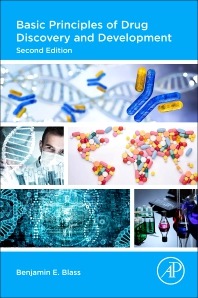
Basic principles of drug discovery and development ; 2nd ed.
Presents the multifaceted process of identifying a new drug in the modern era, which requires a multidisciplinary team approach with input from medicinal chemists, biologists, pharmacologists, drug metabolism experts, toxicologists, clinicians, and a host of experts from numerous additional fields. Enabling technologies such as high throughput screening, structure-based drug design, molecular modeling, pharmaceutical profiling, and translational medicine are critical to the successful development of marketable therapeutics. Given the wide range of disciplines and techniques that are required for cutting edge drug discovery and development, a scientist must master their own fields as well as have a fundamental understanding of their collaborator’s fields.
Antiviral drug discovery and development
Summarizes antiviral drug design and discovery approaches Provides the latest update in the field of antiviral therapeutics Includes antiviral research of coronaviruses
Animal Models of T Cell-Mediated Skin Diseases
Pharmaceutical companies are spending increasing amounts of money on drug discovery and development. Nevertheless, attrition rates in clinical development are still very high, and up to 90% of new compounds fail in clinical phase I - III trials, which is partially due to lack of clinical efficacy. This indicates a strong need for highly predictive in vitro and in vivo models. The "50th International Workshop of the Ernst Schering Research Foundation" focussed on "Animal Models of T Cell-Mediated Skin Diseases". Such animal models should have impact not only on inflammatory dermatoses but also on other inflammatory disorders due to their model character. The current volume summarises recent advances in animal research that are important for anti-inflammatory drug discovery.
