



الصفحة 1
الصفحة 1

Modern hospice design : The architecture of palliative and social care
Takes cognisance of the new conditions of social care in the 21st century, principally in the UK, Europe and North America. It does so with regard to the development of new building types, but also in response to new philosophies of palliative care and the status of the elderly and the dying. At its core is a public discussion of a philosophy of design for providing care for the elderly and the vulnerable, taking the importance of architectural aesthetics, the use of quality materials, the porousness of design to the wider world, and the integration of indoor and outdoor spaces as part of the overall care environment.

Interior design for small dwellings
Addresses the onrush of interest in smaller homes and the possibility that small dwellings might be the answer to housing needs and sustainability. The book explores key principles essential to residing and designing small interiors with emphasis on client involvement and implementation of participatory, inclusive design as advocated by the Council for Interior Design Accreditation.

Interior Design Concept : Critical Practices, Processes and Explorations in Interior Architecture and Design
Combines a comprehensive introduction to design concept, with a reflective examination upon the various ways it can be understood, harnessed, and implemented. Within interior architecture and design, the power of conceptual thinking to fuel creativity, innovation, and collaboration is evident in the use of design concept. Broadly accepted as an essential component in the design process, design concept is a notoriously elusive topic which has, until now, received little critical attention. This book offers a reevaluation of current academic ideas about design methodologies and the nature of inspiration, alongside brand-new data from an international research study to help clarify what creativity really means in the modern world.

Future campus : Design quality in university buildings
Argues that investment in the higher education sector is a driver for intellectual, social and economic development, offering opportunities for positive impacts for the physical environment on the character and performance of higher education. The editor believes that good outcomes result from good design, which should address elements such as learning from best current practice, the importance of clear briefing, good environmental performance, the positive social impacts and, also, the importance of ensuring a beautiful outcome. It has chapters contributed from leading-edge practices, including case studies with highly illustrated project examples.

Creative Practice Inquiry in Architecture
This collection introduces, illustrates, and advances fresh ideas about creative practice inquiry in architecture. It concerns architectural knowledge: how architects can use their distinctive skills, habits, and values to advance professional insight, and how such insights can be extended to make wider contributions to society, culture, and scholarship. It shows how architectural ways of knowing and working can be mobilised as tools for research.

Collage and architecture
This new edition includes: A stronger focus on contemporary practices, including digital methods; New designers and architects, including Marshall Brown, WAI Architecture Think Tank, and Tatiana Bilbao, bringing their methods and work to life; An expanded global and diverse perspective of architecture as collage; Collage is an important instrument for analysis and design. Through its 261 color images, this book shows how this versatile medium can be adapted and transformed in your own work.

Coding, shaping, making : experiments in form and form-making
Combines inspiration from architecture, mathematics, biology, chemistry, physics and computation to look towards the future of architecture, design and art. It presents ongoing experiments in the search for fundamental principles of form and form-making in nature so that we can better inform our own built environment.
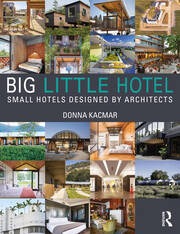
Big little hotel : Small hotels designed by architects
This book showcases small hotels, all located in the United States, designed by architects who use light and materials in interesting and intentional ways. The designs also deliberately connect to their local history, context, or land – in many cases all three. Both the architecture and the operations harmonize with the place, whether that is a bustling city, small town, or natural area. Many are new buildings but some are adaptive reuse projects or renovations of historic properties, extending the connectivity of the place into the future.

Architecture for residential care and ageing communities : Spaces for dwelling and healthcare
A guide to the planning, architecture, and design of schools that are healthy, stimulating, and will conserve energy and resources. Written with the needs of architects, construction professionals, educators, and school administration in mind, the book provides a road map for sustainable planning, design, construction, and operations.
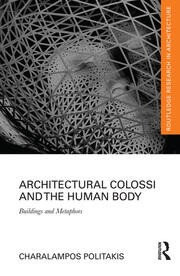
Architectural colossi and the human body buildings and metaphors
Architectural Colossi and the Human Body discusses the role of Platonic and Cartesian philosophy and how philosophers such as Heidegger and Merleau-Ponty, and theoreticians such as Frascari and Pallasmaa, have seen, described and analysed the human body and the role of architecture and perception. Drawing upon three key case studies and by employing theoretical ideas of Venturi and others, this book will provide an understanding of the role of anthromorphism and the relation and use of the human body with reference to selected architects and artists.
Architectonics and parametric thinking : computational modeling for beginning design
Architectonics and Parametric Thinking begins by clearly positioning the potentials of parametric design through a series of chapters written by leaders in their respective industries. This helps to situate the vast potential of parametric softwares, allowing the reader to understand the full range of what is made possible by working computationally. Following this theoretical introduction, the book presents a manual that walks readers through the step-by-step construction of parametric modeling scripts built through an architectonic lens using clear, compelling diagrams.
