



الصفحة 1
الصفحة 1

Nanotechnology in therapeutics : Basics and trends
Nanotechnology delivers a unique approach, which promises higher drug efficacy, targeted drug delivery, on demand delivery, biocompatibility, etc. For example, nanotechnology-based delivery systems can protect drugs from degradation and help reduce the number of doses required, make treatment a better experience and reduce treatment expenses and a number of nano-based systems allow delivery of insoluble drugs, allowing the use of previously rejected drugs or drugs which are difficult to administer.

Nanopharmaceuticals ; Vol.1 : Expectations and realities of multifunctional drug delivery systems
Reviews advances in the drug delivery field via nanovehicles or nanocarriers that offer benefits like targeted therapy and serves as a single dose magic bullet for multiple drug delivery with improved drug efficiency at a lower dose, transportation of the drug across physiological barriers as well as reduced drug-related toxicity. The chapters are written by a diverse group of international researchers from industry and academia. The series Expectations and Realities of Multifunctional Drug Delivery Systems examines the fabrication, optimization, biological aspects, regulatory and clinical success of wide range of drug delivery carriers. This series reviews multifunctionality and applications of drug delivery systems, industrial trends, regulatory challenges and in vivo success stories. Throughout the volumes discussions on diverse aspects of drug delivery carriers, such as clinical, engineering, and regulatory, facilitate insight sharing across expertise area and form a link for collaborations between industry-academic scientists and clinical researchers. Expectations and Realities of Multifunctional Drug Delivery Systems connects formulation scientists, regulatory experts, engineers, clinical experts and regulatory stake holders. The wide scope of the book ensures it as a valuable reference resource for researchers in both academia and the pharmaceutical industry who want to learn more about drug delivery systems.

Muscle hypertrophy and role of anabolic hormones in bodybuilding
The goal of our research first of all to give an overall view on the physiology of muscles and we will focus on natural elements such as diet and exercises to improve your aim without using chemical drugs, we will also include other factors affecting hypertrophy muscle such as genetic ones since the variation in between two sportive persons might be more than 50 percent determined by heredity which is a very important element and may lead a sportive man to elevate the doses to reach the same development of ideal muscles.
Introduction to toxicology
Charts the evolution of the field of toxicology, from the use of natural toxins by ancient tribes through the developments established by Paracelsus, and progresses through to the current topics in the public interest. For centuries, the study of toxicology has fascinated students. The book begins with basic toxicological principles, including an historical summary, dose-response relationships (NEW chapter), exposure-response relationships (NEW chapter), disposition, and metabolism of xenobiotic toxic substances. Other important new chapters include target organ toxicity, toxicity of carcinogenic agents and new and updated concepts in toxicity testing, and antidotes and treatment of poisonings. In all, nine new or expanded chapters from the third edition are advanced. Current concerns about the effects of therapeutic drugs, carcinogens, industrial toxins, pesticides, and herbicides on human health, animal welfare, and the stability and maintenance of the ecosystem continue to highlight toxicology as an important and growing scientific discipline.

Improving Healthcare : A Dose of Competition
Improving Healthcare: A Dose of Competition systematically examines the American health care system from a competition-oriented perspective. The volume surveys the performance of each major sector of the health care system, and identifies impediments to more effective competition. Improving Healthcare examines such issues as competition v. regulation, public and private sector approaches to health care financing, cross-subsidies, licensure, provider market concentration, financial and clinical integration, payment for performance, quality, pharmacy benefit managers, direct-to-consumer advertising of pharmaceuticals, certificates of need, mandates, unionization, the significance of organizational status (nonprofit v. for-profit), and the role of antitrust and consumer protection in health care. It offers concrete recommendations to improve the quality and cost-effectiveness of the American health care marketplace.

Fundamentals of Nuclear Medicine Dosimetry
This text is a practical introduction that guides the reader through fundamental concepts in the calculation of radiation dose, including discussions of standardized models, methods of calculations, and available software applications. This comprehensive guide discusses the biological effects of radiation on living systems.

Essential pharmaceutics
Essential Pharmaceutics is suited to this modern teaching style, and is the first book of its kind to provide the resources and skills needed for successful implementation of an active learning pharmaceutics course.This text offers a format that is specifically suited for integration in an active learning, team-based classroom setting

Equidosimetry : Ecological Standardization and Equidosimetry for Radioecology and Environmental Ecology
Considerable experience with radioecological and related ecological research on terrestrial and aquatic ecosystems has been achieved, especially after the Chernobyl accident. The combined effects of the radiation, chemical and biological factors, after a contamination of the environment and during its remediation have shown an interactive complexity that highlights the need for equidosimetrical evaluations of the influence of the various stressors and the need for their ecological normalization. In radioecology and radiation protection, methods of radiation dosimetry are key for dose assessment. It is therefore highly desirable to develop a clear theoretical approach as well as a practical method of equidosimetry that would allow for an ecological normalization of the different stressors in unified uniform units, especially for comparison purposes.

Encyclopedia of Molecular Pharmacology
It provides rapid access to information on molecular pharmacology for research scientists, clinicians and advanced students. With the A-Z format of over 2,000 entries, around 350 authors provide a complete reference to the area of molecular pharmacology. The book combines the knowledge of classic pharmacology with the more recent approach of the precise analysis of the molecular mechanisms by which drugs exert their effects. Short keyword entries define common acronyms, terms and phrases. In addition, detailed essays provide in-depth information on drugs, cellular processes, molecular targets, techniques, molecular mechanisms, and general principles.

Drugs in Ophthalmology
This drug handbook is divided into two sections: Alphabetical Listing of Drugs Entries in this section are listed by generic name. Information for each drug is arranged in a consistent format for easy reference. Summary of Anti-infectives This section summarizes the common doses of antibiotics, antifungals, and antivirals. For each drug, the dose for each route of administration is included.

Drug delivery systems using quantum computing
Drug delivery systems (DDS) are defined as methods by which drugs are delivered to desired tissues, organs, cells, and subcellular organs for drug release and absorption through a variety of drug carriers. By controlling the precise level and/or location of a given drug in the body, side effects are reduced, doses are lowered, and new therapies are possible. Nevertheless, there are still significant obstacles to delivering certain medications to particular cells. Drug delivery methods change pharmacokinetic, pharmacodynamic, and drug release patterns to enhance product efficacy and safety, as well as patient convenience and compliance.
Dose Finding in Drug Development
When you go to the pharmacy and fill a prescription, have you ever wondered if the dose of the medication is right for you? Can the dose be too low so that the drug will not work? This book answers some of these questions, and introduces the drug development process, the design and analysis of clinical trials.

Cured II - LENT Cancer Survivorship Research and Education : Late Effects on Normal Tissues
Multimodal treatment lies at the heart of the improvement in cancer cure rates. However, the more aggressive the treatment delivery in terms of dose, time and volume for radiation and chemotherapy, the more adverse effects in normal tissues can be anticipated. Against this background, a major paradigm shift has taken place in that there is a new focus on cancer survivorship. Put another way, there has been a realization that prolongation of life must be accompanied by maintenance of the quality of life: the life worth saving must be worth living.
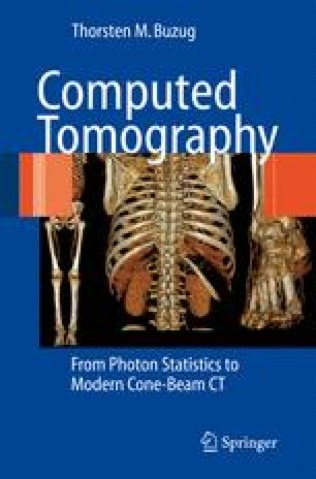
Computed Tomography : From Photon Statistics to Modern Cone-Beam CT
Tis book provides an overview of X-ray technology, the historic developmental milestones of modern CT systems, and gives a comprehensive insight into the main reconstruction methods used in computed tomography.

CO-ENZYME Q10
Coenzyme Q10 (CoQ10) is a fat-soluble compound that is synthesized by the body and can be obtained from the diet. Co-Q10 plays a central role in mitochondrial oxidative phosphorylation and the production of adenosine triphosphate (ATP). It also functions as an antioxidant in cell membranes and lipoproteins. Endogenous synthesis and dietary intake provide sufficient C0- Q10 to prevent deficiency in healthy people, although coenzyme Q10 concentrations in tissues decline with age. Oral supplementation of coenzyme Q10 increases coenzyme Q10 concentrations in plasma and lipoproteins. Oral high-dose co- Q10 is usually effective to treat mitochondrial disorders that are caused by mutations in coenzyme Q10 biosynthetic genes.
Low-Dose Radiation Effects on Animals and Ecosystems : Long-Term Study on the Fukushima Nuclear Accident
Brings together the works of radiation biologists and ecologists to provide reliable radioecology data and gives insight into future radioprotection. The book examines the environmental pollution and radiation exposure, and contains valuable data from abandoned livestock in the ex-evacuation zone and from wild animals including invertebrates and vertebrates, aqueous and terrestrial animals, and plants that are subjected to long-term exposure in the area still affected by radiation. It also analyzes dose evaluation, and offers new perspectives gained from the accident, as well as an overview for future studies to promote radioprotection of humans and the ecosystem.

Knowledge, practices, and awareness of safety risks associated with antiemetic use: A cross-sectional study
Highlighted a high prevalence of self-medication, with most participants keeping these drugs at home due to their accessibility and low cost. A strong correlation was observed between educational level and awareness; individuals with higher education were more likely to seek professional advice and carefully read drug leaflets. Conversely, lower educational groups and younger participants showed a greater tendency to repeat doses without consultation or rely on home remedies.

Complex Motion ; 1st International Workshop, IWCM 2004, Günzburg, Germany, October 12-14, 2004, Revised Papers
The world we live in is a dynamic one: we explore it by moving through it, and many of the objects which we are interested in are also moving. Trafic, for instance, is an example of a domain where detecting and processing visual motion is of vital interest, both in a metaphoric as well as in a purely literal sense. Visual communication is another important example of an area of science which is dominated by the need to measure, understand, and represent visual motion in an eficient way. Visual motion is a subject of research which forces the investigator to deal with complexity; complexity in the sense of facing efiects of motion in a very large diversity of forms, starting from analyzing simple motion in a changing envir- ment (illumination, shadows, . . . ), under adverse observation conditions, such as bad signal-to-noiseratio (low illumination, small-scaleprocesses, low-dosex-ray, etc. ), covering also multiple motions of independent objects, occlusions, and - ing as far as dealing with objects which are complex in themselves (articulated objects such as bodies of living beings). The spectrum of problems includes, but does not end at, objects which are not ‘bodies’ at all, e. g. , when anal- ing fiuid motion, cloud motion, and so on. Analyzing the motion of a crowd in a shopping mall or in an airport is a further example that implies the need to struggle against the problems induced by complexity.

Chemotherapy and pharmacology for leukemia in pregnancy : Guidelines and strategies for best practices
The book addresses a broad range of subjects, including: pregnancy and its characteristics; staging, pathology, morbidity and what to expect in each type of leukemia; chemotherapy for leukemia in pregnant women with complete trials; dose adjustment of chemotherapy for leukemia in pregnancy based on serum dosages; and pharmacokinetics and pharmacodynamics for this unique group of patients. In turn, subsequent chapters focus on protecting the fetus and neonatal management regarding chemotherapy for leukemia in pregnancy, including the treatment and risks for the fetus (for each type of leukemia), intrathecal therapy and its effects on the fetus; supportive drugs, antibiotics and antifungals for pregnant patients during chemotherapy, including intervention and dose adjustments; palliative care for women with leukemia in pregnancy; breastfeeding during treatment for leukemia; pharmacological aspects of supplements, vitamins and nutrition in pregnancy during leukemia treatment; and more.
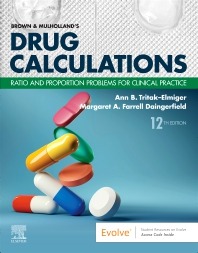
Brown and Mulholland’s drug calculations
A realistic practice problems and unique "proof" step in the answer key that allows you to double-check your answers to avoid medication errors. This edition continues to promote critical thinking, clinical judgment, and patient safety with respect to accurate drug dosages. Helpful worksheets, assessment tests, and Clinical Alerts call attention to situations in actual practice that have resulted in drug errors — giving you extensive hands-on practice for the Next Generation NCLEX® and beyond.
