



الصفحة 1
الصفحة 1

Modeling in Biopharmaceutics, Pharmacokinetics and Pharmacodynamics : Homogeneous and Heterogeneous Approaches
The state of the art in Biopharmaceutics, Pharmacokinetics, and Pharmacodynamics Modeling is presented in this book. It shows how advanced physical and mathematical methods can expand classical models in order to cover heterogeneous drug-biological processes and therapeutic effects in the body. The book is divided into four parts; the first deals with the fundamental principles of fractals, diffusion and nonlinear dynamics; the second with drug dissolution, release, and absorption; the third with empirical, compartmental, and stochastic pharmacokinetic models, and the fourth mainly with nonclassical aspects of pharmacodynamics. The classical models that have relevance and application to these sciences are also considered throughout. Many examples are used to illustrate the intrinsic complexity of drug administration related phenomena in the human, justifying the use of advanced modeling methods.

Interfacial Processes and Molecular Aggregation of Surfactants
Given the enormous interest in surface phenomena in areas ranging from materials science to applications in life science, this volume is a very timely addition to the literature. Emphasis is on surfactants mediating interfacial and molecular aggregation phenomena, and the following topics are reviewed in particular: dissolution rates, equilibrium adsorption, mixing rules, and spreading on a solid surface of surfactants, as well as the role of surfactants in mediating a range of processes, such as the fabrication of various nanomaterials.

In Vitro Drug Release Testing of Special Dosage Forms
Covers the in vitro release testing of: lipid based oral formulations; chewable oral drug products; injectables; drug eluting stents; inhalation products; transdermal formulations; topical formulations; vaginal and rectal delivery systems and ophthalmics. The book concludes with a look at regulatory aspects. Covers both oral and non-oral dosage forms Describes current regulatory conditions for in vitro drug release testing Features contributions from well respected global experts in dissolution testing

Genders in the Life Course : Demographic Issues
Treats the topic of gender and demographic behaviour during the life course in a comprehensive fashion. It covers a lot of ground, from the age at first intercourse over union formation and dissolution, fertility, migration, ageing, to excess male mortality, comparing genders behaviour and its determinants. It reports new findings of empirical research, mostly based on data from a number of European countries, making a good use of the Family and Fertility surveys and other international data base.

Formulating poorly water soluble drugs
A pharmaceutical scientist’s approach toward solubility enhancement of a poorly water-soluble molecule typically includes detailed characterization of the compound’s physiochemical properties, solid-state modifications, advanced formulation design, non-conventional process technologies, advanced analytical characterization, and specialized product performance analysis techniques. The scientist must also be aware of the unique regulatory considerations pertaining to the non-conventional approaches often utilized for poorly water-soluble drugs. One faced with the challenge of developing a drug product from a poorly soluble compound must possess at a minimum a working knowledge of each of the above mentioned facets and detailed knowledge of most. In light of the magnitude of the growing solubility problem to drug development, this is a significant burden especially when considering that knowledge in most of these areas is relatively new and continues to develop.

Enhancing the Dissolution Rate of Atorvastatin by Solid Dispersion Technique
In the last few decades, solid dispersion (SD) technology had been studied as an approach to produce an amorphous carrier to enhance the solubility, dissolution rate, and bioavailability of poorly water-soluble drugs. The use of suitable carrier and methodology in the preparation of SDs play a significant role in the biological behavior of the SDs. Atorvastatin is a statin group HMG-CoA reductase inhibitor drug that is commonly used to adverse cardiovascular events and to lower blood total cholesterol and LDL-cholesterol. the solubility of atorvastatin in water is very low (0.1 mg mL− 1), which results in reduced bioavailability. In order to enhance its solubility, we have prepared solid dispersions (SDs) of atorvastatin at different drug: polymer ratios (1:2, 1:10, 1:20,1:25 and 1:40), using polyethylene glycol 6000 as polymer and different preparation methods (co-precipitate and melting methods) The characterization of the SDs was performed using differential scanning calorimetry (DSC), Fourier transform infrared spectroscopy (FTIR) The solubility of AT was improved by the incorporation PEG6000.

Development and In-vitro Dissolution Test of Pilocarpine PVA : Hydrogel Lenses
Due to high water content of hydrogel (wetting) and due to extended drug release comparing to ophthalmic solution and higher transparency comparing to ophthalmic ointment, soft contact lenses were found to elongate contact time with the eye and use it for long time without causing hypoxia or needing multiple dosing per a day. The objective of the study was to design, fabricate, and investigate the effectiveness of PVA hydrogel with DMSO soft contact lens in releasing the model drug, pilocarpine.
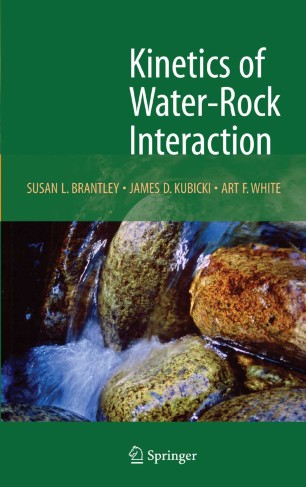
Kinetics of Water-Rock Interaction
Systems at the surface of the Earth are continually responding to energy inputs derived from solar radiation or from the radiogenic heat in the interior. These energy inputs drive plate movements and erosion, exposing metastable mineral phases at the Earth’s surface. In addition, these energy fluxes are harvested and transformed by living organisms. As long as these processes persist, chemical disequilibrium at the Earth’s surface will be perpetuated. Chemical disequilibrium is also driven by human activities related to production of food, extraction of water and energy resources, and burial of wastes. To understand how the surface of the Earth will change over time, we must understand the rates at which reactions occur and the chemical feedbacks that relate these reactions across extreme temporal and spatial scales. This book addresses fundamental and applied questions concerning the rates of water-rock interactions driven by tectonic, climatic, and anthropogenic forcings.
Biopharmaceutics applications in drug development
This book introduces fundamental concepts, methods, and advances in the areas of dissolution, absorption, and permeability and their key applications in dosage form performance. Case studies are used to discuss the applications of biopharmaceutic strategies in the development of successful drugs, with a specific focus on the applications of biopharmaceutic strategies in the development of successful drugs. The book presents an integrated view in linking pharmaceutic to the biological consequences of drug products and leverages those for decision making in drug development.
Biogeochemistry of Trace Elements in Arid Environments
Global warming has worsened the water resource crisis in many arid zones worldwide, from Africa to Asia, affecting millions of people and putting them at risk of hunger. Effective management of arid zone resources, including understanding the risks of toxic trace and heavy elements to humans, coupled with the need to produce more food to feed the world’s growing population, has thus become increasingly important. This very timely book, the only one of its kind on the market, fills the gap of our knowledge of trace elements in these regions. This book begins by introducing the nature and properties of arid zone soil, followed by an updated overview and comprehensive coverage of the major aspects of the trace elements and heavy metals of most concern in the world’s arid and semi-arid soils. These aspects include: - content and distribution - solution chemistry - solid-phase chemistry - selective sequential dissolution techniques - transfer fluxes - bioavailability - pollution and remediation In order to illustrate the themes, a comprehensive and focused case study on transfer fluxes of trace elements in Israeli arid soils is presented. Finally it closes with the global perspectives on anthropogenic interferences in the natural trace elements’ distribution.
25 Years of Transformations of Higher Education Systems in Post-Soviet Countries : Reform and Continuity
A result of the first ever study of the transformations of the higher education institutional landscape in fifteen former USSR countries after the dissolution of the Soviet Union in 1991. It explores how the single Soviet model that developed across the vast and diverse territory of the Soviet Union over several decades has evolved into fifteen unique national systems, systems that have responded to national and global developments while still bearing some traces of the past. The book is distinctive as it presents a comprehensive analysis of the reforms and transformations in the region in the last 25 years; and it focuses on institutional landscape through the evolution of the institutional types established and developed in Pre-Soviet, Soviet and Post-Soviet time. It also embraces all fifteen countries of the former USSR, and provides a comparative analysis of transformations of institutional landscape across Post-Soviet systems.
