



الصفحة 1
الصفحة 1

Moral reasoning at work : Rethinking ethics in organizations ; 2nd ed.
Moral Reasoning at Work offers a fresh perspective on how to live with them using ethics and moral psychology research. It argues that decision-makers must go beyond compliance and traditional approaches to ethics to prepare for moral dilemmas. The book has been updated with a range of examples from the author’s more recent research, to reflect current issues affecting organizations in the digital age. With two new chapters on artificial intelligence and social media, this new edition provides an up-to-date overview of ethical challenges in organizations.

Innovations in landscape architecture
The chapters explore digital technology, design processes and theoretical queries that shape the contemporary practice of landscape architecture. Topics covered include: Digital design Fabrication and prototyping Emerging technology Visualization of data System theory

Higher Education in Romania : Overcoming Challenges and Embracing Opportunities
The book focuses on areas of interest for Romanian higher education, such as systemic measures to improve access, participation and completion for (vulnerable) students, better promotion of the Romanian higher education to attract students, as well as instruments for a more efficient use of data at higher education level. Each article includes evidence-based policy proposals that could support new strategic initiatives in higher education, including new legislation.

European Higher Education Area : Challenges for a New Decade
This book highlights the major outcomes of the fourth edition of the Future of Higher Education – Bologna Process Researchers Conference (January 2020), which has already established itself as a landmark in the European higher education environment.

Digital workflows in architecture : Design - assembly - industry
The logics of digital processes in architecture have begun to structure the way that architects design, the way that builders build, and the way that industry is reorganizing. This book is a reference work on digital technologies as key factors in architectural design, fabrication and workflow organization. It presents essays and case studies from some of the leading voices on the topic.

Digital landscape architecture : Logic, structure, method and application
Readers will get a comprehensive understanding of digital landscape architecture, know about multiple digital methods for landscape planning and design, and learn a lot of practical projects with digital technology.

Digital innovation management : People, process, platforms and policy
Shows how digital innovation management practices can facilitate project coordination aimed at business success while prioritizing environmental and social responsibility. structured around the four pillars of digital innovation (people, process, platforms, and policy), the book illustrates how digital and physical elements of innovation management can be integrated to create new marketing offerings, organizational processes, and business models that align with sustainability and human centric ideals. the book supports a theoretical framing of digital innovation management with case studies of creative digital ecosystems such as smart cities, which leverage integrated digital systems to advance research, innovation, and education. finally, the book provides an analysis of emerging technologies, such as artificial intelligence and blockchain, that may introduce significant digital innovations to make smarter organizations and territories.

Digital fundamentals
For courses in digital circuits, digital systems (including design and analysis), digital fundamentals, digital logic, and introduction to computers Digital Fundamentals, Eleventh Edition, continues its long and respected tradition of offering students a strong foundation in the core fundamentals of digital technology, providing basic concepts reinforced by plentiful illustrations, examples, exercises, and applications.

Computational intelligence for agent-based systems
In these last years the digital technology explosion has spawned so many new lifestyle models that the boundaries between "real" and "digital" are fiercely debated. This scenario has deeply changed the viewpoint about computer applications: computers become smaller, cheapest and hugely distributed in wired or unwired networks, applications become so flexible and intelligent as to tailor its communication facilities in order to increase the usability of the system. Such data-intensive, unstructured spaces featured by minimal or no centralized control flow, present a challenge for traditional methods of analysis, design and integration of advanced, distributed and intelligent computer systems. Within this challenge, an important role is played by two important research areas : Fuzzy Technology, thanks to its ability to exploit the tolerance for imprecision to achieve tractability and Agent Technology, thanks to its nature to employ agent-wise communities to carry out complex goals by means of smart interaction, cooperation, and pro-activeness.

Collaboration in designing a pedagogical approach in information literacy
This book combines expertise in information literacy with expertise in education and teaching to share tips and tricks for the development of good information literacy teaching and training in universities and libraries.

Managing Development and Application of Digital Technologies : Research Insights in the Munich Center for Digital Technology & Management (CDTM)
Digital technology determines today’s world and will be one of the key technologies of the future. Successful technology development, introduction and management are not only a question of technical issues; due to their complexity a close cooperation between different scientific disciplines is required to discuss various consequences, chances and risks from manifold points of view as a starting point for the design of adequate solutions. The ability to integrate business and technology decisions will become a crucial core competence.
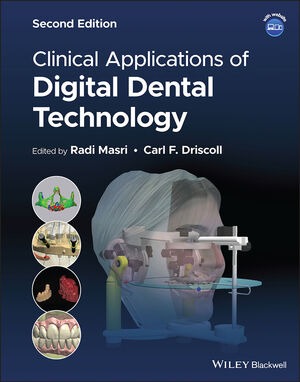
Clinical applications of digital dental technology
Provides comprehensive yet practical references to a wide range of potential uses for digital technology in dental practice, discussing a wide range of digital technologies including their indications, contraindications, advantages, disadvantages, limitations, and applications. Overall, the book emphasizes how to use digital dentistry in daily practice across all specialties. With broad coverage of the subject, Clinical Applications of Digital Dental Technology discusses digital imaging, digital impressions, digital prosthodontics, digital implant planning and placement, and digital applications in endodontics, orthodontics, and oral surgery. Each chapter is written by experts in each topic and covers applications for prosthodontics, implant dentistry, oral surgery, endodontics, orthodontics, and other specialty areas.

Artificiality and sustainability in entrepreneurship : Exploring the unforeseen, and paving the way to a sustainable future
Explores the past, present, and future of artificiality and sustainability in entrepreneurship – the unforeseen consequences and ways to advance to a sustainable future. In particular, it connects artificiality, sustainability and entrepreneurship, intertwining artificial with the specific phenomenon of those novel digital technologies that provoke continuous and significant change in our lives and business. Unlike digital entrepreneurship research, which focuses on digital technology development and management, this book covers processes and mechanisms of sustainable adaptability of entrepreneurs, the business logic of start-ups, and the collaborative behaviours under the mass digital transformation, including the prevalence of artificial intelligence. Some of the questions that this book answers are as follows: How has entrepreneurship reacted to such challenges previously? What lessons have been learned and need to be carried forward? How can entrepreneurship and the artefacts of entrepreneurship respond to current challenges? What should be the mindset of the entrepreneur to assure sustainable adaptation? How to embrace and embed the new business logic?
