



الصفحة 1
الصفحة 1
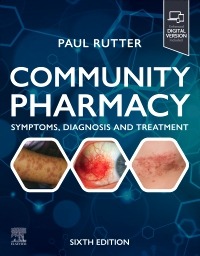
Community pharmacy : symptoms, diagnosis and treatment
Support pharmacists in identifying, diagnosing, treating or referring the illnesses and conditions they will commonly encounter in the community. A logical structure covers the full range of common presentations, including respiratory, ear, eye, gastroenterological and skin conditions. Clear pictures, referral criteria and summaries of treatment options support clinical reasoning, differential diagnosis and selection of appropriate products. Suitable for both pharmacy students and qualified pharmacists, the sixth edition has been fully updated to align with changes to the pharmacy curriculum and the rapidly expanding scope of pharmacists working in primary care and community pharmacy.
Clinical consultation skills in medicine : A primer for MRCP PACES
Follows the revised format of the Practical Assessment Clinical Examination Skills (PACES) exam conducted by the Royal College of Physicians in the UK, where ‘clinical consultation skills’ will be tested twice in two separate stations. Thus, coming closest to what doctors do in real life: obtain a structured history, perform a focussed examination and explain the problem to the patient in lay terms. This book takes readers through a rational approach to 63 common presenting symptoms or laboratory abnormalities in medicine. It is aimed at improving the clinical consultation skills of young doctors and preparing them for the new format of MRCP PACES

100 diagnostic dilemmas in clinical medicine
Presents 100 real-life scenarios seen in the hospital and community setting. A succinct summary of the patient's history, examination and any initial investigations is followed by a detailed consideration of the diagnosis and management of each case, in the short, medium and, where appropriate, long term.

100 cases in acute medicine
A succinct summary of the patient's history, examination and initial investigations, including photographs where relevant, is followed by questions on the diagnosis and management of each case. The answer includes a detailed discussion on each topic, with further illustration where appropriate, providing an essential revision aid as well as a practical guide for students and junior doctors. Making clinical decisions and choosing the best course of action is one of the most challenging and difficult parts of training to become a doctor. Fully revised and updated for this second edition, these cases will teach students and junior doctors to recognize important clinical symptoms and signs, and to develop their diagnostic and management skills.
