



الصفحة 1
الصفحة 1
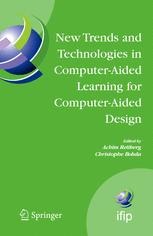
New Trends and Technologies in Computer-Aided Learning for Computer-Aided Design ; IFIP International Working Conference: EduTech 2005, Perth, Australia, October 20-21, 2005
Computation and communication technologies underpin work and development in many different areas. Among them, Computer-Aided Design of electronic systems and E-Learning technologies are two areas which are different but share many concerns. The design of CAD and E-Learning systems already touches on a number of parallels, such as system interoperability, user interfaces, standardization, EML-based formats, reusability aspects (of content or designs), and intellectual property rights. Furthermore, the teaching of Design Automation tools and methods is particularly amenable to a distant or blended learning setting, and implies the interconnection of typical CAD tools, such as simulators or synthesis tools, with e-learning tools. There are many other aspects in which synergy can be found when using E-Learning technology for teaching and learning technology. This workshop, sponsored by IFIP WG 10.5 Design and Engineering of Electronic Systems in cooperation with IFIP WG 3.6 Distance Education, will explore the interrelationship between these two subjects, where Computer-Aided Design meets Computer-Aided Learning. New Trends and Technologies in Computer-Aided Learning for Computer-Aided Design documents recent approaches and results presented at the EduTech 2005 Workshop, which was held in October 2005 in Perth, Australia and sponsored by the International Federation for Information Processing (IFIP). The topics chosen for this working conference are very timely: learning environments, tools and applications for education, education technologies and trends, and teaching in the hardware design area.

Microalgae Building Enclosures : Design and Engineering Principles
Aims to provide design, engineering, and biotechnical guidelines for microalgae building enclosures that need to be considered for symbiotic relations among the built environment, humans, and ecosystems. Introduces the theoretical background of microalgae as a bioremediator and future energy system and their potential roles toward sustainable and healthy built environments. Part II exemplifies interventions and multiple benefits of microalgae systems in product, architecture, urban, and infrastructure applications across the globe including Africa, Asia, Australia, Europe, South America, and North America. Part III explains the design and engineering criteria, biotechnical design requirements, and various performance metrics for microalgae architecture. Finally, Part IV investigates potential building applications in low-rise buildings, high-rise buildings, and energy-efficient retrofitting. The book also includes international case studies of microalgae building systems within various building types and climates.
Evaluation of text summaries based on linear optimization of content metrics
Covers both theoretical contributions and practical applications in security system design by applying the Internet of Things (IoT) and CI. It further explains the application of IoT in the design of modern security systems and how IoT blended with computational intel- ligence can make any security system improved and realizable. Key features: Focuses on the computational intelligence techniques of security system design Covers applications and algorithms of discussed computational intelligence techniques Includes convergence-based and enterprise integrated security systems with their applications Explains emerging laws, policies, and tools affecting the landscape of cyber security Discusses application of sensors toward the design of security systems This book will be useful for graduate students and researchers in electrical, computer engineering, security system design and engineering

Doors : History, repair and conservation
Guides you through the function, history, development, care, repair and conservation of doors by chapter authors who are experts in their field. This book offers depth and range of detail from dating and archaeology right through to the surveying, recording, engineering and curation of the door, its furniture and the part of the building into which it is set.
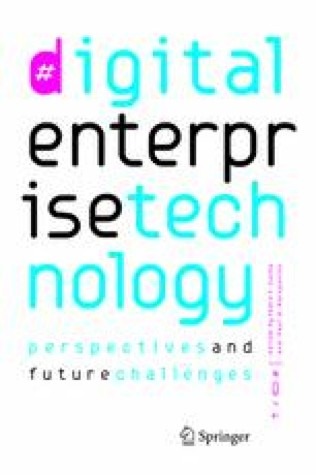
Digital Enterprise Technology : Perspectives and Future Challenges
Digital engineering methods and systems are vitally important for performing key technical and business functions of global enterprises in a distributed and collaborative manner. The product design and engineering systems are gradually being developed to include a variety of tools for DfX, as well as incorporate aspects of digital manufacturing.The chapters presented in this book are contributed by world class leaders in the field. This volume includes relevant examples of current state-of-art in the development and use of systems and methods for the digital modelling of global development and realization processes in the context of life cycle management.

Autonomy oriented computing : From problem solving to complex systems modeling
Autonomy Oriented Computing explores the important theoretical and practical issues in AOC, by analyzing methodologies and presenting experimental case studies. The book serves as a comprehensive reference source for researchers, scientists, engineers, and professionals in all fields concerned with this promising new development in computer science. It can also be used as a main or supplementary text in graduate and undergraduate programs across a broad range of computer-related disciplines, including Robotics and Automation, Amorphous Computing, Image Processing and Computer Vision, Programming Paradigms, Computational Biology, and many others. The first part of the book, Fundamentals, describes the basic concepts and characteristics of an AOC system, and then it enumerates the critical design and engineering issues faced in AOC system development. The second part of the book, AOC in Depth, provides a detailed analysis of methodologies and case studies to evaluate the use of AOC in problem solving and complex system modeling. The final chapter reviews the essential features of the AOC paradigm and outlines a number of possibilities for future research and development.

A Handbook of Sustainable Building Design and Engineering : An Integrated Approach to Energy, Health and Operational Performance
Equips students with the tools they will need to tackle the challenges of sustainable building design and engineering. The book looks at how to design, engineer and monitor energy efficient buildings, how to adapt buildings to climate change, and how to make buildings healthy, comfortable and secure. New material for this edition includes sections on environmental masterplanning, renewable technologies, retrofitting, passive house design, thermal comfort and indoor air quality. With chapters and case studies from a range of international, interdisciplinary authors, the book is essential reading for students and professionals in building engineering, environmental design, construction and architecture
