



الصفحة 1
الصفحة 1

Non-metallic biomaterials for tooth repair and replacement
Focuses on the use of biomaterials for a range of applications in tooth repair and, in particular, dental restoration. Part one reviews the structure, modification and repair of dental tissues. The properties of enamel and dentin and their role in adhesive dental restoration are discussed, along with biomineralization and biomimicry of tooth enamel, and enamel matrix proteins (EMPs) for periodontal regeneration. Part two goes on to discuss the processing, bonding and wear properties of dental ceramics, glasses and sol-gel derived bioactive glass ceramics for tooth repair and replacement. Dental composites for tooth repair and replacement are then the focus of part three, including composite adhesive and antibacterial restorative materials for dental applications. T

Modern Operative Dentistry : Principles for Clinical Practice
Provides the theoretical knowledge required by students when learning how to diagnose oral diseases, plan treatment, and perform various types of dental restoration. It is also useful for clinicians wishing to update their treatment skills and broaden their understanding operative dentistry. Adopting an evidence-based approach, and in accordance with the philosophy of minimally invasive dentistry, it explains in detail the use of both classic and new restorative materials in various clinical situations. It also discusses the principles of smile analysis, as well the technique for esthetic composite restorations on posterior and anterior teeth, including direct and indirect veneers.

Global Diagnosis : A New Vision of Dental Diagnosis and Treatment Planning
The emphasis in the Global Diagnosis system is to determine the etiology of the aberrant gingival positions prior to treatment. The power of the system is that the diagnosis leads to the treatment plan. This book explains the Global Diagnosis system and shows how to diagnose and treat patients based on five CORE questions. Subsequent chapters outline treatment options.

Extra-coronal restorations : Concepts and clinical application
A clinical guide to contemporary materials and techniques for the restoration of individual teeth and implants. It fully reflects the important developments in the field over the past 15 years, including in particular the shift away from wholesale use of crowns towards adhesive dentistry and less invasive extra-coronal restorations. The book opens by considering the principles and evidence base relating to the longevity of restorations of teeth and implants. Importantly, it explains how to ensure "a healthy start" and manage future risks. Material choice and aesthetic issues are then discussed, before all aspects of the planning and provision of extra-coronal restorations are examined in depth. The coverage also includes the adaptation of crowns to existing partial dentures. In line with modern dental education, each chapter begins with clinically relevant learning objectives, and helpful clinical tips are highlighted.

Esthetic & restorative dentistry : Material selection & technique
Provides the most up-to-date information on enhanced developments, materials, and techniques that have emerged since the publication of the second edition, offering the reader a completely updated, revised, and newly illustrated overview of modern esthetic and restorative dentistry complete with tutorial videos. New topics include web-based communication with the laboratory, indirect composite chairside CAD/CAM restorations, a comparison of digital and conventional techniques, the resin composite injection technique, as well as updated information on composites and ceramic systems, including esthetic zirconia. New cases illustrate the maintenance of esthetic restorative materials, esthetic contouring, immediate dentin sealing, and novel surgical techniques such as lip repositioning, connective tissue grafting, and ridge preservation with collagen membranes.

Digital Restorative Dentistry : A Guide to Materials, Equipment, and Clinical Procedures
Offers up-to-date, readily understandable guidance on the materials and equipment employed in digital restorative dentistry and on the specific clinical procedures that may be performed using the new technologies. The key components of digital restorative dentistry – image acquisition, prosthetic/restorative design, and fabrication – are fully addressed. Readers will find helpful information on scanners, the software for prosthetic design, and the materials and technologies for prosthesis fabrication, including laser sintering, 3D printing, CAD/CAM, and laser ablation. The section on clinical procedures explains all aspects of the use of digital technologies in the treatment of patients requiring removable partial dentures, complete dentures, fixed partial prostheses, crowns, endodontics, and implant surgery and prosthodontics. The field of restorative and prosthetic dentistry is undergoing rapid transition as these new technologies come to play an increasingly central role in everyday dental practice. In bridging the knowledge gap that this technological revolution has created in the field of dentistry, the book will satisfy the needs of both dentists and dental students.

Dental Composite Materials for Direct Restorations
Covers both basic scientific and clinically relevant aspects of dental composite materials with a view to meeting the needs of researchers and practitioners. Following an introduction on their development, the composition of contemporary composites is analyzed. A chapter on polymerization explains the setting reactions and light sources available for light-cured composites. The quality of monomer-to-polymer conversion is a key factor for material properties. Polymerization shrinkage along with the associated stress remains among the most challenging issues regarding composite restorations. A new classification of dental composites is proposed to offer more clinically relevant ways of differentiating between commercially available materials.

Dental caries : The disease and its clinical management
In this highly anticipated new edition, the editors maintain the same focus on high-level coverage of the disease etiology and process, clinical management best-practice, and wider public health issues connected with dental caries management, including an enhanced focus on the ‘caries control concept’. The aim is to link theory with clinical performance, making prevention, diagnosis and restorative procedures evidence based. The structure of the book has been completely overhauled, with the same coverage streamlined in order to distil information effectively. The book is divided into six main sections: An overview of the disease and its prevalence / The caries lesion and its biological determinants / Diagnosis / Controlling dental caries / Operative intervention / Caries control in special populations

Deep margin elevation
Deep margin elevation (DME) is a minimally invasive and successful procedure for deep subgingival caries. and evidence among practitioners. This review aims to assess the feasibility of DME, current clinical concepts, techniques, and materials for DME, and compare it with traditional techniques for cervical margin relocation while also considering various clinical parameters.

Craig’s Restorative Dental Materials ; 1st ed.
Covers everything you need to know to understand the science of selecting dental materials when designing and fabricating restorations. It begins with fundamentals and moves on to advanced skills in the manipulation of dental materials, providing insight on the latest advances and research along the way. From an expert author team led by Ronald Sakaguchi, this comprehensive resource is considered to be the standard in the field of dental restorations.

Contemporary Esthetic Dentistry
Covering both popular and advanced cosmetic procedures, Contemporary Esthetic Dentistry enhances your skills in the dental treatments leading to esthetically pleasing restorations. Then covers essential topics such as ultraconservative dentistry, color and shade, adhesive techniques, anterior and posterior direct composites, and finishing and polishing. Popular esthetic treatment options are described in detail, including bleaching or tooth whitening, direct and porcelain veneers, and esthetic inlays and onlays.

Laser in restorative dentistry
The application of lasers in restorative dentistry has revolutionized dental treatments, offering enhanced precision, reduced discomfort, and improved clinical outcomes. Lasers have become a valuable tool in procedures such as cavity preparation, caries removal, tooth whitening, and composite resin curing. Their ability to selectively target diseased tissue while preserving healthy structures minimizes trauma and promotes faster healing. Moreover, lasers offer a less invasive alternative to traditional mechanical methods, often eliminating the need for anesthesia. This technology's versatility allows for its use in both hard and soft tissue treatments, including gingival recontouring and managing peri-implant diseases. As laser technology continues to advance, its integration into restorative dental practices offers significant potential for improved patient care, greater procedural efficiency, and long-term durability of restorations. Future developments in laser applications are expected to expand their role, making them an indispensable asset in modern dentistry.
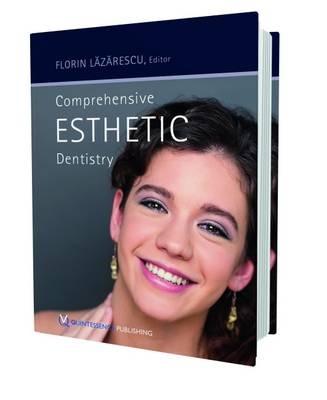
Comprehensive esthetic dentistry
Allows a clinician to shape dental treatment and elevate patient smiles. Based on scientific research, clinical evidence, and the practical experience of the authors, this book is a practical approach to esthetic dentistry.

Comparative analysis of failure mods in fiber posts, ever-x, ribboned fiber and natural teeth (control)
This randomized controlled trial aims to compare the failure modes of different restorative materials, including fiber posts, Ever-X, ribboned fiber, and natural teeth, under mechanical stress. Understanding the failure behavior of these materials will guide clinicians in selecting the most durable and repairable options for dental restorations.

Clinical cases in implant dentistry
Presents 49 actual clinical cases, accompanied by academic commentary, that question and educate the reader about essential topics in implant dentistry, encompassing diagnosis, surgical site preparation and placement, restoration, and maintenance of dental implants. Unique case-based format supports problem-based learning Promotes independent learning through self-assessment and critical thinking Highly illustrated with full-color clinical cases Covers all essential topics within implant dentistry
Bulk Fill Resin Composites in Dentistry : A Clinical Guide
Dedicated to all relevant aspects of bulk fill materials and their uses in clinical practice. Today, we count over 30 different bulk fill materials, which can be used in the dental clinic. The composition of bulk fill materials and their different modes of application for moderate to large direct resin restorations placement are explained in this book. It is written by a group of international specialists and allows the reader to evaluate available materials, learn predictable techniques and evaluate long term survival as well as future developments. The book covers all fields related to the history of bulk fill composites, their composition and physical properties, and a step by step guide to their successful clinical applications.
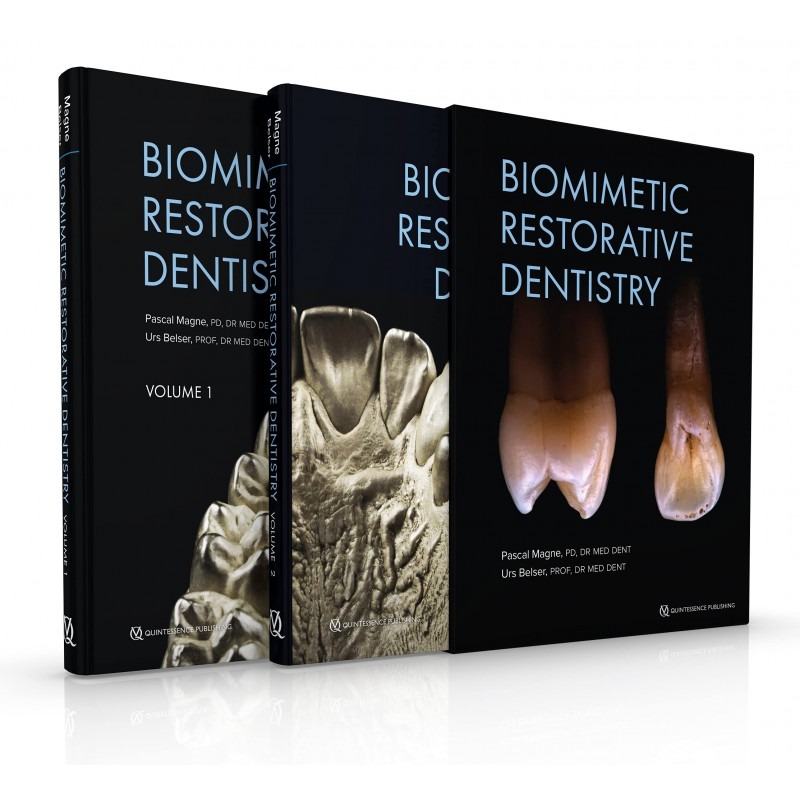
Biomimetic restorative dentistry ; Vol.1 : Fundamentals and basic clinical procedures
Takes the science of esthetic dental reconstruction to a new level both clinically and academically, and it offers all that a clinician could wish for in terms of indications and the classic clinical steps for tooth preparation, laboratory and CAD/CAM procedures, adhesive luting procedures, and maintenance. But above all, what makes this book so unique is the biomimetic principle—as such, restoring or mimicking the biomechanical, structural, and esthetic integrity of teeth is paramount. The core of this book centers on the application of the biomimetic principle in the form of bonded restorations using composite resins and ceramics, covering indications, treatment planning, diagnosis, tooth preparation and impression, laboratory and CAD/CAM procedures, final delivery, follow-up, maintenance, and repair. Written by a true master and artist, this book will undoubtedly inspire excellence in anyone who picks it up.

Biomimetic restorative dentistry
Biomimetic dentistry represents a significant advancement in restorative practices, emphasizing the preservation of natural tooth structure and the use of innovative materials that closely mimic biological tissues. This article explores the potential impact of biomimetic approaches on patient outcomes, highlighting key findings that demonstrate improved longevity of dental restorations and reduced incidence of secondary caries.
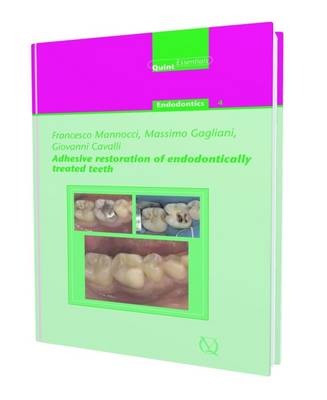
Adhesive restoration of endodontically treated teeth
Dentine bonding systems, composite resins and fibre posts have widely replaced cast posts and amalgam as core materials; all-ceramic and composite crowns have also replaced metal ceramic crowns in many aesthetic cases. The aim of this book is to provide the general practitioner with some principles and techniques for the adhesive restoration of root filled teeth.
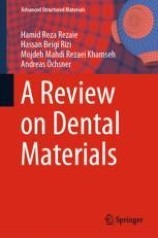
A Review on Dental Materials
A Review on Dental Materials discusses the current biomaterials used for dental applications and the basic sciences underpinning their application.
