



الصفحة 1
الصفحة 1

Nuclear pre-mRNA Processing in Plants
In recent years nuclear pre-mRNA processing has taken center stage as an important regulator of gene expression and ultimately growth and development. Large-scale genome and cDNA sequencing projects together with bioinformatic analyses of these sequences have revealed that alternative splicing of pre-mRNAs contributes greatly to transcriptome and proteome complexity in eukaryotes. During the last few years, tremendous progress has been made in understanding various aspects of pre-mRNA processing including alternative splicing and its importance in plant growth and development as well as in plant responses to hormones and stresses. This book, with contributions from leading scientists in this area, summarizes recent advances in nuclear pre-mRNA processing in plants. It provides researchers in the field, as well as those in related areas, with an up-to-date and comprehensive, yet concise, overview of the current status and future potential of this research in understanding plant biology.

New Issues and Paradigms in Research on Social Dilemmas
This edited volume has been compiled to present new theoretical and methodological developments in the field of social dilemma research. Social dilemmas are situations when there is a conflict between self-interest and collective interest. Research in this area has gained interest in the last twenty years in disciplines such as sociology, psychology, and economics. It also has wide applications to numerous real-world issues including environmental degradation, organizational management, and provision of societal public good. The three sections in the volume mirror the different levels of analysis in this research: the individual, group, and societal levels.

Nanotechnology in therapeutics : Basics and trends
Nanotechnology delivers a unique approach, which promises higher drug efficacy, targeted drug delivery, on demand delivery, biocompatibility, etc. For example, nanotechnology-based delivery systems can protect drugs from degradation and help reduce the number of doses required, make treatment a better experience and reduce treatment expenses and a number of nano-based systems allow delivery of insoluble drugs, allowing the use of previously rejected drugs or drugs which are difficult to administer.

Monitoring and Modelling Lakes and Coastal Environments
Habitat environments of lakes and coastal wetlands are deteriorating due to their exploitative use and improper management. As rapid development and population growth continue in coastal areas, environmental degradation and over exploitation will further erode the biodiversity and undermine the productivity of these unique ecosystems. An earnest attempt has been made in the present book to find ways for restoration, conservation and management of lakes and coastal wetlands.

Modeling of Adhesively Bonded Joints
A lot of recent developments have been made about adhesively bonded joints modeling using various methods of analysis. The increasing application of adhesives in industry is partly due to the increased sophistication and reliability of adhesive joints modeling. The book proposed intends to provide the designer with the most advanced stress analyses techniques in adhesive joints to reinforce the use of this promising bonding technique.

Mitochondria and the Heart
The function of the heart is highly dependent on oxidative energy that is generated in mitochondria. Defects in mitochondrial structure and function can be found in association with cardiovascular diseases. Mitochondria and the Heart discusses the role that mitochondria plays in cardiovascular disease, including biogenesis and function of cardiac mitochondria during normal growth, development and aging. In addition, nonbioenergetic, biogenesis and degradation pathways are explored. Understanding these pathways and the effects that mitochondrial defects have in cardiac pathology is extremely important in establishing the diagnosis and treatment of mitochondrial-based cardiac diseases.

Microorganisms in the deterioration and preservation of cultural heritage
This book offers a comprehensive overview of the role and potential of microorganisms in the degradation and preservation of cultural materials (e.g. stone, metals, graphic documents, textiles, paintings, glass, etc.).

Methods in Gut microbial ecology for ruminants
As a result of various human activities, such as increase in human population,decrease in arable land due to soil degradation, urbanization, industrialization and associated increase in the demand for livestock products, dramatic changes are occurring in the global ruminant livestock sector. These changes includeshift inthesize of regional livestock populations and in the types of management and feeding systems under which ruminant livestock are held, and increased demand of a wider range of quality attributes from animal agriculture, not just of the products themselves but also of the methods used in their production. The livestock sector will need to respond to new challenges of increasing live stock productivity while protecting environment and human health and conservingbiodiversity and natural resources. The micro-organisms in the digestive tracts of ruminant livestock have a profound in?uence on the conversion offeedinto end products, which can impact on the- imal and theenvironment. As the livestock sector grows particularly in developing countries, there will be an increasing need to understand these processes for b- ter management and use ofbothfeed and other natural resources that underpinthe development of sustainable feeding systems.

Mediterranean Land-surface Processes Assessed from Space
1. 1 Space View and Ground Observations 1 1. 2 Mediterranean Climatic Environment 2 1. 3 Processes at Surfaces 10 1. 3. 1 Deforestation and Land-use Changes 10 1. 3. 2 Water Related Problems 16 1. 3. 3 Fire, Grazing, and Land Degradation 19 1. 3. 4 Drought, Floods, Frost, and Desertification 21 1. 3. 5 Coupling Between Surface and Atmosphere: The Role of the Atmospheric Boundary Layer 25 1. 4 Role and Capabilities of Measurements Made From Space 30 1. 4. 1 Research Programmes 30 1. 4. 2 Expected Information 32 1. 4. 3 Research Strategy 33 1. 4. 4 Observation of Changes in Heterogeneous Landscapes: Spatial and Temporal Scales 35 1. 4. 5 Land-surface Change Indicators Observable from Space 36 Spectral Characteristics of Vegetation and Soils (36); Responses of Remote Sensing Signals to Changes of Land-surface Properties (40) 1. 5 About this Book 48 Chapter 2 Processing and Archiving of Satellite and Ancillary Data 51 2. 1 Introduction 51 2. 2 The Remote Sensing Data Base 55 2. 2. 1 Satellite Instruments 55 The NOAA Observing System (55); Meteosat (57); Nimbus-7 (59); Landsat (59); SPOT (61); DMSP (62); ERS-1 and ERS-2 (62); TRMM (63); Terra (64); Envisat (65); Aqua (66) 2. 2. 2 Aircraft Instruments 66 The Use of Aircraft for Land-surface Process Studies (66); AVIRIS (67); TMS (68); AIRSAR (68); DIAL (69) 2. 3 Reception, Acquisition and Availability of Satellite Data 70 2. 3.

Intestinal Microorganisms of Termites and Other Invertebrates
Soil microorganisms play a major role in the degradation and recycling of organic material. Microbes are involved in the food web and strongly contribute to soil fertility. In the past, attention was mainly directed towards free-living or particle-bound microorganisms, while the role of intestinal microbes of soil animals has been neglected. For the first time, "Intestinal Microorganisms of Termites and Other Invertebrates" focuses on the microbes in gut systems of soil animals. It starts with a profound overview of the biology of soil invertebrates. A major part deals with the gut microbiota of termites, the best investigated gut system of invertebrates. Termites are important soil processors in tropical and subtropical regions. Insight is given into the intestinal microbiota of further relevant primary litter decomposers, such as earthworms, springtails, millipeds, and woodlice. Novel techniques for studying intestinal microbes complete the volume.

Increasing climate variability and change : Reducing the vulnerability of agriculture and forestry
One of the major challenges facing humankind is to provide an equitable standard of living for this and future generations: adequate food, water and energy, safe shelter and a healthy environment. Human-induced climate change, and increasing climate variability, as well as other global environmental issues such as land degradation and loss of biological diversity, threaten our ability to meet these basic human needs. It is undisputed that the last two decades have been the warmest this century, and likely to be the warmest for the last 1000 years, sea level is rising, rain and snowfall patterns are changing.

High-Latitude Bioerosion : The Kosterfjord Experiment
Bioerosion is the major force driving the degradation of marine skeletal carbonates and limestone coasts. A wide spectrum of mechanical and/or chemical boring, scraping or crushing organisms break down calcereous substrates, comprising various grazers, macroborers and especially microborers. Their traces on and within hard substrates are known from fossil carbonates as old as the Precambrian and serve as valuable palaeoenvironmental indicators. Bioerosion processes have been extensively studied in tropical seas, while corrsponding investigations from cold-temperate to polar settings remain sparse. For the first time, an experimental study yields insight into the pace of carbonate degradation and the chronology of boring community development along a bathymetric gradient in a high-latitude setting.

HDPE Geomembranes in Geotechnics
HDPE (High-density polyethylene) geomembranes are nowadays widely used for large-area liners and construction sealings in geotechnical engineering. Lining of water ponds, dams and dykes, landfill base liners and cover systems, remediation of contaminated sites, waterproof for tunnels, beneath highways and for various other civil engineering constructions are a few examples of application. The book covers all aspects of the HDPE geomembrane field: HDPE materials, geomembrane manufacture, textured geomembranes, properties, long-term performance and testing, installation and welding of geomembranes, quality assurance and control, leak detection, standards, recommendations and regulations. Various important topics are treated in detail. As part of it, the basic physical and chemical facts necessary to fully understand HDPE geomembrane properties and performance are carefully developed and explained.

Handbook of Biodegradable Materials
Discusses the recent advances in biodegradation technologies and highlights emerging sustainable materials, including environmentally friendly nano-based materials for replacing plastics. It is useful to scientists, engineers, biologists, medical doctors and provides alternative eco-friendly materials to replace the currently used ones with harmful impact on the environment and life. The chapters present different types of alternative materials in diverse areas, such as food packaging materials, materials for construction and agricultural materials. The principles and types of biodegration technologies are described in depth.

Groundwater and Ecosystems
Groundwater Dependent Ecosystems (GDEs) frequently exhibit rich biological diversity and can provide enormous economic wealth. In recent years, GDEs in many industrialized countries have shown signs of serious degradation, primarily the result of groundwater abstraction and pollution. Many such systems, including a number of well documented cases in Eastern Europe, are no longer sustainable. As a consequence, the conservation and sustainable management of GDEs has emerged as one of the most urgent environmental research priorities of our time. A large percentage of the world’s population lives in cities and either depends on, or is affected in some way, by groundwater. Moreover, groundwater has become a very important and complex issue that attracts the interest of many diverse stakeholders. Many problems related to groundwater and ecosystems are shared by countries throughout the world and there is growing recognition that much can be gained by co-operation on an international scale.

Globalisation, Poverty and Conflict : A Critical 'Development' Reader
Is ‘development’ passé? Is it merely a by-product or a ‘trickle down’ effect of economic growth, spurred by globalisation? Will poverty simply diminish with increased global markets? This state-of-the-art critical ‘development’ reader deals with these and related questions. Globalisation, Poverty and Conflict examines the inter-relationships between globalisation, poverty and conflict. It complements current debates in the field of development studies and, in an era in which development fatigue seems to have become more profound than ever before, it brings the importance of development once again to the forefront. Achieving the Millennium Development Goals by 2015 is a concrete target which many governments have agreed to work towards.Whether these goals can be realised is another issue. Nonetheless, the Millennium Development Goals have brought more focused attention to development in the past few years and renewed debate about the relationships between the process of globalisation and widespread poverty and the emergence of violent conflicts. The authors in this edited volume discuss these inter-related and highly controversial topical elements of development in a number of chapters organised around three sets of issues: (1) globalisation, inequality and poverty; (2) governance, civil society and poverty; and (3) resource degradation, institutions and conflict. The contributions represent current thinking on (and practice of) development policy, poverty reduction, the need for multi-level democratic institutions, and the containing and prevention of conflicts. The authors confront the predominant mainstream ideas on ‘development’ and propose alternatives.

Forest Environments in the Mekong River Basin
Deforestation and forest degradation have continued over a long period of time, and the deterioration of forest environment management services is becoming one of the biggest concerns in the world. Especially in large continental river basins, sel? sh political attitudes and individual interests in some regions predispose other regions to problems downstream and bring about international issues. The Mekong is just such a river basin and its water is the most important resource, interdependent with the forest conditions in the region. The lives of millions of people are sustained by the water of the Mekong River, and mutual understanding on water resource mana- ment is essential in this region. Consequently, appropriate environment management to control water resources is required of each country along with scienti? c knowledge of forest management, including forest hydrology.
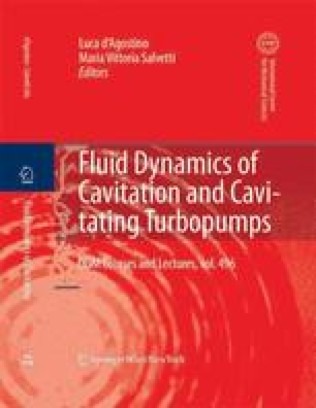
Fluid dynamics of cavitation and cavitating turbopumps
The book focuses on the fluid dynamics of cavitation with special reference to high power density turbopumps, where it represents the major source of performance and life degradation and often generates the conditions for the onset of dangerous fluid dynamic instabilities. To this purpose the first part of the book covers the more fundamental aspects of cavitation (nucleation, bubble dynamics, thermodynamic effects, cavitation erosion, stability of parallel bubbly flows) and the main kinds of cavitating flows (attached cavitation, cloud cavitation, supercavitation, ventilated supercavities, vortex cavitation, shear cavitation). The second part focuses on the hydrodynamics and instabilities of cavitating turbopumps (cavitation surge, rotating cavitation, higher order cavitation surge, rotordynamic whirl forces). Finally, the third part illustrates the alternative approaches for modeling and engineering simulation of cavitating flows.

Ester Boserup’s legacy on sustainability : Orientations for contemporary research
The contents are organized in three sections reflecting important focal points of Boserup’s own work: Long-Term Socio-Ecological Change; Agriculture, Land Use, and Development; and Gender, Population, and Economy. The first three chapters offer a comprehensive review of her political and scientific work. Section Two focuses on the applicability of Boserup’s reflections on land use, technology, and agriculture, incorporating case studies which illuminate and test Boserup’s hypotheses on land use intensification and soil degradation, the impact of population growth on land use, the agricultural transition, and the role of women in development. The case studies examine both long historical time series and present-day dynamics, and explore different levels of geographical scale, from the local to the regional and the global. Section Three emphasizes the key role of women and gender relations for agriculture and development.

Environmental change and human security : Recognizing and acting on hazard impacts
This book focuses on the linkage between human and environmental security and takes both a conceptual and a pragmatic approach to complex environmental issues (such as soil erosion, desertification, water degradation, demographic shifts, food security and agricultural prospects, urbanization trends, hazard-induced migrations) that affect human security. The book is the direct outcome of a NATO Advanced Research Workshop (ARW), sponsored by the Science for Peace and Security Programme (SPS), Salve Regina University, United Nations Environment Programme (UNEP) and the United States Environmental Protection Agency (EPA). The book summarizes the collective work of both natural and social science disciplines in regard to how best address, mitigate, adapt, or achieve resilience
