



الصفحة 1
الصفحة 1

Olfactory knows the truth
Olfaction, the sense of smell detects and discriminate odors as well as social cues which influence our innate responses. The olfactory system in human beings is found to be weak as compared to other animals; however, it seems to be very precise. It can detect and discriminate millions of chemical moieties (odorants) even in minuscule quantities. The sense of smell is greatly underappreciated, despite the fact that it monitors the intake of airborne agents into the human respiratory system and determine to a large degree the flavor and palatability of foods and beverage. In addition to enhancing quality of life, this primary sensory system warns of spoiled foods, leaking natural gas, polluted air and smoke, and mediates basic elements of communication (e.g., mother-infant interaction). It is now apparent that smell dysfunction is among the first clinical signs of such neurodegenerative diseases as Alzheimer’s disease and sporadic Parkinson’s disease.

Nutrition and diet in health: Principles and applications
Food provides us with essential nutrients involved in many physiological activities and biological processes in the body including growth and development, metabolism, immune function, and overall well-being. Nutrition and Diet in Health: Principles and Applications reviews and discusses the issues related to the roles of nutrition and diets in human health and diseases. The book contains two sections - one section features principles, the other, covers applications. Part One provides information on sustainable use of nutrition and diets in health and diseases; advanced biotechnological approaches to improve nutritional content of food; trace elements in nutrition; drug and nutrient interactions; functional foods and nutraceuticals in health maintenance; and Bio markers of functional foods and nutraceuticals in health maintenance. Part Two discusses the significance of nutrition in selected human diseases, including cardiovascular diseases, cancer, infection, neurodegenerative diseases, and metabolic co-morbidities. It also discusses optimal nutrition for wellness, fitness, pregnancy, mental health, aging, and longevity.

Nicotinic Acetylcholine Receptor Signaling in Neuroprotection
Presents the roles and mechanisms of signal transduction triggered by nicotinic acetylcholine receptors (nAChRs) stimulation in neuroprotection against toxic effects of risk factors of neurodegenerative diseases. Accumulating evidence suggests that nAChRs in the CNS play important roles not only in excitatory neurotransmission but also in neuronal survival and related functions. Neuroprotection mediated by nAChRs in neurodegenerative diseases such as Alzheimer's disease is the major topic of this book. In response to rapidly evolving areas in clinical and laboratory neuropharmacology and neurochemistry, this volume provides in-depth coverage of neuroprotection in basic research and future developments in the clinical application of effective neuroprotective strategies in neurodegenerative diseases. This work appeals to both basic and clinical researchers in several fields, such as neuroscience, neurology, and pharmacology.

Neurochemical Aspects of Excitotoxicity
Leading researchers offer cutting-edge information on glutamate metabolism in the brain, examining the role of glutamate transporters and the involvement of glutamate receptors in the pathogenesis of acute neural trauma and neurodegenerative diseases.

Misbehaving Proteins : Protein (Mis)Folding, Aggregation, and Stability
Misfoldedaggregatedproteinoncewasconsideredasinterestingasyesterday’strash—a bothersome by-product of important and productive activities, to be disposed of and forgotten as quickly as possible. Yesterday’s trash has become today’s focus of cons- erable scienti?c interest for at least two reasons: (1) protein aggregates are at the core of a number of chronic degenerative diseases such as Alzheimer’s disease, and (2) - gregation poses signi?cant obstacles to the manufacture of safe, ef?cacious, and stable protein products. As interest in protein misfolding, aggregation, and stability has soared beyond the core group of traditional protein-folding scientists, and as substantial scienti?c progress in understanding and controlling protein misfolding has been achieved, the need to summarize the state of the art became manifest. Although there are many excellent texts and edited collections on protein structure and folding, these volumes tend to relegate protein misfolding and aggregation to a minor role. Review articles and books focused on the biological role of protein aggregates in diseases have been published recently.

Metabolism and Functions of Bioactive Ether Lipids in the Brain
This book will be particularly useful to neuroscience graduate students, academics, and researchers. Clinicians will find this book useful for understanding molecular aspects of neurodegeneration in acute neural trauma and neurodegenerative diseases that are mediated by plamalogen-selective phospholipases A2 and PAF acetyl hydrolases. This monograph is the first to provide a comprehensive description of not only metabolism and role of plasmalogen and platelet activating factor in brain tissue but also the involvement of these lipids with abnormal signal transduction processes in neurological disorders.

Ibuprofen : Clinical Pharmacology, Medical Uses and Adverse Effects
Presents topical research in the study of the clinical pharmacology, medical uses, and adverse effects of ibuprofen. Topics discussed include the occurrence, ecotoxicity and water remediation technologies of ibuprofen in the aquatic environment; associated adverse drug reaction in ibuprofen use; hybrid multifunctional ibuprofen drugs; a pharmaceutical nanotechnology approach to ibuprofen delivery; vibrational dynamics and chiral properties of racemate and pure enantiomers of ibuprofen complexed in cyclodextrins; therapeutic effects of ibuprofen on transgenic mice models of neurodegenerative diseases; and the use of ibuprofen for pain relief in gynecology.

Hormones and the brain
Peripheral hormones have a major impact on the brain: they are able to interfere with its development, to affect release of neurotransmitters and concentrations of receptors, to trigger growth factors involved in lesion repair. These multiple actions account for their capacity to modulate a number of physiological parameters, from reproductive functions to memory, behaviour and aging. Depending upon intensity and duration of exposure, they can be either neuroprotective or neurotoxic, for instance by affecting production of free radicals. This book, based on contributions of pioneer investigators in the field, outlines the ambiguous actions of gonadal steroids (estradiol, progesterone, testosterone, inhibin and activin) and of neurosteroids, related moieties produced in the brain itself. After summarizing their multiple mechanisms of action, which involve both direct effects on neuronal membranes and activation of genes coding for specific proteins in neurons or glial cells, the book outlines the role of hormones in pathogenic processes such as mental disturbances or neurodegenerative diseases.

Heat Shock Proteins and the Brain : Implications for Neurodegenerative Diseases and Neuroprotection
Neurodegenerative disorders such as Alzheimer’s disease, Huntington’s disease, Parkinson’s disease and amyotrophic lateral sclerosis have been termed ‘protein misfolding disorders’ that are char- terized by the neural accumulation of protein aggregates. Manipulation of the cellular stress response involving the induction of heat shock proteins offers a the- peutic strategy to counter conformational changes in neural proteins that trigger pathogenic cascades resulting in neurodegenerative diseases. Heat shock proteins are protein repair agents that provide a line of defense against misfolded, aggregati- prone proteins. Heat Shock Proteins and the Brain: Implications for Neurodegenerative Diseases and Neuroprotection reviews current progress on neural heat shock proteins (HSP) in relation to neurodegenerative diseases (Part I), neuroprotection (Part II), ext- cellular HSP (Part III) and aging and control of life span (Part IV).

Handbook of neurochemistry and molecular neurobiology : Degenerative Diseases of the Nervous System
The Second Edition of the Handbook of Neurochemistry, which was published about 24 years ago, consisted of 10 volumes. In addition to metabolic processes, the 17 new volumes explore the functions of peptides, transport, immunology and other processes not well understood 24 years ago.

Guyton and Hall textbook of medical physiology
Employs a distinctive format to ensure maximum learning and retention of complex concepts. A larger font size emphasizes core information, while supporting information, including clinical examples, are detailed in smaller font and highlighted in pale blue - making it easy to quickly skim the essential text or pursue more in-depth study. This two-tone approach, along with other outstanding features, makes this bestselling text a favorite of students worldwide. Offers a clinically oriented perspective written with the clinical and preclinical student in mind, bridging basic physiology with pathophysiology. Focuses on core material and how the body maintains homeostasis to remain healthy, emphasizing the important principles that will aid in later clinical decision making. Presents information in short chapters using a concise, readable voice that facilitates learning and retention. Contains more than 1,200 full-color drawings and diagrams - all carefully crafted to make physiology easier to understand. Features expanded clinical coverage including obesity, metabolic and cardiovascular disorders, Alzheimer's disease, and other degenerative diseases.

Glycerophospholipids in brain : Phospholipases A2 in Neurological Disorders
This unique volume will be invaluable not only to those interested in biochemical properties of phospholipases A2, but also their involvement in neurological disorders. Students will benefit from it as a supplement for a range of neuroscience courses. Clinicians will find it invaluable as well for understanding molecular aspects of neurodegeneration in acute neural trauma (stroke) and neurodegenerative diseases (Alzheimer disease) that are mediated by phospholipases A2.
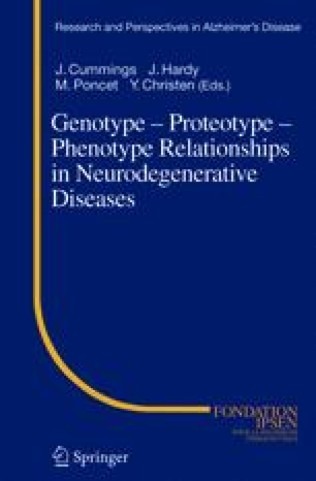
Genotype - Proteotype - Phenotype Relationships in Neurodegenerative Diseases
Improved understanding of role of protein dysmetabolism in neurodegeneration promises to improve diagnoses, facilitate the development of biological markers relevant to disease pathophysiology, and provide tractable therapeutic targets. This Fondation IPSEN conference summary provides an update on the latest advances of the role of protein misfolding in the pathophysiology of neurodegenerative diseases.

Drug discovery and GBCR – Related CNS Disorders
Neurodegenerative diseases are a large group of neurological disorders with diverse etiological and pathological phenomena. However, current therapeutics rely mostly on symptomatic relief while failing to target the underlying disease pathobiology. G-protein-coupled receptors (GPCRs) are one of the most frequently targeted receptors for developing novel therapeutics for central nervous system (CNS) disorders. Many currently available antipsychotic therapeutics also act as either antagonists or agonists of different GPCRs. Therefore, GPCR-based drug development is spreading widely to regulate neurodegeneration and associated cognitive deficits through the modulation of canonical and noncanonical signals.

Delivery of drugs ; Vol.2 : Expectations and realities of multifunctional drug delivery systems
Examines the formulation of micro-nanosized drug delivery systems and recaps opportunities for using physical methods to improve efficacy via mechano-, electroporation. The book highlights innovative delivery methods like PIPAC, including discussions on the regulatory aspects of complex injectables. Written by a diverse range of international researchers from industry and academia, the chapters examine specific aspects of characterization and manufacturing for pharmaceutical applications as well as regulatory and policy aspects.This book connects formulation scientists, regulatory experts, engineers, clinical experts and regulatory stakeholders.

Cyclin Dependent Kinase 5 (Cdk5)
Cyclin Dependent Kinase 5 provides a comprehensive and up-to-date collection of reviews on the discovery, signaling mechanisms and functions of Cdk5, as well as the potential implication of Cdk5 in the treatment of neurodegenerative diseases. Since the identification of this unique member of the Cdk family, Cdk5 has emerged as one of the most important signal transduction mediators in the development, maintenance and fine-tuning of neuronal functions and networking. Further studies have revealed that Cdk5 is also associated with the regulation of neuronal survival during development as well as in neurodegenerative diseases. These observations indicate that precise control of Cdk5 is essential for the regulation of neuronal survival. The pivotal role that Cdk5 appears to play in both the regulation of neuronal survival and synaptic functions thus raises the interesting possibility that Cdk5 inhibitors may have therapeutic potential for the treatment of a number of neurodegenerative diseases.
Lippincott illustrated reviews : Pharmacology
Presents up-to-date drug information in an accessible format ideal for a fast, effective refresher. Part of the popular Lippincott® Illustrated Reviews series, this concise resource features clear, effective writing and hundreds of illustrations that break down complex information for rapid review. Sequential images present mechanisms of action and focus on showing rather than telling students how drugs work, and review questions with answers deliver powerful, practical exam preparation. Updated drug information reflects the most current, clinically relevant pharmacology material. Approachable outline format distills complex information for easier review. High-quality illustrations reinforce understanding in vibrant detail. Enhanced review questions with answers test students' understanding and identify areas for further study.
Cell Therapy, Stem Cells and Brain Repair
As our world continues to evolve, the field of regenerative medicine f- lows suit. Although many modern day therapies focus on synthetic and na- ral medicinal treatments for brain repair, many of these treatments and prescriptions lack adequate results or only have the ability to slow the p- gression of neurological disease or injury. Cell therapy, however, remains the most compelling treatment for neurodegenerative diseases, disorders, and injuries, including Parkinson’s disease, Huntington’s disease, traumatic brain injury, and stroke, which is expanded upon in more detail in Chapter 1 by Snyder and colleagues. Cell therapy is also unique in that it is the only therapeutic strategy that strives to replace lost, damaged, or dysfunctional cells with healthy ones.

Cell therapy stem cells and regenerative medicine
Provides an overview of cell-based therapy for human diseases including the definition, history, and clinical applications of human stem cells and their use in regenerative medicine. It covers human pluripotent stem cells (human embryonic stem cells and human induced pluripotent stem cells), mesenchymal stem/stromal cells, and hematopoietic stem cells, bone marrow mononuclear cells. In terms of clinical applications, this book also provides an update on recent human trials using these cells to treat various diseases, including neurological disorders, pulmonary dysfunctions, metabolic/endocrine-related diseases, frailty, and cancer treatment. In addition, it discusses the authors’ clinical trial experiences related to these conditions in a clinical setting to provide additional insight into regenerative medicine, especially cell-based therapy.

Bone Marrow Derived Progenitors
The ability of stem cells to acquire different desired phenotypes has opened the door for a new discipline: regenerative medicine. Much of the interest for this purpose is generated by embryonic stem cells, but their use is still controversial for moral reasons as well as scientifically. Less controversial and readily available are the adult bone marrow-derived progenitors including hematopoietic stem cells, endothelial progenitors and mesenchymal stem cells. The ambitious goal of this volume is to provide a comprehensive overview of the currently available information related to the therapeutic utility of adult bone marrow-derived cells. Each chapter has been written by an accomplished expert in the field, making this a hugely valuable resource for anyone looking for an up-to-the-minute assessment of current practice in adult bone marrow-derived cell therapy.
