



الصفحة 1
الصفحة 1

Multicriteria Optimization
Decision makers in many areas, from industry to engineering and the social sector, face an increasing need to consider multiple, conflicting objectives in their decision processes. In many cases these real world decision problems can be formulated as multicriteria mathematical optimization models. The solution of such models requires appropriate techniques to compute so called efficient, or Pareto optimal, or compromise solutions that - unlike traditional mathematical programming methods - take the contradictory nature of the criteria into account. This book provides the necessary mathematical foundation of multicriteria optimization to solve nonlinear, linear and combinatorial problems with multiple criteria. Motivational examples illustrate the use of multicriteria optimization in practice. Numerous illustrations and exercises as well as an extensive bibliography are provided.

Intelligent decision support : Current challenges and approaches
This anthology contains contributions addressing current challenges and approaches of intelligent decision support in organizations. The main foci are on: - quantitative decision problems in transportation, production, finance and marketing - business process optimization and information systems design - special problems of intelligent decision support which have their source in areas such as human resources management, information management and economic theory.

Generalized Bounds for Convex Multistage Stochastic Programs
The auther was involved in several industry projects in the field of power management, on the occasion of which I was repeatedly c- fronted with complex decision problems under uncertainty. Although usually hard to solve, I quickly learned to appreciate the benefit of stochastic progr- ming models and developed a strong interest in their theoretical properties. Motivated both by practical questions and theoretical concerns, I became p- ticularly interested in the art of finding tight bounds on the optimal value of a given model. The present work attempts to make a contribution to this important branch of stochastic optimization theory. In particular, it aims at extending some classical bounding methods to broader problem classes of practical relevance.

Developments in language theory ; Vol. 3572 ; 9th International Conference, DLT 2005, Palermo, Italy, July 4-8, 2005, Proceedings
Constitutes the refereed proceedings of the 9th International Conference on Developments in Language Theory, DLT 2005, held in Palermo, Italy in July 2005. Several issues in language theory are addressed including grammars, acceptors, and transducers for strings frees, graphs, and arrays; efficient text algorithms; and more.
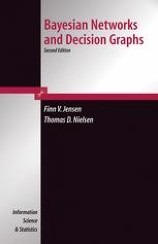
Bayesian Networks and Decision Graphs
Probabilistic graphical models and decision graphs are powerful modeling tools for reasoning and decision making under uncertainty. As modeling languages they allow a natural specification of problem domains with inherent uncertainty, and from a computational perspective they support efficient algorithms for automatic construction and query answering. This includes belief updating, finding the most probable explanation for the observed evidence, detecting conflicts in the evidence entered into the network, determining optimal strategies, analyzing for relevance, and performing sensitivity analysis. The book introduces probabilistic graphical models and decision graphs, including Bayesian networks and influence diagrams.It contians two parts. The first part focuses on probabilistic graphical models. Compared with the previous book, the new edition also includes a thorough description of recent extensions to the Bayesian network modeling language, advances in exact and approximate belief updating algorithms, and methods for learning both the structure and the parameters of a Bayesian network. The second part deals with decision graphs, and in addition to the frameworks described in the previous edition, it also introduces Markov decision processes and partially ordered decision problems.
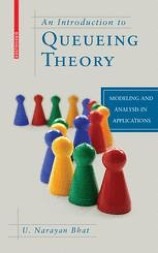
An Introduction to Queueing Theory : Modeling and Analysis in Applications
This introductory textbook is designed for a one-semester course on queueing theory that does not require a course in stochastic processes as a prerequisite. By integrating the necessary background on stochastic processes with the analysis of models, the work provides a sound foundational introduction to the modeling and analysis of queueing systems for a broad interdisciplinary audience of students in mathematics, statistics, and applied disciplines such as computer science, operations research, and engineering.
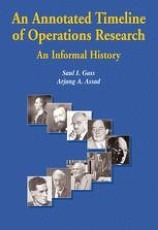
An annotated timeline of operations research: An informal history
An Annotated Timeline of Operations Research: An Informal History recounts the evolution of Operations Research (OR) as a new science - the science of decision making. Arising from the urgent operational issues of World War II, the philosophy and methodology of OR has permeated the resolution of decision problems in business, industry, and government. The Timeline chronicles the history of OR in the form of self-contained, expository entries. Each entry presents a concise explanation of the events and people under discussion, and provides key sources where further relevant information can be obtained. In addition, books and papers that have influenced the development of OR or helped to educate the first generations of OR academics and practitioners are cited throughout the book.

Algebraic informatics ; 2nd International conference, CAI 2007, Thessalonkik, Greece, May 21-25, 2007, Revised Selected and Invited Papers
It covers algebraic semantics on graphs and trees, formal power series, syntactic objects, algebraic picture processing, infinite computation, acceptors and transducers for strings, trees, graphs, arrays, etc., and decision problems.

A Concise Introduction to Mathematical Logic
This book is unique in that it is more concise than most others; the material is treated in a streamlined fashion. This allows the lecturer to select the material for a one-semester course on a topic more easily. These initial chapters cover just the material for an introductory course on mathematical logic combined with the necessary material from set theory. Chapter 3 is partly of a descriptive nature, providing a view towards decision problems, automated theorem proving, non-standard models and related subjects. The other chapters contain material on logic programming for computer scientists, model theory, recursion theory, Gödel's Incompleteness Theorems, and applications of mathematical logic. Philosophical and foundational problems of mathematics are discussed where appropriate.
