



الصفحة 1
الصفحة 1

New horizons for a data-driven economy : A roadmap for usage and exploitation of big data in Europe
The book is structured in four parts: Part I “The Big Data Opportunity” explores the value potential of big data with a particular focus on the European context. It also describes the legal, business and social dimensions that need to be addressed, and briefly introduces the European Commission’s BIG project. Part II “The Big Data Value Chain” details the complete big data lifecycle from a technical point of view, ranging from data acquisition, analysis, curation and storage, to data usage and exploitation. Next, Part III “Usage and Exploitation of Big Data” illustrates the value creation possibilities of big data applications in various sectors, including industry, healthcare, finance, energy, media and public services. Finally, Part IV “A Roadmap for Big Data Research” identifies and prioritizes the cross-sectorial requirements for big data research, and outlines the most urgent and challenging technological, economic, political and societal issues for big data in Europe.

Morphometrics with R
The R language and environment offers a single platform to perform a multitude of analyses from the acquisition of data to the production of static and interactive graphs. This offers an ideal environment to analyze shape variation and shape change. This open-source language is accessible for novices and for experienced users. Adopting R gives the user and developer several advantages for performing morphometrics: evolvability, adaptability, interactivity, a single and comprehensive platform, possibility of interfacing with other languages and software, custom analyses, and graphs. The book explains how to use R for morphometrics and provides a series of examples of codes and displays covering approaches ranging from traditional morphometrics to modern statistical shape analysis such as the analysis of landmark data, Thin Plate Splines, and Fourier analysis of outlines.
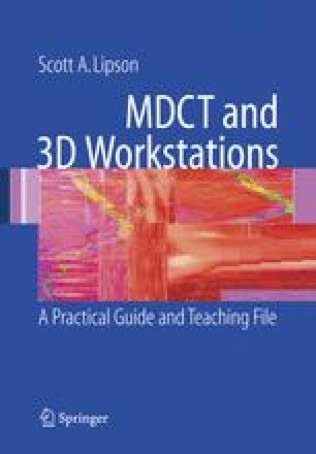
MDCT and 3D Workstations : A Practical How-To Guide and Teaching File
Written by Scott A. Lipson, MD, an authority in the field, this book is ideal for radiologists, radiology residents, and CT technologists who are getting started in multidetector CT or who want to improve and optimize their CT service. This concise guide and teaching file is the perfect introduction to MDCT volumetric imaging and 3D workstations. Intended to serve as a practical, easy-to-read systematic learning tool, the book begins by introducing the reader to the process of image data acquisition, CT protocols, image reconstruction and review, 3D workstations, clinical workstation use, and CT workflow efficiency. The second section of this book is a volumetric imaging teaching file.

Introduction to data systems : Building from Python
Encompassing a broad range of forms and sources of data, this textbook introduces data systems through a progressive presentation. Introduction to Data Systems covers data acquisition starting with local files, then progresses to data acquired from relational databases, from REST APIs and through web scraping. It teaches data forms/formats from tidy data to relationally defined sets of tables to hierarchical structure like XML and JSON using data models to convey the structure, operations, and constraints of each data form.

Interfacing with C++ : Programming Real-World Applications
This book is for people who are interested in learning and exploring electronic interfacing as well as C++ programming in a practicable and enjoyable way. Readers will learn to program a PC to do real-world things - not simply number crunching and graphics. They will also master how to write programs that interact with real-world devices. The book and accompanying software incorporate simple and easy-to-understand projects such as digital-to-analog conversion, analog to digital conversion, DC and Stepper motor control, temperature and voltage measurement, PC-based timing, or basic data acquisition.

Handbook of networked and embedded control systems
The Handbook of Networked and Embedded Control Systems, the first of its kind, provides engineers, computer scientists, mathematicians, and students a broad, comprehensive source of information and technology to address many questions and aspects of embedded and networked control. A carefully organized collection of important results, tools, software, and technology, this work unifies into a single reference many scattered articles, websites, and specification sheets—information that might otherwise be difficult to find.

Frontiers of Digital Transformation : Applications of the Real-World Data Circulation Paradigm
Proposing the concept of real-world data circulation (RWDC), this book presents various practical and industry-related studies in human, mechanical, and social data domains. RWDC is a new field of study, established by the information technology (IT) community.

Fringe 2005 ; The 5th International Workshop on Automatic Processing of Finge Patterns
In 1993 new prin- ples of optical shape measurement, setup calibration, phase unwr- ping and nondestructive testing were the focus of discussion, while in 1997 new approaches in multi-sensor metrology, active measu- ment strategies and hybrid processing technologies played a central role.

Forest Inventory : Methodology and Applications
This book has been developed as a forest inventory textbook for students and can also serve as a handbook for practical foresters. The book is divided into four sections. The first section deals mostly with sampling issues. First, we present the basic sampling designs at a fairly non-technical mathematical level. In addition, we present some more advanced sampling issues often needed in forest inventory. Those include for instance problems with systematic sampling, and methods for sampling vegetation or rare populations. Forest inventory also includes issues that are unique to forestry, like problems in measuring sample plots in the field, or utilising sample tree measurements. These issues include highly sophisticated methodology, but we try to present these also such that forestry students can grasp the ideas behind them. Each method is presented with examples. For foresters who need more details, references are given to more advanced scientific papers and books in the fields of statistics and biometrics.

Experimental vibration analysis for civil structures : Testing, sensing, monitoring, and control
Covers a wide range of topics in the areas of vibration testing, instrumentation, and analysis of civil engineering and critical infrastructure. It explains how recent research, development, and applications in experimental vibration analysis of civil engineering structures have progressed significantly due to advancements in the fields of sensor and testing technologies, instrumentation, data acquisition systems, computer technology, computational modeling and simulation of large and complex civil infrastructure systems. The book also examines how cutting-edge artificial intelligence and data analytics can be applied to infrastructure systems.

Emerging Technologies in Oral and Maxillofacial Surgery
Covers the application of emerging technologies, occurring after the 4th industrial revolution, in oral and maxillofacial surgery (OMFS) and introduces a new era of personalized medicine in this discipline. It describes the manufacturing and data acquisition methods, in detail, including the advantages and disadvantages of each process. The workflow of using the emerging technologies in reconstructive treatments, orthognathic surgery, implant dentistry, robotic surgery and bio‑fabrication have been covered in separate chapters.

Distributed Cooperative Laboratories : Networking, Instrumentation, and Measurements
This is a highly interdisciplinary topic, where various aspects converge: multimedia communications and networking, sensor networks, Grid technology, Quality of Service (QoS) provisioning and control, network management, measurement instrumentation and methodology, architecture of measurement systems. The material is organized into six parts: Technologies for Real-Time Interactive Multimedia Communications; Monitoring, Management and Configuration of Networks and Networking Devices; Data Acquisition and Aggregation in Sensor Networks; Grid Structures for Distributed Cooperative Laboratories; Architectures and Techniques for Tele-Measurements; Virtual Immersive Communications and Distance Learning. Each contribution presents a self-contained treatment, within a framework that provides the reader with an up-to-date picture of the most recent state-of-the-art developments.

Disruptive trends in automation technology
The industrial sector is being transformed by the convergence of information technology and operational technology. The latter is another name for automation technology and covers established systems such as supervisory control and data acquisition (SCADA), programmable logic controllers (PLC), fieldbuses, and automation and control systems. As this technology is connected to the Internet and 5G networks, some monitoring, control, and analytic functionalities are deployed to the edge or cloud, and researchers are challenged to ensure the security, dependability, real-time performance, and maintainability of the resulting systems. The big data that is accessible from these systems create opportunities for artificial intelligence applications that can further disrupt the established practices in the automation domain.

Directions in strong motion instrumentation ; Proceedings of the NATO SFP Workshop on Future Directions in Instrumentation for Strong Motion and Engineering Seismology, Kusadasi, Izmir, May 17-21, 2004
This book, which contains papers by invited authorities, represents a unique interaction between seismologists and earthquake engineers who examine issues of mutual concern in an overlapping area of major interest. The papers have been grouped around three major areas. -Seismic Hazard and Extreme Motions -Engineering Uses of Strong Motion Seismograms -Arrays and Observations.

Deep learning and computer vision in remote sensing-II
Computer vision (CV) have seen a massive rise in popularity in the remote sensing field over the last few years. This success is mostly due to the effectiveness of deep learning (DL) algorithms. However, remote sensing data acquisition and annotation, as well as information extraction from massive remote sensing data, are still challenging. This reprint collected novel developments in the field of deep learning and computer vision methods for remote sensing. Papers dealing with fundamental theoretical analyses, as well as those demonstrating their application to real-world problems, have been published. With practical examples and real-world case studies, this reprint provides a valuable resource for researchers, professionals, and students seeking to harness the power of deep learning in the field of remote sensing.

Deep learning and computer vision in remote sensing-I
In the last few years, huge amounts of progress have been made regarding remote sensing in the field of computer vision. This success and progress is mostly due to the effectiveness of deep learning (DL) algorithms. In addition, the remote sensing community has shifted its attention to DL, and DL algorithms have been used to achieve significant success in many image analysis tasks. However, with regard to remote sensing, a number of challenges caused by difficulties in data acquisition and annotation have not been fully solved yet. This reprint is a collection of novel developments in the field of remote sensing using computer vision, deep learning, and artificial intelligence. The articles published involve fundamental theoretical analyses as well as those demonstrating their application to real-world problems.

Decoding the city urbanism in the Age of Big Data
Shows how Big Data change reality and, hence, the way we deal with the city. They demonstrate how the Lab interprets digital data as material that can be used for the formulation of a different urban future. The publication also looks at the negative aspects of the city-related data acquisition and control.
Managing Distributed Cloud Applications and Infrastructure : A Self-Optimising Approach
The emergence of the Internet of Things (IoT), combined with greater heterogeneity not only online in cloud computing architectures but across the cloud-to-edge continuum, is introducing new challenges for managing applications and infrastructure across this continuum.

Machine learning and data mining for sports analytics ; 7th international workshop, MLSA 2020, Co-located with ECML/PKDD 2020, Ghent, Belgium, September 14–18, 2020, Proceedings
Constitutes the refereed post-conference proceedings of the 7th International Workshop on Machine Learning and Data Mining for Sports Analytics, MLSA 2020, colocated with ECML/PKDD 2020, in Ghent, Belgium, in September 2020. The 11 papers presented were carefully reviewed and selected from 22 submissions. The papers present a variety of topics within the area of sports analytics, including tactical analysis, outcome predictions, data acquisition, performance optimization, and player evaluation.

ITI treatment guide ; Vol.11 : Digital workflows in implant dentistry
Addressing the technology and tools necessary to incorporate DDT into a traditional workflow, along with the clinical steps required for data acquisition, such as CBCT imaging and intraoral, extraoral, and facial scanning. The software tools needed to interpret the digital data are presented, and instructions are given on how to integrate data sets to virtually reconstruct the patient s orofacial anatomy. In addition, a series of 13 clinical cases illustrate digital technologies applied to oral implantology.
