



الصفحة 1
الصفحة 1

Handbook of damage mechanics : Nano to macro Scale for materials and structures
A wide range of materials that engineers may encounter are covered, including metals, composites, ceramics, polymers, biomaterials, and nanomaterials. The internationally recognized team of contributors employs a consistent and systematic approach, offering readers a user-friendly reference that is ideal for frequent consultation.

Fracture Mechanics : With an Introduction to Micromechanics
Concerned with the fundamental concepts and methods of fracture mechanics and micromechanics, Fracture Mechanics primarily focuses on the mechanical description of fracture processes; however, material specific aspects are also discussed. The presentation of continuum mechanical and phenomenological foundations is followed by an introduction into classical failure hypotheses. A major part of the book is devoted to linear elastic and elastic-plastic fracture mechanics. Further subjects are creep fracture, dynamic fracture mechanics, damage mechanics, probabilistic fracture mechanics, failure of thin films and fracture of piezoelectric materials. The book also contains an extensive introduction into micromechanics.

Fire properties of polymer composite materials
This book is the first to deal comprehensively with the important topic of the fire behaviour of polymer composite materials. Composites are used in a diverse range of applications, including land and marine transport, aerospace, the chemical industry, and most branches of civil engineering infrastructure. It is our belief that fire behaviour is the single most important factor limiting the wider use of composites in many of these areas. Our aim in producing this volume is therefore to stimulate the work that is needed to overcome this fundamental problem. The first step in such a journey is, of course, to summarise what is presently known, which is what we have attempted here. The book covers all of the key issues on the behaviour of polymer composites in fire.

Engineering Damage Mechanics : Ductile, Creep, Fatigue and Brittle Failures
Engineering Damage Mechanics is deliberately oriented toward applications of Continuum Damage Mechanics to failures of mechanical and civil engineering components in ductile, creep, fatigue and brittle conditions depending upon the thermomechanical loading and the materials: metals and alloys, polymers, elastomers, composites, concretes. Nevertheless, to help engineers, researchers, beginners or not, the first two chapters are devoted to the main concepts of damage mechanics and to the associated computational tools.

Elasto-plastic damage behaviour of concrete elements
Shows how the mechanical phenomena of familiar concrete structures can be expressed using mathematical models and provides a solid basic understanding of the nonlinear behaviour of concrete structures. It applies elasto-plastic theory to damage mechanics and the modelling of cracks in concrete. Sets out the reality of damage mechanics in concrete Connects standard theory with good design and construction practice

Creep Mechanics ; 2nd ed.
The monograph offers an overview of other experimental investigations in creep mechanics. Rules for specifying irreducible sets of tensor invariants, scalar coefficients in constitutive and evolutional equations, and tensorial interpolation methods are also explained.
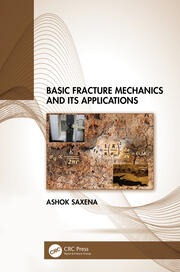
Basic Fracture Mechanics and its Applications
Presents specific aspects of how fracture mechanics is used to address fatigue crack growth, environment assisted cracking, and creep and creep-fatigue crack growth. Other topics include mixed-mode fracture and materials testing and selection for damage tolerant design, alongside in-depth discussions of ensuring structural integrity of components through real-world examples. There is a strong focus throughout the book on the practical applications of fracture mechanics. It provides a clear description of the theoretical aspects of fracture mechanics and also its limitations.
