



الصفحة 1
الصفحة 1

Icons of Space : Advances in Hierotopy
Brings together important scholars of Byzantine religion, art, and architecture, to honour the work of renowned art historian Alexei Lidov. As well as his numerous publications, Lidov is well known for developing the concept of hierotopy, an innovative approach for studying the creation of sacred spaces. Hierotopy and the related concepts of ‘spatial icons’ and ‘image-paradigms’ emphasize fundamental questions about icons, including what defines them as structures, spaces, and experiences.

Herbals of Asia : Prevalent diseases and their treatments
Excellent source of information by identifying hundreds of medicinal herbs and unfolding their medicinal uses for treatment of prevalent diseases Presents recent developments in research on medicinal plants for different diseases, formulation of products, and market strategy Research scholars in relevant field, health practitioners, herbalists and pharmaceutical industries will benefit from the text’s rich list of references as well as plant field photographs Demonstrates the global relevance of sharing local knowledge, and highlights the need to make information on plants available on a worldwide basis

Forest Policies and Social Change in England
The book stresses how values and perceptions shape policies, and conversely how policies can modify perceptions, and also how policies can fail if they do not take perceptions into account. She concludes that many of the issues facing English forestry in the 21st century – from leisure, health and amenity provision, through education and rural as well as urban regeneration, to biodiversity conservation – go well beyond both national borders and the scope of forestry. This novel synthesis provides a valuable resource for advanced students and researchers from all areas of natural resource studies, including those interested in social history, socio-economics, cultural geography and environmental psychology, as well as those studying landscape ecology, environmental history, policy analysis and natural resource management.
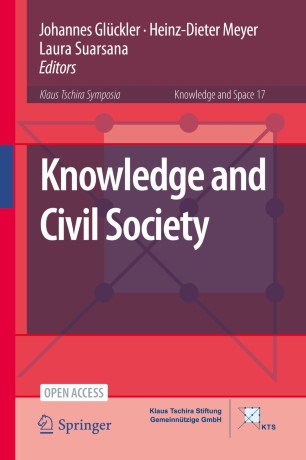
Knowledge and Civil Society
Focuses on the role of civil society in the creation, dissemination, and interpretation of knowledge in geographical contexts. It offers original, interdisciplinary and counterintuitive perspectives on civil society. The book includes reflections on civil and uncivil society, the role of civil society as a change agent, and on civil society perspectives of undone science. Conceptual approaches go beyond the tripartite division of public, private and civic sectors to propose new frameworks of civic networks and philanthropic fields, which take an inclusive view of the connectivity of civic agency across sectors.
