



الصفحة 1
الصفحة 1

Nitrogen-fixing Actinorhizal Symbioses
This book is the self-contained sixth volume of a comprehensive series on nitrogen fixation. It presents the state-of-the-art in regards to actinorhizal symbioses. Like legumes, actinorhizal plants form root nodules that host nitrogen-fixing soil bacteria. However, because the macrosymbionts are, with one exception, woody plants rather than crop plants, actinorhizal symbioses are less well-known than legume symbioses to which they are phylogenetically related. Actinorhizal plants come from eight different families. This volume includes chapters that deal with all these aspects of the symbiosis and both symbionts plus their ecological role and use. Other chapters tackle the global distribution of different actinorhizal plants and their microsymbionts and how this impacts the question of co-evolution of the micro- and macrosymbionts as well as comparing the actinorhizal and leguminous symbioses.

Nitric oxide in plants : A molecule with dual roles
Studies have identified the central role of nitric oxide in stress mitigation through the modulation of physiological and biochemical pathways including germination, photosynthesis regulation, and programmed cell death. Nitric Oxide in Plants: A Molecule with Dual Roles provides a detailed account of the physio-biochemical, molecular, and omic basis of NO-mediated responses in crop plants under different stresses.

Natural Resistance Mechanisms of Plants to Viruses
Resistance phenomena such as the local lesion response, induced resistance, "green islands" and resistance in various crop plants are linked with new information on gene-silencing mechanisms, gene silencing suppressors, movement proteins and plasmodesmatal gating, downstream signalling components, and more.

Molecular Marker Systems in Plant Breeding and Crop Improvement
Successful release of new and better crop varieties increasingly requires genomics and molecular biology. This volume presents basic information on plant molecular marker techniques from marker location up to gene cloning. The text includes a description of technical approaches in genome analysis such as comparison of marker systems, positional cloning, and array techniques in 19 crop plants. A special section focuses on converting this knowledge into general and specific breeding strategies, particularly in relation to biotic stress. Theory and practice of marker assisted selection for QTL, gene pyramiding and the future of MAS are summarized and discussed for maize, wheat, and soybean. Furthermore, approaches in silviculture on the examples of Fagus, Populus, Eucalyptus, Picea and Abies are presented. The volume ends with a comprehensive review of the patents relevant for using molecular markers and marker assisted selection.

Improvement of Crop Plants for Industrial End Uses
This book provides concerns useful to promote an increase of the productivity of crops by using functional genomics (to understand the regulation of plant metabolism at molecular, cellular and whole plants), and the improvement of photosynthetic efficiency (to design new plants with enhanced raw materials percent and recovery).

Genomics-assisted crop improvement ; Vol.1 : Genomics approaches and platforms
Genomics research has great potential to revolutionize the discipline of plant breeding. This two-volume set provides a critical assessment of genomics tools and approaches for crop breeding. Volume 1, entitled "Genomics Approaches and Platforms", illustrates state-of-the-art genomics approaches and platforms presently available for crop improvement.

Genomics of Tropical Crop Plants
Genomics of Tropical Crop Plants summarizes recent progress on genomic research, including the development of molecular markers, genomic and cDNA libraries, expressed sequence tags (ESTs), genetic and physical maps, gene expression profiles, and whole genome sequences for 20 tropical crop plants. It offers background information about the evolutionary origin and environments of tropical crop species, international programs that are addressing the needs of tropical agriculture, and the potential for new technologies to increase the productivity and value of tropical crops. This book provides new dimensions to growing information concerning temperate crops and their morphology, physiology, and parallel evolution in diverse plant lineages.

Fruits and Nuts
Genome Mapping and Molecular Breeding in Plants presents the current status of the elucidation and improvement of plant genomes of economic interest. The focus is on genetic and physical mapping, positioning, cloning, monitoring of desirable genes by molecular breeding and the most recent advances in genomics. The series comprises seven volumes: Cereals and Millets; Oilseeds; Pulses, Sugar and Tuber Crops; Fruits and Nuts; Vegetables; Technical Crops; and Forest Trees. Fruits and nuts form the largest group among crop plants. Several constraints such as long life cycle, heterozygosity and large plant size caused comparatively slow research progress in the past. The chapters on 20 fruit and nut crops authored by 56 renowned scientists from 12 countries include for the first time comprehensive reviews on mango, banana, olive, pineapple, pistachio, persimmon and papaya. Other crops covered are apple, grape, cherry, plum, peach, pear, apricot, strawberry, raspberry, blueberry, almond, citrus and avocado.
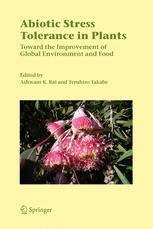
Abiotic Stress Tolerance in Plants : Toward the Improvement of Global Environment and Food
Stresses in plants caused by salt, drought, temperature, oxygen, and toxic compounds are the principal reason for reduction in crop yield. For example, high salinity in soils accounts for large decline in the yield of a wide variety of crops world over; ~1000 million ha of land is affected by soil salinity. Increased sunlight leads to the generation of reactive oxygen species, which damage the plant cells. The threat of global environment change makes it increasingly demanding to generate crop plants that could withstand such harsh conditions. Much progress has been made in the identification and characterization of the mechanisms that allow plants to tolerate abiotic stresses.
