



الصفحة 1
الصفحة 1

Molecular Marker Systems in Plant Breeding and Crop Improvement
Successful release of new and better crop varieties increasingly requires genomics and molecular biology. This volume presents basic information on plant molecular marker techniques from marker location up to gene cloning. The text includes a description of technical approaches in genome analysis such as comparison of marker systems, positional cloning, and array techniques in 19 crop plants. A special section focuses on converting this knowledge into general and specific breeding strategies, particularly in relation to biotic stress. Theory and practice of marker assisted selection for QTL, gene pyramiding and the future of MAS are summarized and discussed for maize, wheat, and soybean. Furthermore, approaches in silviculture on the examples of Fagus, Populus, Eucalyptus, Picea and Abies are presented. The volume ends with a comprehensive review of the patents relevant for using molecular markers and marker assisted selection.

Haploids in Crop Improvement II
This volume provides an excellent overview of haploid induction and the application of doubled haploids. The authors emphasize advances made in the understanding of microspore embryogenesis, but treat also advances in gynogenesis and the manipulation of parthenogenetic haploid development. The text contains a thorough discussion of the application of haploidy to the improvement of a number of species from various families.

Genomics-assisted crop improvement ; Vol.2 : Genomics applications in crops
Genomics research has great potential to revolutionize the discipline of plant breeding. This two-volume set provides a critical assessment of genomics tools and approaches for crop breeding. Volume 2, entitled "Genomics Applications in Crops", compiles crop-specific studies that summarize both the achievements and limitations of genomics research for crop improvement.

Genomics-assisted crop improvement ; Vol.1 : Genomics approaches and platforms
Genomics research has great potential to revolutionize the discipline of plant breeding. This two-volume set provides a critical assessment of genomics tools and approaches for crop breeding. Volume 1, entitled "Genomics Approaches and Platforms", illustrates state-of-the-art genomics approaches and platforms presently available for crop improvement.
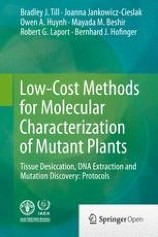
Low-cost methods for molecular characterization of mutant plants : Tissue desiccation, DNA extraction and mutation discovery : Protocols
Offers low-cost and rapid molecular assays for the characterization of mutant plant germplasm. Detailed protocols are provided for the desiccation of plant tissues; the extraction of high-quality DNA for downstream applications; the extraction of single-strand-specific nucleases for single nucleotide polymorphism; and small insertion/deletion discovery using standard agarose gel electrophoresis. The methods described can be applied in any laboratory equipped for basic molecular biology and do away with the need for expensive freezers and toxic organic compounds.
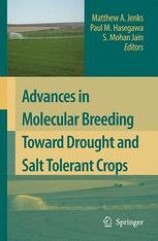
Advances in Molecular Breeding Toward Drought and Salt Tolerant Crops
Advances in Molecular Breeding toward Drought and Salt Tolerant Crops seeks to integrate the most recent findings about key biological determinants of plant stress tolerance with modern crop improvement strategies. This volume is unique because is provides exceptionally wide coverage of current knowledge and expertise being applied in drought and salt tolerance research, spanning the scientific hierarchy from physiology, biochemistry, development, and genetics, to the newest technologies being used to manipulate drought and salinity associated traits for germplasm improvement. This book will be an invaluable reference for educators and researchers in agronomy and horticulture, crop breeding, molecular genetics, and biotechnology.
