



الصفحة 1
الصفحة 1

Nature, Value, Duty : Life on Earth with Holmes Rolston, III
"Nature Value and Duty: Life on Earth with Holmes Rolston, III" is a collection of contemporary writings on the work of Holmes Rolston, III. The authors contributing to this volume are a mixture of senior scholars in environmental ethics and new voices in philosophy and in literature. Together they provide an in depth evaluation of many of the topics discussed by Rolston. They probe the strengths and weaknesses of his work and suggest valuable correctives. Rolston himself, in a detailed reply to each of his critics at the end of the volume, reveals where some of these criticisms sting him the most and in the process provides one of the most detailed and articulate defenses of his position ever offered."

Mysteries of the Rectangle : Essays on painting
In Mysteries of the Rectangle, Hustvedt concentrates her narrative gifts on the works of such masters as Francisco Goya, Jan Vermeer, Jean-Baptiste-Siméon Chardin, Gerhard Richter, and Joan Mitchell. Through her own personal experiences, Hustvedt is able to reveal things until now hidden in plain sight: an egglike detail in Vermeer's Woman with a Pearl Necklace and the many hidden self-portraits in Goya's series of drawings, Los Caprichos, as well as in his infamous painting The Third of May. Most importantly, these essays exhibit the passion, thrill, and sheer pleasure of bewilderment a work of art can produce—if you simply take the time to look.
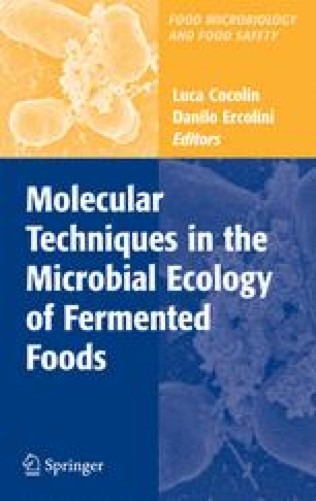
Molecular Techniques in the Microbial Ecology of Fermented Foods
Molecular Methods and Microbial Ecology of Fermented Foods presents the latest findings in microbial ecology as determined by the application of molecular methods, reports the most recent advances in the field, and offers details on primers and protocols most suitable for studying specific food ecosystems. It provides analytical details and suggestions useful in research, as well as evaluation of the criticism of using novel approaches in food fermentation microbiology. This book also discusses new insights drawn from the use of bio-molecular techniques in the microbial ecology of fermented foods.
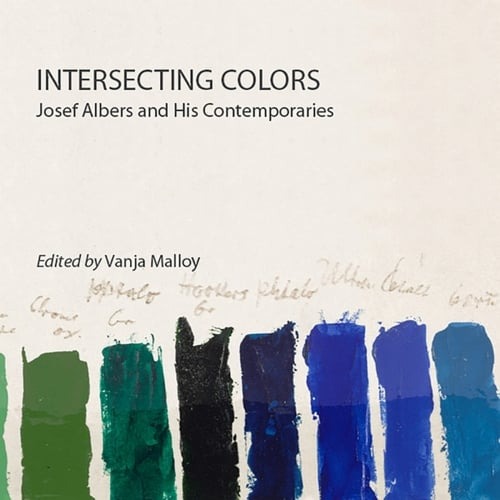
Intersecting colors : Josef Albers and his contemporaries
Offers a timely reappraisal of the immense impact of Albers's thinking, writing, teaching, and art on generations of students. It shows the formative influence on his work of non-scientific approaches to color (notably the work of Johann Wolfgang von Goethe) and the emergence of Gestalt psychology in the first decades of the twentieth century. The work also shows how much of Albers's approach to color-dismissed in its day by a scientific approach to the study and taxonomy of color driven chiefly by industrial and commercial interests-ultimately anticipated what neuroscience now reveals about how we perceive this most fundamental element of our visual experience.

International reflections on the Netherlands didactics of mathematics : Visions on and experiences with realistic mathematics education
This book, inspired by the ICME 13 Thematic Afternoon on “European Didactic Traditions”, takes readers on a journey with mathematics education researchers, developers and educators in eighteen countries, who reflect on their experiences with Realistic Mathematics Education (RME), the domain-specific instruction theory for mathematics education developed in the Netherlands since the late 1960s. Authors from outside the Netherlands discuss what aspects of RME appeal to them, their criticisms of RME and their past and current RME-based projects.

Extensionalism : The Revolution in Logic
This vivid and thought-provoking book by the Israeli logician Nimrod Bar-Am impels one to rethink the place of logic in Western thought. It shows that the history of logic from Aristotle to Tarski is the history of the gradual undoing of the classic conflation of logic and empirical science. It sets tomorrow’s agenda for philosophers and historians of logic and scientific method by taking as its starting point the mere fact that, curiously, ancient logic is not as formal as current literature presents it. Rather, as Bar-Am explains, modern formal logic became possible only after a series of bold criticisms of the magnificent Aristotelian system. These criticisms begin with David Hume’s declaration that logic does not sanction induction, follow on with Kant’s view of logic as an extremely limited system, and culminating with Booles’ introduction of logic as an extensional system, and Russell’s solution to his own paradox.

Discourse : A Concept for Information and Communication Sciences
This book examines discourse, an object of analysis and criticism, from a wide range of perspectives. Among the concepts explored are the contributions of rhetoric in the art of discourse, the evolution of multiple approaches and the main methods of discourse analysis conducted by a variety of researchers. The book deepens our knowledge and understanding of discourse, a concept on which any research related to information and communication can be based.

Courts, politics and constitutional law : judicialization of politics and politicization of the judiciary
Examines how the judicialization of politics, and the politicization of courts, affect representative democracy, rule of law and separation of powers. This volume critically assesses the phenomena of judicialization of politics and politicization of the judiciary. It explores the rising impact of courts on key constitutional principles, such as democracy and separation of powers, which is paralleled by increasing criticism of this influence from both liberal and illiberal perspectives. The book also addresses the challenges to rule of law as a principle, preconditioned on independent and powerful courts, which are triggered by both democratic backsliding and the mushrooming of populist constitutionalism and illiberal constitutional regimes.
Logos of Phenomenology and Phenomenology of the Logos. Book One : Phenomenology as the Critique of Reason in Contemporary Criticism and Interpretation
During its century-long unfolding, spreading in numerous directions, Husserlian phenomenology while loosening inner articulations, has nevertheless maintained a somewhat consistent profile. As we see in this collection, the numerous conceptions and theories advanced in the various phases of reinterpretations have remained identifiable with phenomenology.
Life Conduct in Modern Times : Karl Jaspers and Psychoanalysis
This award-winning book investigates the critique of psychoanalysis formulated by the psychiatrist and philosopher Karl Jaspers (1883-1969) over a period of five decades. His arguments against Freud and his followers are examined from systematic perspectives. The study traces the medico-historical roots of Jasper’s criticism of psychoanalysis and then places it within the framework of scientific theory before devoting itself extensively to medico-ethical aspects of the controversy, which are ultimately treated in terms of a history of mentalities. According to this view, Jasper’s student Hannah Arendt saw to it that the philosopher be made aware of the socio-cultural impact which psychoanalysis was beginning to have in the U.S.A.
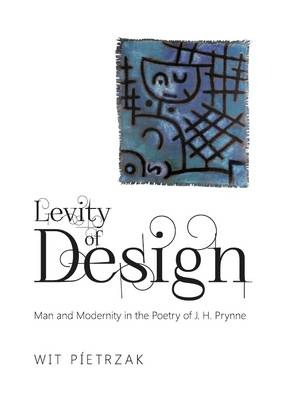
Levity of Design : Cambridge Scholars Publishing
How can poetry embrace morality through focusing on metaphrasts? What is the relation between an allummette and the alpha rhythm? Why is it that money has turned into a metonym of goodness and success? And above all, is it still possible to think of the human subject as a viable category in late modernity? These are some of the questions that J.
Knowing Art : Essays in Aesthetics and Epistemology
Knowing Art collects ten original essays written by leading philosophers who distill and build upon recent work at the intersection of aesthetics and epistemology. Specific topics addressed include the objectivity of critical knowledge, the quality of critical testimony, the roles of principles and perception in critical reasoning, phenomenal knowledge of what a work of art is like, the acquisition of factual information and psychological understanding from fictions, and the limits of images as sources of historical evidence. In addressing these topics, the volume also explores the challenges that art poses for theories of knowledge as well as the challenges that artistic knowledge poses to traditional views about art.
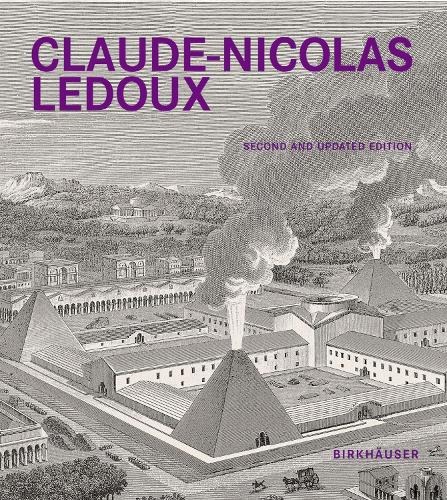
Claude-Nicolas Ledoux : Architecture and uopia in the era of the French revolution
Claude-Nicolas Ledoux (1736-1806) is today regarded as chief representative of French revolutionary architecture. With his extraordinary inventiveness he projected the architectural ideals of his era. Ledoux's influential buildings and projects are presented and interpreted both aesthetically and historically in this book. His best-known projects - the Royal Saltwords of Arc-et-Senans, the tollgates of Paris, the ideal city of Chaux - reveal the architect's allegiance to the principles of antiquity and Renaissance but also illustrate the evolution of his own utopian language. With the French Revolution, Ledoux ceased building as his contemporaries perceived him as a royal architect. He focused on the development of his architectural theory and redefined the vision of the modern architect
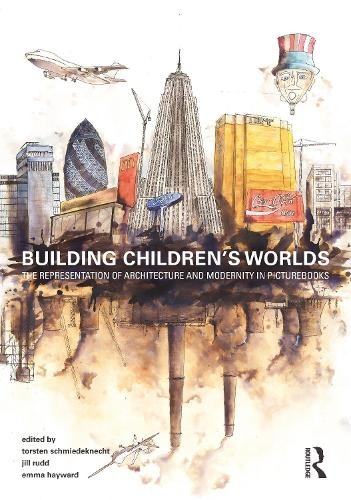
Building Children's Worlds : The Representation of Architecture and Modernity in Picturebooks
Children are the future architects, clients and users of our buildings. The kinds of architectural worlds they are exposed to in picturebooks during their formative years may be assumed to influence how they regard such architecture as adults. Contemporary urban environments the world over represent the various stages of modernism in architecture. This book reads that history through picturebooks and considers the kinds of national identities and histories they construct. Reveals what stories are told about modern architecture and shows how those stories affect future attitudes towards and expectations of the built environment.
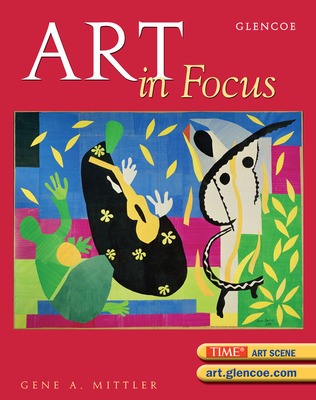
Art in Focus
The premier art history text! This integrated, chronological approach to the study of art demonstrates the interrelationships of aesthetics, art criticism, art history, and studio art.
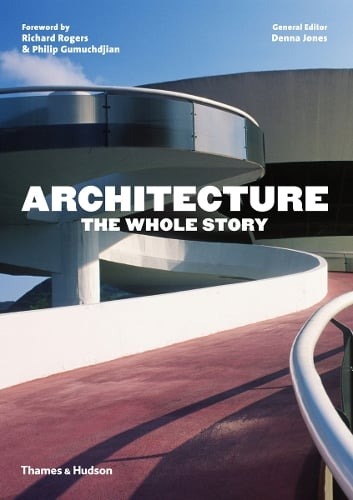
Architecture : the whole story
From ancient and classical masterpieces to contemporary, cutting-edge buildings, architecture has defined our world throughout history. Drawing its examples from all around the globe, Architecture: The Whole Story is a richly illustrated and comprehensive account of the architects, plans, designs and constructions that over the centuries have most engaged our minds, inspired our imaginations and raised our spirits. For everyone who has ever wished for greater insight into the art of building design, Architecture: The Whole Story provides the analytical tools to appreciate to the fullest the variety of architectural achievement and the built environment in the world.
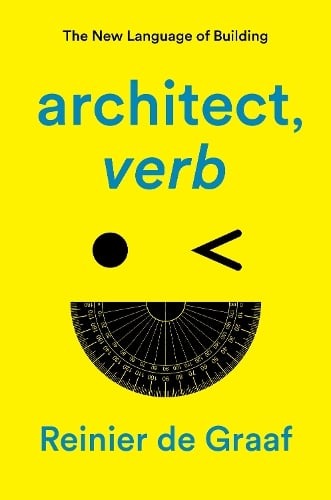
Architect, verb : the new language of building
Leading architect Reinier de Graaf De Graaf punctures the myths behind the debates on what contemporary architecture is, with wit and devastating honesty. Architecture, it seems, has become too important to leave to architects. No longer does it suffice to judge a building solely by its appearance, it must be measured, and certified. When architects talk about "Excellence," "Sustainability," "Well-being," "Liveability," "Placemaking," "Creativity," "Beauty" and "Innovation" what do they actually mean? In Architect, Verb, De Graff dryly skewers the doublespeak and hot air of an industry in search of an identity in the 21st century
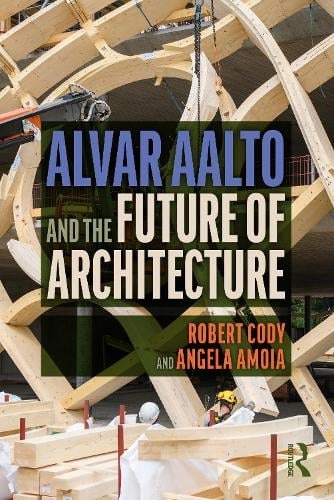
Alvar Aalto and the future of architecture
Exposes dialogue between history, theory, design, construction, technology, and sensory experience by means of digital simulations that enhance the assessment and values of our material choices. It offers a critical look to the past to inspire the future. This new edition looks to Alvar Aalto as the primary protagonist for channeling discussions related to these topics. Architects like ALA, Shigeru Ban, 3XN, Peter Zumthor, and others also play the role of contemporary guides in this review. The work of Aalto and selected contemporary architects, along with computer modeling software, showcase the importance of comprehensive design.
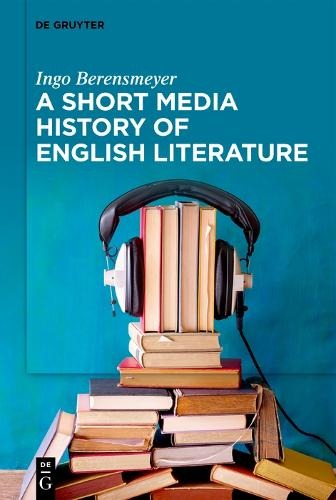
A Short Media History of English Literature
Explores the history of literature as a history of changing media and modes of communication, from manuscript to print, from the codex to the computer, and from paper to digital platforms. It argues that literature has evolved, and continues to evolve, in sync with material forms and formats that engage our senses in multiple ways. Because literary experiences are embedded in, and enabled by, media, the book focuses on literature as a changing combination of material and immaterial features.
