



الصفحة 1
الصفحة 1

Next generation information technologies and systems ; 6th International Conference, NGITS 2006, Kebbutz Sehfayim, Israel, July 4-6, 2006, Proceedings
The selected papers may be classified roughly in ten broad areas: ? Information systems development ? Distributed systems ? Semi-structured data ? Data mining and agent-oriented computing ? User-oriented design ? Frameworks, models and taxonomies ? Simulation and incremental computing ? Information integration ? Security and privacy ? Next-generation applications This event is the culmination of efforts by many talented and dedicated individuals.
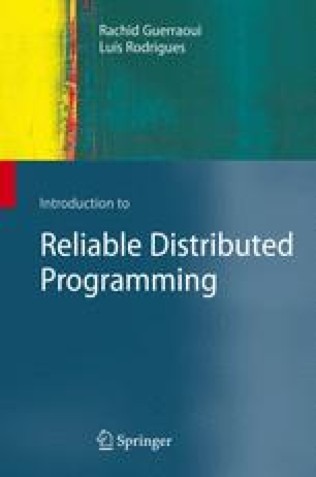
Introduction to Reliable Distributed Programming
Guerraoui and Rodrigues present an introductory description of fundamental reliable distributed programming abstractions as well as algorithms to implement these abstractions. The authors follow an incremental approach by first introducing basic abstractions in simple distributed environments, before moving to more sophisticated abstractions and more challenging environments. Each core chapter is devoted to one specific class of abstractions, covering reliable delivery, shared memory, consensus and various forms of agreement. This textbook comes with a companion set of running examples implemented in Java. These can be used by students to get a better understanding of how reliable distributed programming abstractions can be implemented and used in practice. Combined, the chapters deliver a full course on reliable distributed programming. The book can also be used as a complete reference on the basic elements required to build reliable distributed applications.

Innovations and Advanced Techniques in Computer and Information Sciences and Engineering
Innovations and Advanced Techniques in Computer and Information Sciences and Engineering is a collection of world class paper articles addressing the following topics: Signal and Image Processing: Content Based Video Retrieval, Character Recognition, Incremental Learning for Speech Recognition, Signal Processing Theory and Methods, and Vision-based Monitoring Systems. Software and Systems: Activity-Based Software Estimation, Algorithms, Genetic Algorithms, Information Systems Security, Programming Languages, Software Protection Techniques, Software Protection Techniques, and User Interfaces. Distributed Processing: Asynchronous Message Passing System, Heterogeneous Software Environments, Mobile Ad Hoc Networks, Resource Allocation, and Sensor Networks. Advanced and innovative techniques in computing: e-Science and Virtual Instrumentation, Fault-Tolerant Scheduling, Grid Computing, Microcracking in Cortical Bones, Service-oriented Architectures, and Virtualization in Data Warehouses.

Innovation Project Management : Methods, Case Studies, and Tools for Managing Innovation Projects
Specific ideas discussed in Innovation Project Management include: Continuous versus discontinuous innovation, incremental versus radical innovation, understanding innovation differences, and incremental innovation versus new product development Identifying core competencies using SWOT analysis and nondisclosure agreements, secrecy agreements, and confidentiality agreements Implications and issues for project managers and innovation personnel, active listening, pitching the innovation, and cognitive biases Measuring intangible assets, customer/stakeholder impact on value metrics, customer value management programs, and the relationship between project management and value

Inelastic analysis of solids and structures
This book presents computational procedures for the stress integration of inelastic constitutive relations within the incremental-iterative finite element analysis and general strain-driven problems of solids and structures.

Guide to Efficient Software Design : An MVC Approach to Concepts, Structures, and Models
This classroom-tested textbook presents an active-learning approach to the foundational concepts of software design. These concepts are then applied to a case study, and reinforced through practice exercises, with the option to follow either a structured design or object-oriented design paradigm. The text applies an incremental and iterative software development approach, emphasizing the use of design characteristics and modeling techniques as a way to represent higher levels of design abstraction, and promoting the model-view-controller (MVC) architecture.

Gene Therapy for Cancer
The possibility of treating cancer, a disease defined by genetic defects, by introducing genes targeting these very alterations has led to an immense interest in gene therapy for cancer. Although incremental successes have been realized, enthusiasm for gene therapy has declined due to an increasing number of obstacles. These obstacles include vector systems that do not reach systemic metastases, therapeutic genes with redundant mec- nisms allowing for cellular resistance, and toxicities in clinical trials leading to premature closure of these studies. Different tactics to overcome or circumvent these obstacles have catalyzed the development of a wide range of gene therapy approaches. Thus far, almost two-thirds of gene therapy trials have focused on cancer. This reflects the concept that gene therapy approaches for the treatment of cancer do not necessarily require long-term expression of the gene as is necessary for the treatment of primary genetic defects like hemophilia or juvenile diabetes.

Formalization of Banking Supervision : 19th–20th Centuries
Elaborate the formalization phase of banking supervision in eight developed countries—USA, Japan, Sweden, Germany, Switzerland, Belgium, France, and UK. This innovative study in the field of banking supervision history identifies why national histories of banking supervision share similarities, but also remain different and are heavily path dependent. This book will be of great interest not only to financial/economic historians but also to general readers interested in banking supervision, i.e., students, bankers, supervisors, and international officials.

Fluctuation Theory for Lévy Processes : Ecole d'Eté de Probabilités de Saint-Flour XXXV - 2005
Lévy processes, i.e. processes in continuous time with stationary and independent increments, are named after Paul Lévy, who made the connection with infinitely divisible distributions and described their structure. They form a flexible class of models, which have been applied to the study of storage processes, insurance risk, queues, turbulence, laser cooling, ... and of course finance, where the feature that they include examples having "heavy tails" is particularly important. Their sample path behaviour poses a variety of difficult and fascinating problems

Evolving Connectionist Systems : The Knowledge Engineering Approach
Evolving Connectionist Systems is aimed at all those interested in developing and using intelligent computational models and systems to solve challenging real world problems in computer science, engineering, bioinformatics and neuroinformatics. The book challenges scientists and practitioners with open questions about future creation of new information models inspired by Nature. This edition includes new methods for adaptive, knowledge-based learning, such as online incremental feature selection, spiking neural networks, transductive neuro-fuzzy inference, adaptive data and model integration, cellular automata and artificial life systems, particle swarm optimisation, ensembles of evolving systems, and quantum inspired neural networks. New applications to gene and protein interaction modelling, brain data analysis and brain model creation, computational neuro-genetic modelling, adaptive speech, image and multimodal recognition, language modelling, adaptive robotics, modelling dynamic financial and socio-economic systems, and ecological modelling, are covered. An important new feature of the book is the attempt to connect different structural and functional levels of a complex, intelligent system, looking for inspiration from functional relationships in natural systems, such as the genetic and the brain activity.

EQ-5D value sets
For various reasons, cost benefit analysis is usually rejected in favour of cost-effectiveness or cost-utility analyses, often involving the estimation of the incremental cost per Quality Adjusted Life Year (QALY) gained (Drummond et al, 2005). The estimation of QALYs gained requires valuations for all relevant health states on a scale anchored at 1 = Full health and 0 = Dead. The EQ-5D is widely used in this context and a number of value sets are available for all the health states generated by the EQ-5D descriptive system. These can be readily applied to health outcomes measured as EQ-5D profiles. EQ-5D has become one of the valuation approaches recommended by several reimbursement authorities and academic bodies in European countries

Energy minimization methods in computer vision and pattern recognition ; 6th International Conference, EMMCVPR 2007, Ezhou, China, August 27-29, 2007, Proceedings
Contains critical issues of representation, learning, and inference. Important new themes include pr- abilistic grammars, image parsing, and the use of datasets with ground-truth to act as benchmarks for evaluating algorithms and as a way to train learning algorithms. Other themes include the development of efficient inference algorithms using advanced techniques from statistics, computer science, and applied mathematics. This book makes no distinction between oral and poster papers. It also contiants sections on al- rithms, applications, image parsing, image processing, motion, shape, and thr- dimensional processing.

Cosmetic creams development and formulation of effective skin care products
A guide to cosmetic creams that focuses on formulation, production, and safety concerns. It puts the focus on the structure and formulation of a cosmetic cream, the production process, the effect of each ingredient, as well as safety considerations. Comprehensive in scope, the book contains a basic definition of cosmetics and describes the types of skin creams currently on the market, the major ingredients used, and example compositions. The author, Wilfried Rähse?a noted expert on the topic?offers guidelines for estimating manufacturing costs and includes procedures for an effective safety assessment.

Converged communications : Evolution from telephony to 5G mobile internet
The central theme of the book is to build deeper understanding about incremental technological progress by introducing both state of the art and their predecessor technologies. The book explores four main areas, including fixed telephone systems, data communication systems, mobile cellular systems, and IP multimedia systems. It clearly explains architectures, protocols, and functional procedures, and discusses a variety of topics ranging from physical layer processes to system level interactions. Converged Communications offers: In-depth treatments of fixed telephone and transmission systems, including operation of telephone exchanges and signaling systems Comprehensive explorations of data communication systems, including transmission of data over telephone lines and data network technologies, such as Ethernet and TCP/IP Incisive discussions of mobile cellular systems, including GSM, 3G, LTE, VoLTE and 5G Insightful analysis of incremental system evolution to justify various design choices made The book is supported with extensive online appendices, which covers communication system concepts, an overview of standardization, various technologies used in the past, state-of-the art technologies such as WLAN, cable modems, and FTTx, complementing the other systems described in the book which have evolved from the fixed telephone network.
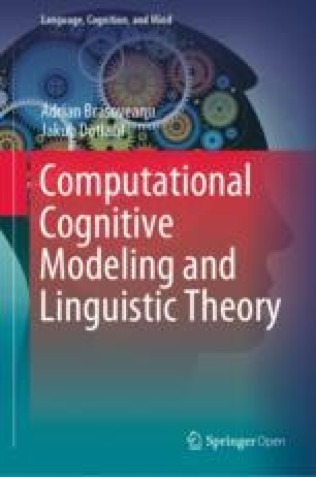
Computational Cognitive Modeling and Linguistic Theory
This book introduces a general framework that allows natural language researchers to enhance existing competence theories with fully specified performance and processing components. Gradually developing increasingly complex and cognitively realistic competence-performance models, it provides running code for these models and shows how to fit them to real-time experimental data. This computational cognitive modeling approach opens up exciting new directions for research in formal semantics, and linguistics more generally, and offers new ways of (re)connecting semantics and the broader field of cognitive science.
Managing innovation in organisations : ostering an entrepreneurial approach
Explores how organisations need to manage their innovation processes in order to compete in the global marketplace. Innovation is essential to the ongoing competitiveness of organisations but can be difficult to capture and disseminate. This book states that there needs to be guidelines about how to manage innovation in an organisational context. This includes focusing on different types of innovation from incremental to radical. This book will focus on ways to manage innovation from incorporating it into organisational practices to implementing it into beneficial partnerships.

Bridge Launching
It is devoted to bridges that are built by incremental launching methods, using prestressed composite materials. It integrates the static, aesthetic, and economic aspects of construction techniques for building these state-of-the-art structures. Bridge launching is a comprehensive handbook, offering explanations of both the theoretical and technological aspects of the construction process. Both beam bridges and arch bridges are thoroughly analysed,and special theories aimed at optimising static aspects, as well as local phenomena, are developed.

Beyond Kyoto : A new global climate certificate system : Continuing Kyoto commitsments or a global ´Cap and Trade´ scheme for a sustainable climate policy?
This book shows how humankind can ‘prevent dangerous interference with the c- mate system’ without dangerous interference with the global economic system. In the two underlying studies on behalf of the Ministry of Environment and Transport of i the German federal state of Baden-Württemberg, the results have been elaborated through scientific evaluation of different climate protection systems and intensive developmental work on an efficient climate protection system. The results will be presented in nine chapters according to the following nine basic R&D steps: 1. Quantifying the ‘ultimate climate objective’ of the world community in order ‘to prevent dangerous interference with the climate system,’ thus achieving climate sustainability; 2. Development of a comprehensive standard system for evaluating the prospect of success for different climate protection systems; 3. Based on this scientific standard system, evaluation of the current Kyoto system and of the most important proposals for ‘incremental regime evolution’ of the Kyoto system. Unfortunately, it must be noted that these systems are incapable of achi- ing climate sustainability; 4. Evaluating three proposals for ‘structural regime change’ of the Kyoto system. Following this objective evaluation process and numeric comparison of the diff- ent proposals, 5. Description of the eight basic elements of GCCS and its in-depth ‘critical asse- ment;’ 6.

Basic concepts in medicinal chemistry
Designed to help students incrementally build their knowledge of fundamental concepts of medicinal chemistry and their applications to therapeutic decisions, it is progressively organized. Specific sections of the text have been updated to make potentially confusing concepts easier to understand. Numerous examples and review questions further reinforce learning and analytical skills.
Advances and Innovations in Systems, Computing Sciences and Software Engineering
Acollection of world class paper articles addressing the following topics: Image and Pattern Recognition: Compression, Image processing, Signal Processing Architectures, Signal Processing for Communication, Signal Processing Implementation, Speech Compression, and Video Coding Architectures. Languages and Systems: Algorithms, Databases, Embedded Systems and Applications, File Systems and I/O, Geographical Information Systems, Kernel and OS Structures, Knowledge Based Systems, Modeling and Simulation, Object Based Software Engineering, Programming Languages, and Programming Models and tools. Parallel Processing: Distributed Scheduling, Multiprocessing, Real-time Systems, Simulation Modeling and Development, and Web Applications. New trends in computing: Computers for People of Special Needs, Fuzzy Inference, Human Computer Interaction, Incremental Learning, Internet-based Computing Models, Machine Intelligence, Natural Language Processing, Neural Networks, and Online Decision Support System.
