



الصفحة 1
الصفحة 1

Writing Manuals for the Masses : The Rise of the Literary Advice Industry from Quill to Keyboard
This collection of essays examines the literary advice industry since its emergence in Anglo-American literary culture in the mid-nineteenth century within the context of the professionalization of the literary field and the continued debate on creative writing as art and craft. Often dismissed as commercial and stereotypical by authors and specialists alike, literary advice has nonetheless remained a flourishing business, embodying the unquestioned values of a literary system, but also functioning as a sign of a literary system in transition. Exploring the rise of new online amateur writing cultures in the twenty-first century, this collection of essays considers how literary advice proliferates globally, leading to new forms and genres.

Worldmodelling architectural models in the 21st century
As architects postulate ever-increasing complex world models from which to draw inspiration and inform their practice, questions of scale, representation and collaboration emerge. Discussed through a range of articles from acclaimed international contributors in the fields of both architecture and media studies, this issue explores how the architectural model is situated between concepts of worldbuilding and worldmaking, in the creative space of worldmodelling.
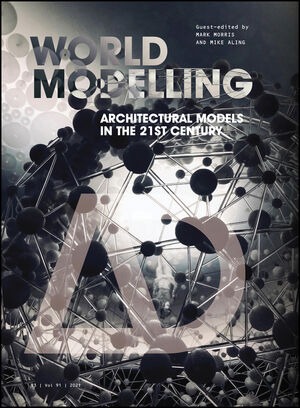
Worldmodelling : Architectural Models in the 21st Century
Worldbuilding is the creation of imaginary worlds through forms of cultural production. Although this discourse began with an analysis of imaginary places constructed in works of literature, it has evolved to encompass worlds from fields such as cinema, games, design, landscape, urbanism and architecture. Worldbuilding differs from the notion of worldmaking, which deals with how speculative thinking can influence the construction of the phenomenal world. As architects postulate ever-increasingly complex world models from which to draw inspiration and inform their practice, questions of scale, representation and collaboration emerge. Discussed through a range of articles from acclaimed international contributors in the fields of both architecture and media studies, this issue explores how the architectural model is situated between concepts of worldbuilding and worldmaking – in the creative space of worldmodelling.

Wood and wood joints building traditions in Europe, Japan and China
Wood and Wood Joints puts today s world in touch with the diverse know-how of Western and Eastern cultures about the creative use of this distinctive material. A holistic perspective generates an appreciation of building with wood that will inform professionals, give building specialists a new sense of an almost vanished world, and simply fascinate the lay public.

Wonder Wood : A Favorite Material for Design, Architecture and Art
Presents this timeless material as it is being used today and how it can be used in the future. It also documents a selection of current international projects and processes, making-ofs, and experiments by 120 internationally renowned designers, architects, and artists, whose creative and innovative approach to the material makes their work compelling. For selected projects, interviews with the designers provide an in-depth look at the creative process and its results. A second section, dedicated to materials and technologies examines innovative developments as well as wood, wood-based materials, finishing technologies, and wooden structure principles.

Wie ticken Jugendliche 2016? : Lebenswelten von Jugendlichen im Alter von 14 bis 17 Jahren in Deutschland = How do young people tick in 2016? : Living environments of young people aged 14 to 17 in Germany
How do young people live and experience their everyday life? How do you perceive the historical and current conditions in Germany and in the world? What makes sense to them? What life plans do they pursue? What role do mobility, sustainability and digital media play in your life? The SINUS Youth Study 2016 empirically investigates these and other questions and depicts the variety of perspectives of young people's living environments. She succeeds in doing this particularly vividly by allowing 14 to 17-year-olds to have their say in the form of numerous quotes and creative self-testimonies. It is also unique that young people provide photographic insights into their living environments and, for the first time, have asked their questions themselves as interviewers. The SINUS youth study thus gives the young generation a public voice that needs to be heard carefully. Because looking at young people is always a look at the future of a country.

Wax Crystal Control · Nanocomposites · Stimuli-Responsive Polymers
"Advances in Polymer Science series has been designed to present critical reviews of the present and future trends in polymer and biopolymer science including chemistry, physical chemistry, physics and materials science. … an informative, interesting, perceptive, and generally splendid book. This volume may well be a substantial contribution … . a very creative piece of work meriting the highest praise from scientists at universities and in industry who wish to keep abreast of advances in the topics covered."

Virtues and Passions in Literature : Excellence, Courage, Engagements, Wisdom, Fulfilment
The Human Condition prompts our creative strivings beyond the natural round of life toward outstanding achievements. It shows how natural forces and promptings of life transmute through creative Human Condition subliminal passions of the soul into innumerable streaks of spiritual significance.

Virtual Leadership : Practical Strategies for Success with Remote or Hybrid Work and Teams
Virtual Leadership offers practical strategies and proven methods for getting the best out of hybrid or remote work and teams. This useful guide explains how to create cohesive teams, collaborate creatively and effectively, connect across barriers of distance and culture, building on the foundation of a leader's own mindset and approach. It provides clear guidance on how to run engaging and effective meetings, as well as how to encourage high performance from motivated and happy team members in between meetings.

Universal principles of architecture : 100 architectural archetypes, methods, conditions, relationships and imaginaries
Illustrates in 100 concepts the importance, possibilities, challenges, and roles that architecture plays in shaping the world. This radical and perhaps surprising survey is divided into five sections: Archetypes, Methods, Conditions, Relationships, and Imaginaries. And, each of the five sections in the book introduces in 20 principles architecture at different scales and stages of the design process.Through an inclusive and holistic approach, the book refers to initial design ideas, creative design approaches, reflections on the effects of the built and destroyed environments, and architectural desires and aspirations to transform the world and engage with the cosmos.

Type Synthesis of Parallel Mechanisms
Focuses on the systematic type synthesis of parallel mechanisms (PMs), which is a key issue in the creative design of a wide variety of innovative devices based on PMs such as parallel manipulators, parallel kinematic machines (machine tools), motion simulators, haptic devices, micro-manipulators, and nano-manipulators. Type synthesis of PMs refers to finding all the types of PMs realizing a specified motion requirement. This book covers the classification of PMs and an efficient method for the type synthesis of PMs and also provides a large number of PMs ready to be used in practical applications. The synthesis approach is based on the concept of virtual chain and the elementary notions of screw theory.

Think Like An Architect : How to develop critical, creative and collaborative problem-solving skills
Shows readers how to access those thinking types and use them outside pure design thinking – showing how they can both solve problems but also identify the problems that need solving. To think the way the best architects do. With a clear, driving narrative, peppered with anecdote, stories and real-life scenarios, this book will future-proof the architectural student. Change is coming in the architecture profession, and this is a much-needed exploration of the critical thinking skills that architects have in abundance, but that are not taught well enough within architecture schools. These skills are crucial in being able to respond agilely to a future that nobody is quite sure of.

The Waste Market : Institutional Developments in Europe
The Waste Market undertakes the interesting task of examining the creative ways in which a handful of European countries, namely Belgium, the Netherlands, Norway, Spain, and Sweden, have managed their waste collection market. For instance, the Netherlands experimented a lot with competition and different types of ownership. It shows that competition is more important than ownership. The use of public firms, exceptional in other European countries, seems to be a powerful instrument to enhance competition. The lack of these firms might explain why private production is not always cheaper than own collection by municipalities in Sweden. Instead of public firms, cooperation is much more used in Spain and Norway to exploit economies of scale.

The Urban Sketching Handbook Techniques for Beginners : How to Build a Practice for Sketching on Location
Learn the basics of value, color mixing, and perspective through helpful studies and exercises, whether at home, in studio, and on location. The Urban Sketching Handbook: Techniques for Beginners is perfect for anyone who's just getting started in this fascinating art form, or who wants to develop their observational and drawing aptitude by reinforcing basic concepts. Offers location artists expert instruction on creative techniques, on-location tips and advice, and an abundance of visual inspiration. These handy references come in a compact, easy-to-carry format-perfect to toss in your backpack or artist's tote.

The Spirit of Entrepreneurship : Exploring the Essence of Entrepreneurship Through Personal Stories
The book explore entrepreneurship through the lens of human behaviour. Creative vision, drive, reflection, action, passion, teamwork, achievement, commitment and, significantly, personal values are some of the major elements.Personal stories of 60 entrepreneurs and entrepreneurial executives from Europe and North America are studied in the context of human and organizational behavior. Case studies range from solo entrepreneurs to fast-growing ventures and from entrepreneurial CEO’s to creative leaders in the public sector. It approach entrepreneurship as an interactive process of human forces and the economic, ecological, and social environments in which they manifest.

The Social Life of Economic Inequalities in Contemporary Latin America : Decades of Change
Examines how economic processes have worked upon social lives and social realities in Latin America during the past decades. Through tracing the effects of the neoliberal epoch into the era of the so-called pink tide, the book seeks to understand to what extent the turn to the left at the start of the millennium managed to challenge historically constituted configurations of inequality. A central argument in the book is that in spite of economic reforms and social advances on a range of arenas, the fundamental tenants of socio-economic inequalities have not been challenged substantially. As several countries are now experiencing a return to right-wing politics, this collection helps us better understand why inequalities are so entrenched in the Latin American continent, but also the complex and creative ways that it is continuously contested. The book directs itself to students, scholars and anyone interested in Latin America, economic anthropology, political anthropology, left-wing politics, poverty and socio-economic inequalities.

The restless compendium : Interdisciplinary investigations of rest and its opposites
Contains 22 essays and interventions on rest and restlessness, silence and noise, relaxation and work. It draws together approaches from artists, literary scholars, psychologists, activists, historians, geographers and sociologists who challenge assumptions about how rest operates across mind, bodies, and practices. Rest’s presence or absence affects everyone. Nevertheless, defining rest is problematic: both its meaning and what it feels like are affected by many socio-political, economic and cultural factors. The authors open up unexplored corners and experimental pathways into this complex topic, with contributions ranging from investigations of daydreaming and mindwandering, through histories of therapeutic relaxation and laziness, and creative-critical pieces on lullabies and the Sabbath, to experimental methods to measure aircraft noise and track somatic vigilance in urban space.

The Resistant Object of Architecture : A Lacanian Perspective
Focuses on the question "what is architecture?," and responds to this question by developing the immanent structural logic of architecture that enables it to work not only as an instrumental thinking practice, but as a practice of creative thinking. This means that it alone determines its issues, problems, and priorities, and precisely because of that it has the capacity and cogency to destabilise, indeed pierce holes in the system in which it operates.

The Rational Spirit in Modern Continuum Mechanics : Essays and Papers Dedicated to the Memory of Clifford Ambrose Truesdell III
Cover a wide range of topics; what ties them together is the rational spirit. Clifford Truesdell, in his address upon receipt of a Birkhoff Prize in 1978, put the essence of modern continuum mechanics succinctly as “conceptual analysis, analysis not in the sense of the technical term but in the root meaning: logical criticism, dissection, and creative scrutiny.

The Palgrave Handbook of Positive Education
This handbook provides a comprehensive overview of the growing field of positive education, featuring a broad range of theoretical, applied, and practice-focused chapters from leading international experts. It demonstrates how positive education offers an approach to understanding learning that blends academic study with life skills such as self-awareness, emotion regulation, healthy mindsets, mindfulness, and positive habits, grounded in the science of wellbeing, to promote character development, optimal functioning, engagement in learning, and resilience.
