



الصفحة 1
الصفحة 1

Global Change and Integrated Coastal Management : The Asia-Pacific Region
Most of the world’s population lives close to the coast and is highly dependent on coastal resources, which are being exploited at unsustainable rates. These resources are being subject to further pressures associated with population increase and the globalization of coastal resource demand. This is particularly so for the Asia-Pacific region which contains almost two thirds of the world’s population and most of the world’s coastal megacities. The region has globally important atmospheric and oceanic phenomena, which affect world climate such as the Asian Monsoon and the El-Niño Southern Oscillation phenomena. The Asia-Pacific region also has highly significant marine diversity but over the last few decades, coastal resources such as mangroves, coral reefs and fisheries have experienced large-scale depletion.

Geological Approaches to Coral Reef Ecology
By reconstructing the ecological history of coral reefs, the authors are able to evaluate whether or not recent, dramatic changes to reef ecosystems are novel events or part of a long-term trend or cycle. The contributions examine the interacting causes of change, which include hurricane damage, regional outbreaks of coral-consuming predators, disease epidemics, sea-level rise, nutrient loading, global warming and acidification of the oceans. Crucial predictions about the future of coral reefs lead to practical strategies for the successful restoration and management of reef ecosystems.

Deep-water Coral Reefs : Unique Biodiversity Hot-Spots
Provides a useful overview of various aspects of deep-water coral reefs and carbonate mounds, providing insights into the physical processes, and inspire and stimulate further research into these fascinating natural systems. This book, presents and discusses only a selection of the world’s discovered deep-water coral reefs.
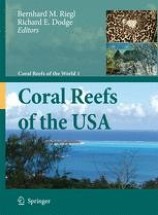
Coral Reefs of the USA
This book will therefore be of broad general interest. For the first time, complete scholarly reviews are given for the geology, geomorphology and the biology of reefs encompassing a vast area stretching from the Mariana Islands in the west, Samoa in the south, Hawaii in the north and the Virgin Islands in the east.

Cold-Water Corals and Ecosystems
Following the exciting exploration of hot vent and cold seep ecosystems, the rediscovery of cold-water coral ecosystems with high-technology instrumentation is currently another hot topic in multidisciplinary marine research. Conventionally, coral reefs are regarded as restricted to warm and well-illuminated tropical seas, not associated with cold and dark waters of higher latitudes. However, ongoing scientific missions have shed light on the global significance of this overlooked ecosystem. Cold-water coral ecosystems are involved in the formation of large seabed structures such as reefs and giant carbonate mounds, and they represent unexploited paleo-environmental archives of earth history. Like their tropical cousins, cold-water coral ecosystems harbour rich species diversity. Despite the great water depths, commercial interests overlap more and more with the coral occurrences. Human activities already impinge directly on cold-water coral reefs causing severe damage to this vulnerable ecosystem. In this volume, the current key institutions involved in cold-water coral research have contributed 62 state-of-the-art articles from geology and oceanography to biology and conservation.
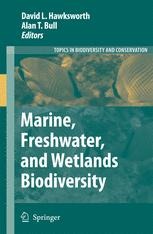
Marine, Freshwater, and Wetlands Biodiversity
Marine, coastal and wetland habitats are threatened, not only through exploitation, but also by the prospect of climate change – as ocean currents change course, sea levels rise, and rainfall patterns change. Even the once-common cod is now under threat from the combined effects of over-fishing and a dramatic change-induced decrease in the plankton that cod larvae feed on. Meanwhile, coral reefs remain especially vulnerable to rapid sea-level changes exacerbated by the effects of tourism and disease. This book gathers together a wide range of papers reporting on key research into the biodiversity conservation of these critical and increasingly threatened habitats. Collectively these papers provide a snap-shot of the types of problems they are experiencing, and offer a wealth of topical examples which render this volume especially valuable to teachers of courses in marine, freshwater and wetlands ecology, biological conservation and ecological restoration.
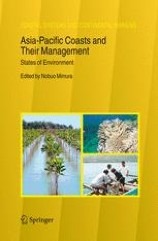
Asian-Pacific coasts and their management : States of environment
The Asia-Pacific region is home to the world’s largest region of coral reefs and mangroves. It accommodates two-thirds of the world’s human population and its economic activities have the highest growth rate in the world. Ongoing degradation of the environment, resulting from coastal development, deforestation, desertification and over-harvesting, are becoming a matter of great concern, as floods and droughts occur as a result of this degradation. Threats of global environmental change, such as climate change and sea-level rise, will exacerbate such problems. Therefore, appropriate policies and measures are needed for coastal management, to address both the local and global trends. This book gives an overview of the state-of-the-art understanding on the drivers, state, and responses to coastal environmental changes in the Asia-Pacific region. It provides excellent perspectives on current and anticipated environmental changes in the region’s coastal areas, to researchers, students, policy makers, coastal managers and other stakeholders.
