



الصفحة 1
الصفحة 1

Fetal compromise in labor
Sixty years ago, the purpose of introducing electronic fetal heart rate monitoring (EFM) was to reduce the incidence of intrapartum stillbirth. However, by the early 1980s, with falling stillbirth rates, fetal blood sampling had been widely abandoned, as many considered that EFM was sufficient on its own. Unfortunately, while the sensitivity of EFM for the detection of potential fetal compromise is high, specificity is low, and there is a high false positive rate which has been associated with a rising cesarean section rate. The authors suggest that EFM is considered and analyzed as a classic screening test and not a diagnostic test. Furthermore, it requires contextualization with other risk factors to achieve improved performance. A new proposed metric, the Fetal Reserve Index, takes into account additional risk factors and has demonstrated significantly improved performance metrics. It is going through the phases of further development, evaluation, and wider clinical implementation.

Cold War Civil Defence in Western Europe : Sociotechnical Imaginaries of Survival and Preparedness
This edited collection brings together established and new perspectives on Cold War civil defence in Western Europe within a common analytical framework that also facilitates comparative and transnational dimensions. The current interest in creating disaster-resilient societies demands new histories of civil defence. Historical contextualization is essential in order to understand what is at stake in preparing, devising, and implementing forms of preparedness, protection, and security that are specifically targeted at societies and citizens. Applying the concept of sociotechnical imaginaries to civil defence history, the chapters of this volume cover a range of new themes, from technology and materiality to media, memory, and everyday experience.
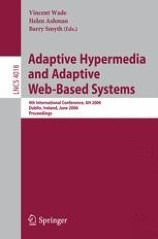
Adaptive Hypermedia and Adaptive Web-Based Systems ; 4th International Conference, AH 2006, Dublin, Ireland, June 21-23, 2006, Proceedings
Here are the refereed proceedings of the 4th International Conference on Adaptive Hypermedia and Adaptive Web-Based Systems, AH 2006, held in Dublin, Ireland, June 2006. The book presents 22 revised full papers and 19 revised short papers together with abstracts of 3 keynotes, 12 poster papers, and 14 doctoral consortium posters. Topics include pioneering theories, techniques, and innovative technologies to provide dynamic personalization, adaptation, and contextualization of hypermedia resources and services.
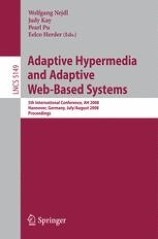
Adaptive Hypermedia and Adaptive Web-Based Systems : 5th International Conference, AH 2008, Hannover, Germany, July 29 - August 1, 2008. Proceedings
This book constitutes the refereed proceedings of the 5th International Conference on Adaptive Hypermedia and Adaptive Web-Based Systems, AH 2008, held in Hannover, Germany in July 2008.
