



الصفحة 1
الصفحة 1
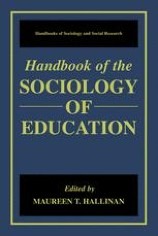
Handbook of the Sociology of Education
The Handbook of the Sociology of Education provides a comprehensive overview of the field of education from a sociological perspective. Experts in this area present theoretical and empirical research on major educational issues and analyze the social processes that govern schooling, as well as the role of schools in and their impact on contemporary society. The book is a major reference work for social scientists, graduate students, and educators who want an overview of the field.

Forensic Anthropology and Medicine : Complementary Sciences From Recovery to Cause of Death
The aim of this book is to dissect forensic anthropology and forensic pathology in its various and valuable contributions to contemporary society. It gives answers and approaches key questions to this sciences' growing audience within different countries in the recent years. It aims to provide a practical approach to the investigation of bodies that are not fresh enough to be considered a normal forensic case.

Evaluating Multiple Narratives : Beyond Nationalist, Colonialist, Imperialist Archaeologies
This volume uses Bruce Trigger's 1984 article, "Alternative Archaeologies: Nationalist, Colonialist, Imperialist" as a starting point to examine the complex interaction between contemporary society and archaeological practice today. This book uses case studies from Asia, Latin America, Europe and North America to explore the interplay between the sociopolitical context of specific national, regional or local archaeological traditions and the variety of interpretations of the past made by archaeologists and others.

Communication research into the digital society : Fundamental insights from the Amsterdam School of Communication Research
Media and communication have become ubiquitous in today’s societies andaffect all aspects of life. On an individual level, they impact how we learnabout the world, how we entertain ourselves, and how we interact withothers. On an organisational level, the interactions between media andorganisations, such as political parties, NGOs, businesses and brands, shapeorganisations’ reputation, legitimacy, trust and (financial) performance, aswell as individuals’ consumer, political, social and health behaviours. Atthe societal level, media and communication are crucial for shaping publicopinion on current issues such as climate change, sustainability, diversity,and well-being.
