



الصفحة 1
الصفحة 1

Nanotechnology for Smart Concrete
Nanomaterials can markedly improve the mechanical properties of concrete, as well as reduce the porosity and enhance the durability of concrete. The application of nanotechnology in concrete is still in its infancy. However, an ever-growing demand for ultra-high-performance concrete and recurring environmental pollution caused by ordinary Portland cement has encouraged engineers to exploit nanotechnology in the construction industry. Nanotechnology for Smart Concrete discusses the advantages and applications of nanomaterials in the concrete industry, including high-strength performance, microstructural improvement, self-healing, energy storage, and coatings. The book: Analyses the linkage of concrete materials with nanomaterials and nanostructures / Discusses the applications of nanomaterials in the concrete industry, including energy storage in green buildings, anti-corrosive coatings, and inhibiting pathogens and viruses / Covers self-healing concrete / Explores safety considerations, sustainability, and environmental impact of nanoconcrete / Includes an appendix of solved questions

Modernisation, Mechanisation and Industrialisation of Concrete Structures
Modernisation, Mechanisation and Industrialisation of Concrete Structures discusses the manufacture of high quality prefabricated concrete construction components, and how that can be achieved through the application of developments in concrete technology, information modelling and best practice in design and manufacturing techniques.
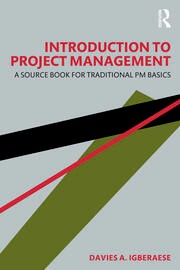
Introduction to Project Management : A Source Book for Traditional PM Basics
Presents the fundamentals of project management in simple language and an easy-to-understand format. It is targeted principally at those who are learning or desiring to learn project management as well as those who are already taking project management as a course of study or as a profession

Designing Intelligent Construction Projects
Readers will find: Illuminating case study material that highlights how change management methodologies, game theory, and collaborative contractual design can deliver results Strategies for achieving lean, viable, and digitally oriented construction leadership fit for the modern market Rigorous discussions of the current and potential future impact of digitization on construction firms

Construction risk management decision making : Understanding current practices
Effective risk management is a vital component of all successful construction projects. Although quantitative tools for evaluating data and minimizing risk are readily available, construction managers commonly adopt a more innate, experience-based approach. In Construction Risk Management Decision Making, project manager and senior consultant Alex C. Arthur provides step-by-step advice on assessing and prioritizing risk using qualitative decision-making systems in the construction industry.
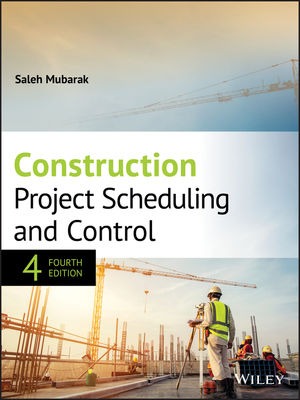
Construction Project Scheduling and Control
Introduces students to entirely new definitions and theories of the Critical Path Method (CPM), the leading scheduling method, as well as the most up-to-date information on Building Information Modeling (BIM). The new edition will include updated worked problems and scheduling software exercises, as well as revised teaching materials such as lecture slides and an instructor's manua

Construction materials, methods, and techniques : Building for a sustainable future
Covers both traditional and contemporary materials, current industry standards and new and emerging technologies. The only text organized according to the Construction Specifications Institute (CSI) MasterFormat (R) standards, construction materials, methods and techniques: building for a sustainable future, fifth edition, features a reader-friendly style and logical structure, which follows the construction process step-by-step from project inception to completion. The new edition provides up-to-date coverage of dramatic changes underway in the construction industry, including advances in pre-fabricated construction; increased use of drones, robotics and artificial intelligence; net-zero buildings and lean construction. You'll learn about key current industry developments and standards, as well as latest relevant building codes, all presented within a dynamic, richly illustrated new design.

Construction Management
Covers a wide range of subjects, reflecting the breadth of knowledge needed to understand the dynamics of this large and complex industry. This edition includes updated chapters on planning and scheduling, a new chapter addressing linear scheduling methods, material regarding the historical background of construction as a profession, and includes an Instructor Resource of solutions to the end-of-chapter review exercises.

Construction audit: building a solid foundation
Provides real-life solutions to common problems in construction. Introduces project management techniques; while not concentrating on a special methodology, the book builds on project management fundamentals. Understanding this will help enable the reader to talk to project managers more effectively.

Construction 4.0 : advanced technology, tools and materials for the digital transformation of the construction industry
Construction 4.0 Advanced Technology, Tools and Materials for the Digital Transformation of the Construction Industry provides readers with a state-of-the-art review of the ongoing digital transformation of the sector within the new 4.0 framework, presenting a thorough investigation of the emerging trends, technologies, and strategies in the fields of smart building design, construction.

Constructing a consumer-focused industry : cracks, cladding and crisis in the residential construction sector
Through evidence-based research and international case studies, this book focuses on the effects that dangerous defects have on the housing consumer.

Chudley and Greeno's building construction handbook
The principles and processes of construction are explained with the concepts of design included where appropriate. Extensive coverage of building construction practice, techniques and regulations representing both traditional procedures and modern developments are included to provide the most comprehensive and easy to understand guide to building construction.
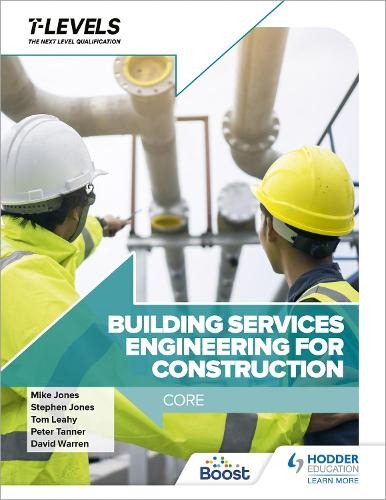
Building services engineering for construction T level: core
Provides complete coverage of the Building Services Engineering for Construction qualification's core units and will equip you with the skills you need to shape your career. - Break down complex topics with summary tables and hundreds of images and artworks - Apply your knowledge in real-world case studies and discover some of the dilemmas you can.

Building design, construction and performance in tropical climates
Outlines: the functional requirements of buildings in tropical climates; the challenges associated with the sustainability of the built environment, building form and whole life performance in the context of a tropical setting; the impact of potentially hostile tropical conditions upon building pathology and the durability of components, structure and fabric; the tasks which face those responsible for appraising the design, condition, maintenance and conservation of built heritage in tropical regions; the facilities management issues faced in tropical climates; and the refurbishment, upgrade and renewal of the tropical built environment.
Building construction and technology
Highlights various aspects of building construction industry based on data from field studies. It discusses the challenges, methodologies, technological applications in building construction, technology, and management. The book presents new approaches to effective building construction and an understanding of the impact of applications of latest technologies.
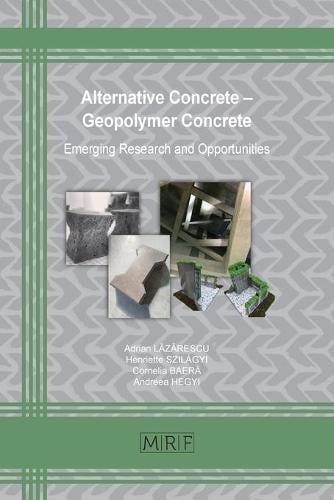
Alternative concrete - geopolymer concrete : Emerging research and opportunities
Focuses on fly ash-based alkali-activated geopolymer concrete, its production and characteristic properties. The re-use of waste materials and industrial by-products, such as fly ash, is not only economically of interest but also helps to reduce carbon dioxide emissions. The carbon footprint of these materials is much lower than that of concrete using ordinary Portland cement. They thus offer new sustainable solutions to the construction industry.

Advances in Construction Materials 2007
A compilation of recent research results on building construction materials. The construction industry consumes extreme volumes of material, and the growing demand for quality and safety require continuous improvement of materials and material compositions. A deep understanding of material behavior is essential to enable efficient construction: light-weight or heavily burdened structures ask for the development of innovative composites or new material compositions.
A cost based approach to project management : Planning and controlling construction project costs
Illustrates the principles of project management and the essentials of cost planning and control with easy-to-understand examples from the construction industry. Includes step-by-step details of project planning, cost estimating, and management processes. Offers clear, cost-based methods for defining scope, preparing bids, and planning for contingencies, as well as monitoring progress and determining when to take remedial action. Contains a user-friendly guide to project management acronyms and terminology. Provides sample construction schedules, budgets, and progress report forms
