



الصفحة 1
الصفحة 1

Noetherian Semigroup Algebras
This work presents a comprehensive treatment of the main results and methods of the theory of Noetherian semigroup algebras. These general results are then applied and illustrated in the context of important classes of algebras that arise in a variety of areas and have been recently intensively studied. Several concrete constructions are described in full detail, in particular intriguing classes of quadratic algebras and algebras related to group rings of polycyclic-by-finite groups. These give new classes of Noetherian algebras of small Gelfand-Kirillov dimension. The focus is on the interplay between their combinatorics and the algebraic structure.

Modernisation, Mechanisation and Industrialisation of Concrete Structures
Modernisation, Mechanisation and Industrialisation of Concrete Structures discusses the manufacture of high quality prefabricated concrete construction components, and how that can be achieved through the application of developments in concrete technology, information modelling and best practice in design and manufacturing techniques.

Integral waterproofing of concrete structures : Advanced protection technologies of concrete by pore blocking and lining
This book first establishes a background about concrete structures and porosity linked with concrete hydration, then goes on to consider concrete durability problems from the perspective of water penetration including damages from freeze-thaw cycles, alkali silica reactions, and chloride ion penetration. The mechanisms, applications, performances, and limitations of waterproofing technologies including coatings and integral systems are compared. The book also showcases all application methods of crystallization waterproofing materials, including material spray on cured concrete and on fresh concrete, and their addition to concrete mix designs as enhancers or admixtures.

High performance concrete optimal composition design
Presents experimental and theoretical results allowing production of special high-strength rapid hardening concrete and fiber reinforced concrete. It describes a method for effective proportioning of high-strength fast-setting concrete and fiber reinforced concrete with high dynamic strength as well as selecting proper technological parameters, methodology for design of reinforced concrete structures using such concrete. Particular attention is paid to ensuring the early strengthening of concrete within 24 hours after casting and to constructing structures with limited energy resources at the site.

Fundamentals of building construction : Materials and methods
Reference for thousands of professionals and students of architecture, engineering, and construction technology for over thirty years. The materials and methods described in this new seventh edition have been thoroughly updated to reflect the latest advancements in the industry. Carefully selected and logically arranged topics-ranging from basic building methods to the principles of structure and enclosure-help readers gain a working knowledge of the field in an enjoyable, easy-to-understand manner. All major construction systems, including light wood frame, mass timber, masonry, steel frame, light gauge steel, and reinforced concrete construction, are addressed. Now in its seventh edition, Fundamentals of building construction contains substantial revisions and updates.

Frames and Bases : An Introductory Course
During the last several years, frames have become increasingly popular; they have appeared in a large number of applications, and several concrete constructions of frames of various types have been presented. Most of these constructions were based on quite direct methods rather than the classical sufficient conditions for obtaining a frame. Consequently, there is a need for an updated book on frames, which moves the focus from the classical approach to a more constructive one.

Finite element design of concrete structures : Practical problems and their solutions
In Finite Element Design of Concrete Structures: practical problems and their solutions the author addresses this 'blind belief' in computer results by offering a useful critique that 'important details are overlooked due to the flood of information' from the output of computer calculations. Indeed, errors in the numerical model may lead in extreme cases to structural failures as the collapse of the so-called Sleipner platform has demonstrated.

Failures in concrete structures : Case studies in reinforced and prestressed concrete
This selection of the author’s firsthand experience with incidents with RC and prestressed structures helps readers avoid the same errors—mistakes discovered at the design stage, or that led to failures or partial structure collapse. It focuses on misunderstanding of structures or codes of practice and specifics during construction.

Design of steel-concrete composite structures using high-strength materials
Design of Steel-Concrete Composite Structures Using High Strength Materials provides guidance on the design of composite steel-concrete structures using combined high-strength concretes and steels. The book includes a database of over 2,500 test results on composite columns to evaluate design methods, and presents calculations to determine critical parameters affecting the strength and ductility of high-strength composite columns. Finally, the book proposes design methods for axial-moment interaction curves in composite columns. This allows a unified approach to the design of columns with normal- and high-strength steel concrete materials.

Design of Hybrid Structures : Where Steel Profiles Meet Concrete
Focuses on design approaches for concrete structures reinforced in an unconventional way by steel profiles. It explains force transfer mechanisms of steel profiles and oncrete interfaces, and an analysis of the characteristics of hybrid structures, including slendercomponents. Several types of hybrid designs are addressed: walls and columns with several embedded steel profiles, connections strengthened by steel profiles between steel and composite or reinforced concrete components, including the specific case of shear keys connecting deep beams or flat slabs to columns. The transition zones in partly reinforced concrete and partly composite columns are also covered.
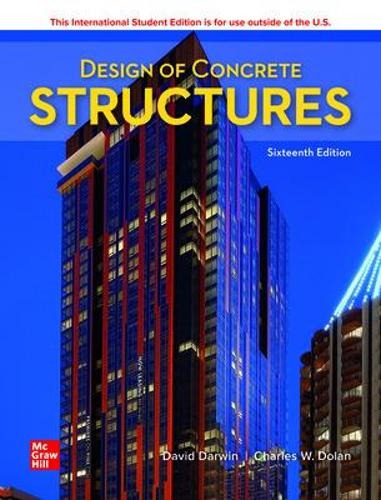
Design of Concrete Structures
Presents the basic mechanics of structural concrete and methods for the design of individual members subjected to bending, shear, torsion, and axial forces. It additionally addresses in detail applications of the various types of structural members and systems, including an extensive presentation of slabs, beams, columns, walls, footings, retaining walls, and the integration of building systems

Design examples for high strength steel reinforced concrete columns : A Eurocode 4 approach
SRC column subjected to axial compression -- SRC column with normal strength material -- SRC column with high strength concrete -- SRC column with high strength steel -- SRC column with high strength concrete and steel -- SRC column subjected to combined compression and bending -- SRC column with normal strength material -- SRC column with high strength concrete -- SRC column with high strength steel -- SRC column

Damage and Cracking of Concrete Structures : From Theory to Practice
Understanding and managing damage and cracking in concrete is essential to ensuring the integrity and durability of civil engineering structures. This book also addresses many situations, such as monotonic or cyclic behavior, seismic responses, a description of fast dynamic situations and effects due to the maturation of concrete at an early age in massive structures. Numerous detailed exercises are provided to help students to understand modeling and calculation techniques.

Concrete permeability and durability performance: from theory to field applications
Durability and service life design of concrete constructions have considerable socio-economic and environmental consequences, in which the permeability of concrete to aggressive intruders plays a vital role.Concrete Permeability and Durability Performance provides deep insight into the permeability of concrete, moving from theory to practice, and presents over 20 real cases.

Computational Structural Concrete : Theory and Applications
Concrete is by far the most used building material due to its advantages: it is shapeable, cost-effective and available everywhere. Combined with reinforcement it provides an immense bandwidth of properties and may be customized for a huge range of purposes. Thus, concrete is the building material of the 20th century. To be the building material of the 21th century its sustainability has to move into focus. Reinforced concrete structures have to be designed expending less material whereby their load carrying potential has to be fully utilized.
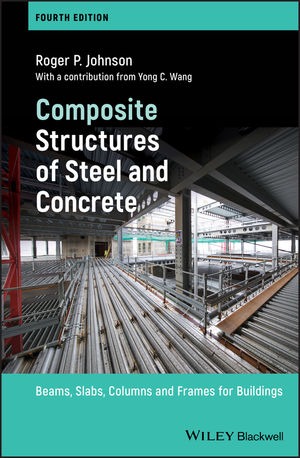
Composite structures of steel and concrete : Beams, slabs, columns and frames for buildings
Provides an introduction to the theory and design of composite structures of steel and concrete. Material applicable to both buildings and bridges is included, with more detailed information relating to structures for buildings. Throughout, the design methods are illustrated by calculations in accordance with the Eurocode for composite structures, EN 1994, Part 1-1, 'General rules and rules for buildings' and Part 1-2, 'Structural fire design', and their cross-references to ENs 1990 to 1993.

CEB-FIP Model code 1990 : Design code
This document is a comprehensive design code for concrete. It is the result of a comprehensive revision to the original model code of 1978, which was produced jointly by the Comite Euro-International du Beton (CEB) and the Federation Internationale de la Precontrainte (FIP). Model Code 1990 has more detailed guidelines and explanations than national codes and can be used as a basis for them. It has already influenced the codification work that is being carried out both nationally and internationally and will continue to do so. With the publication of Eurocode 2: Part 1 as a draft pre-standard, this document is a useful reference during the consultative period before Eurocode 2 becomes a European standard. It may be of use to anyone involved in codification work on concrete.
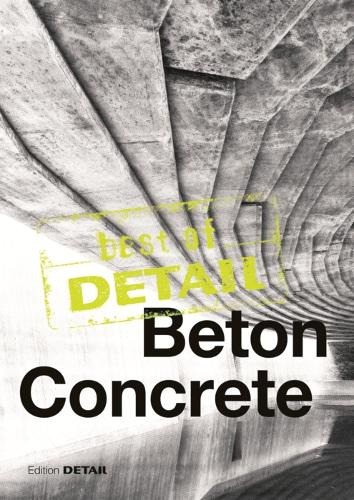
Best of Detail : Beton / Concrete - Best of DETAIL
Presents highlights from the magazine published in recent years about concrete, a powerful medium for architectural expression. In additional to compelling specialist articles, this book contains a special section with a wide range of examples to inspire your own architectural practice, from train stations and churches to single-family homes
