



الصفحة 1
الصفحة 1
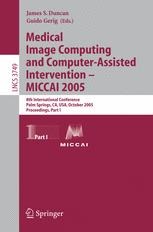
Medical Image Computing and Computer-Assisted Intervention – MICCAI 2005 ; 8th International Conference, Palm Springs, CA, USA, October 26-29, 2005, Proceedings, Part I
This paper presents a method for classification of medical images, using machine learning and deformation-based morphometry. A morphological representation of the anatomy of interest is first obtained using highdimensional template warping, from which regions that display strong correlations between morphological measurements and the classification (clinical) variable are extracted using a watershed segmentation, taking into account the regional smoothness of the correlation map which is estimated by a crossvalidation strategy in order to achieve robustness to outliers. A Support Vector Machine-Recursive Feature Elimination (SVM-RFE) technique is then used to rank computed features from the extracted regions, according to their effect on the leave-one-out error bound. Finally, SVM classification is applied using the best set of features, and it is tested using leave-one-out. The results from a group of 61 brain images of female normal controls and schizophrenia patients demonstrate not only high classification accuracy (91.8%) and steep ROC curves, but also exceptional stability with respect to the number of selected features and the SVM kernel size

Mechanosensitive Ion Channels
This book explores the latest data dealing with mechanosensitive channels research results. It was compiled by a group of internationally recognized scientists leading in the field of mechanosensitive ion channels or mechanically gated channels and signaling cascades research.
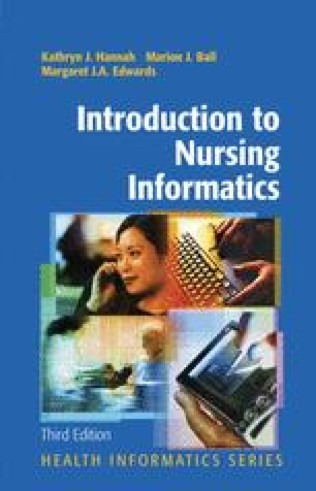
Introduction to Nursing Informatics
In the series, eminent experts, as editors or authors, offer their accounts of innovations in health informatics. Increasingly, these accounts go beyond hardware and software toaddresstheroleofinformationinin?uencingthetransformationofheal- caredeliverysystemsaroundtheworld.Theseriesalsowillincreasinglyfocus on “peopleware” and the organizational, behavioral, and societal changes that accompany the diffusion of information technology in health services environments.

Home Long-Term Oxygen Treatment in Italy : The Additional Value of Telemedicine
This book, edited by Roberto W. Dal Negro and Allen I. Goldberg, gives us a full account of the impact of the telemedicine system on H-LTOT. According to the information in this book, we have to begin to think about the possibility of using telemonitoring in H-LTOT in a really general manner. In fact, telemonitoring allows better control of the compliance of patients suffering from respiratory failure, and this means a better clinical condition and longer survival, both linked to the long-term administration of oxygen. Moreover, it also permits a reduction in expenditure for the management of patients under LTOT.
Evaluating the organizational impact of health care information systems
Evaluating the Organizational Impact of Health Care Information Systems, Second Edition, is heavily updated and revised from its First Edition, which is entitled Evaluating Health Care Information Systems: Methods and Applications. The much-needed Second Edition is a guide for evaluating the organizational impacts of computer systems in health care institutions. It provides a practical guide for determining the appropriate questions to ask based on underlying models of change and the most effective methods available. An introduction to various methods is provided, as well as appendices containing survey instruments usable in research and evaluation, computer programs for data analyses, and other evaluation resources. The book provides a critical overview of current research and evaluation to date with numerous bibliographic references from health care and other fields. The methods and instruments described are applicable to a wide variety of other organizations that utilize information technology and they emphasize the importance of clearly specifying the purpose of the evaluation, recognizing assumptions about organizational change and using a multi-method approach to system evaluation. The material presented is drawn from a variety of social and health science disciplines in order to integrate the study of information system with social science theory and methods. Chapter highlights include Cognitive Approaches to Evaluation, Computer Simulation as an Evaluation Tool, and Research and Evaluation: Future Directions.

e-Business in Healthcare : From eProcutement to Supply Chain Management
eBusiness in Healthcare raises awareness of and interest in electronically mediated business processes in healthcare to a large audience including healthcare informaticians, medical business managers, clinicians, pharmacists and scientists.
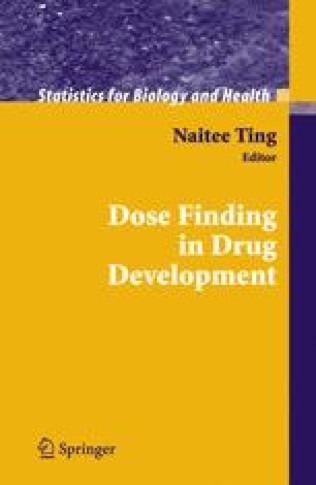
Dose Finding in Drug Development
When you go to the pharmacy and fill a prescription, have you ever wondered if the dose of the medication is right for you? Can the dose be too low so that the drug will not work? This book answers some of these questions, and introduces the drug development process, the design and analysis of clinical trials.

Manuale di accreditamento delle strutture diabetologiche = Accreditation manual of diabetic facilities
Healthcare quality is not a new issue, but it is often underestimated. The doctor focuses on his relationship with the patient, and is led to believe that technique and technology are sufficient to guarantee effective and efficient performance, regardless of the organizational system. Quality understood as "Total Quality Management" is a way to cross a border, to create knowledge, to break the armor of self-referentiality and that individualistic vision of work learned during university studies and consolidated by professional practice. The path of professional peer accreditation is the tool that the scientific society Associazione Medici Diabetologi has developed and provided to diabetologists to facilitate the understanding of ways of looking at the world of healthcare that are different from those they usually use.
Biostatistics and microbiology : A survival manual
This book presents a step-by-step manner that eliminates the greatest obstacle to the learner, which is applying the many processes that comprise a statistical method. The author counters the fear of statistical methods by describing early in the book a step-by-step procedure to perform a statistical method - a process that we will term "the six-step procedure." All of the testing will be performed adhering to six well-defined steps, which will greatly simplify the statistical process. Each step in the sequence must be completed before moving on to the next step.
