



الصفحة 1
الصفحة 1

Non-Linear Optical Properties of Matte : From molecules to condensed phases
Non-Linear Optical Properties of Matter: From Molecules to Condensed Phases attempts to draw together both theory and application in this field. As such it will be of interest to both experimentalists and theoreticians alike. Divided into two parts, Part 1 is concerned with the theory and computing of non-linear optical (NLO) properties while Part 2 reviews the latest developments in experimentation.This book will be invaluable to researchers and students in academia and industry. It will be of particular interest to anyone involved in materials science, theoretical and computational chemistry, chemical physics, and molecular physics.

Molecular Materials with Specific Interactions - Modeling and Design
One of the first requirements to initiate the molecular modeling of molecular materials is an accurate and realistic description of the electronic structure, intermolecular interactions and chemical reactions at microscopic and macroscopic scale. Therefore the first four chapters contain an extensive introduction into the latest theories of intermolecular interactions, functional density techniques, microscopic and mezoscopic modeling techniques as well as first-principle molecular dynamics.In the following chapters, techniques bridging microscopic and mezoscopic modeling scales are presented. The authors then illustrate various successful applications of molecular design of new materials, drugs, biocatalysts, etc. before presenting challenging topics in molecular materials design.

Modeling Marvels : Computational Anticipation of Novel Molecules
The aim of this book is to survey a number of chemical compounds that chemists, both theoretical and experimental, find fascinating. Some of these compounds, like planar carbon species or oxirene, offer no obvious practical applications; nitrogen oligomers and polymers, in contrast, have been touted as possible high-energy-density materials. What unites this otherwise eclectic collection is that these substances are unknown and offer a challenge to theory and to synthesis.

Drug Addiction : From Basic Research to Therapy
Drug Addiction: From Basic Research to Therapy provides a comprehensive overview of physiological, biochemical, genetic and behavioral pathways underlying drug addiction. Focusing on fundamental neurophysiological processes that overlap between drug addiction and other CNS disorders, this volume covers the translation of basic research into novel therapies, not only of drug addiction but a spectrum of related CNS disorders, including pain. Chapters are written by leading scientists with widely ranging expertise in synthetic and computational chemistry, molecular biology, genetics, neurosciences, drug discovery and development, drug targeting, and quantitative therapeutics, providing an unprecedented overview of a complex field of high societal signficance.

Conceptual density functional theory : Towards a new chemical reactivity theory
This two-volume reference book shows how conceptual density functional theory can reconcile empirical observations within silico calculations using density functional theory, molecular orbital theory, and valence bond theory. The ability to predict properties like electronegativity, acidity/basicity, strong covalent and weak intermolecular interactions as well as chemical reactivity makes DFT directly applicable to almost all problems in applied chemistry, from synthetic chemistry to catalyst design and materials characterization.
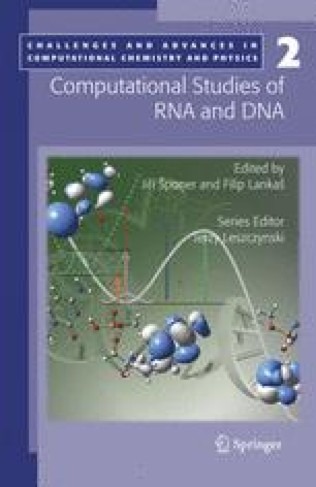
Computational studies of RNA and DNA
Computational Studies of RNA and DNA includes, in an integrated way, modern computational studies of nucleic acids, ranging from advanced electronic structure quantum chemical calculations through explicit solvent molecular dynamics (MD) simulations up to mesoscopic modelling, with the main focus given to the MD field. It gives an equal emphasis to the leading methods and applications while successes as well as pitfalls of the computational techniques are discussed.The systems and problems studied include: Accurate calculations of base pairing energies / Electronic properties of nucleic acids and electron transfer, through various types of nucleic acid / Calculating DNA elasticity

Computational Science – ICCS 2007; 7th International Conference, Beijing China, May 27-30, 2007, Proceedings, Part I
This book contiants sections on efficient data management, parallel monte carlo algorithms, simulation of multiphysics multiscale systems, dynamic data driven application systems, computer graphics and geometric modeling, computer algebra systems, computational chemistry, computational approaches and techniques in bioinformatics, computational finance and business intelligence, geocomputation, high-level parallel programming, networks theory and applications, collective intelligence for semantic and knowledge grid, collaborative and cooperative environments, tools for program development and analysis in CS, intelligent agents in computing systems, CS in software engineering, computational linguistics in HCI, internet computing in science and engineering, workflow systems in e-science, graph theoretic algorithms and applications in cs, teaching CS, high performance data mining, mining text, semi-structured, Web, or multimedia data,

Computational drug discovery : methods and application
Covers a wide range of cutting-edge computational technologies and computational chemistry methods that are transforming drug discovery. The book delves into recent advances, particularly focusing on artificial intelligence (AI) and its application for protein structure prediction, AI-enabled virtual screening, and generative modeling for compound design. Additionally, it covers key technological advancements in computing such as quantum and cloud computing that are driving innovations in drug discovery.

Computational Chemistry and Molecular Modeling : Principles and Applications
The gap between introductory level textbooks and highly specialized monographs is filled by this modern textbook. It provides in one comprehensive volume the in-depth theoretical background for molecular modeling and detailed descriptions of the applications in chemistry and related fields like drug design, molecular sciences, biomedical, polymer and materials engineering. Special chapters on basic mathematics and the use of respective software tools are included.
An Introduction To Chemoinformatics
This, the first text written specifically for this field, aims to provide an introduction to the major techniques of chemoinformatics. The first part of the book deals with the representation of 2D and 3D molecular structures, the calculation of molecular descriptors and the construction of mathematical models. The second part describes other important topics including molecular similarity and diversity, the analysis of large data sets, virtual screening, and library design. Simple illustrative examples are used throughout to illustrate key concepts, supplemented with case studies from the literature.

Advanced Quantum Mechanics
Discusses nonrelativistic multi-particle systems, relativistic wave equations and relativistic quantum fields. Characteristic of the author´s work are the comprehensive mathematical discussions in which all intermediate steps are derived and where numerous examples of application and exercises help the reader gain a thorough working knowledge of the subject. The topics treated in the book lay the foundation for advanced studies in solid-state physics, nuclear and elementary particle physics. This text both extends and complements Schwabl´s introductory Quantum Mechanics, which covers nonrelativistic quantum mechanics and offers a short treatment of the quantization of the radiation field. The fourth edition has been thoroughly revised with new material having been added. Furthermore, the layout of the figures has been unified, which should facilitate comprehension.

A short guide to clinical pharmacokinetics
Consists of seven chapters that cover various aspects of pharmacokinetics and its clinical applications. The chapters are structured to provide clear objectives and keywords are bolded throughout the text to facilitate understanding. The topics covered include the significance of pharmacokinetics in clinical practice, factors affecting pharmacokinetic parameters, pharmacokinetic drug interactions, therapeutic drug monitoring, dosage adjustment in different population groups, the influence of hepatic diseases on pharmacokinetics and the impact of pharmacogenomics on pharmacokinetics and pharmacodynamics.
