



الصفحة 1
الصفحة 1

Norwegian Shipping in the 20th Century : Norway's Successful Navigation of the World's Most Global Industry
This open access book discusses how Norwegian shipping companies played a crucial role in global shipping markets in the 20th century, at times transporting more than ten per cent of world seaborne trade. Chapters explore how Norway managed to remain competitive, despite being a high labour-cost country in an industry with global competition. Among the features that are emphasised are market developments, business strategies and political decisions The Norwegian experience was shaped by the main breaking points in 20th century world history, such as the two world wars, and by long-term trends, such as globalization and liberalization. The shipping companies introduced technological and organizational innovations to build or maintain a competitive advantage in a rapidly changing world. The growing importance of offshore petroleum exploration in the North Sea from the 1970s was both a threat and an opportunity to the shipping companies. By adapting both business strategies and the political regime to the new circumstances, the Norwegian shipping sector managed to maintain a leading position internationally.

Guanxi and Business Strategy : Theory and Implications for Multinational Companies in China
Guanxi and Business Strategy" elaborates upon a topic of paramount importance to both academic scholars and managers doing business with China: the impact of personal relationships (guanxi) on business affairs. In the Chinese cultural and socio-economic environment, how are the ubiquitous practices of guanxi to be considered in entrepreneurial strategies,Rather than explaining the emergence of guanxi and its persistence – in spite of the existence of a market economy – with Confucianism, the author applies the phenomenon to the methodology of New Economic Sociology. By integrating guanxi into a business context, he shows that the commercial utilization of guanxi with suppliers, customers, competitors and authorities yields significant sustainable competitive advantages.

Global Production : A Handbook for Strategy and Implementation
What is the best configuration for a global production network? What are the different dynamics in low-cost vs. high-cost countries? Getting the answers right is key to building a competitive and efficient global production network. Centers of economic activity are shifting profoundly, globally and even regionally. Production is shifting even more dramatically than the economy as a whole, making it critical for decision makers to know what criteria matter most and how to make the right decisions on where to invest. Regardless of the industry involved, an optimized global footprint can translate to a competitive advantage. A comprehensive redesign typically yields a 20 to 40 percent reduction in manufacturing costs. Global production and purchasing operations create a platform for entry into new markets. Planning and implementing a sustainable globalization strategy, however, takes considerable effort; this book is there to help in that task.

Firm competitive advantage through relationship management : A theory for successful sustainable growth
This book aims to develop a mid-range theory of relationship management, examining truly relationship-orientated firms to discover not only what qualities these firms have that make them successful at the RM model, but also what benefits this model has for the firm.

Evaluation of Cooperative Planning in Supply Chains : An Empirical Approach of the European Automotive Industry
Modern literature has heralded the "Era of Network Competition" in which cooperating networks and not individual firms seek to attain competitive advantages. Supply chains in the automotive industry provide a good example of such cooperative environments which are characterized by a division of labor and where almost no final product is produced and sold by just one company alone.

Entrepreneurship and innovation : Theory, practice and context, 4th
Provides an overview of the theory, Practice and context of entrepreneurship and innovation at both the industry and firm level. It provides a foundation of ideas and understandings designed to shape the reader’s thinking and behaviour to better appreciate the role of innovation and entrepreneurship in modern economies, And to recognise their own abilities in this regard. The book provides the reader with an overview of these elements and how they combine to create new value in the market.

Corporate Sustainability in Practice : A guide for Strategy Development and Implementation
Building better organisations, with a clear sense of purpose, is a common challenge faced by many entrepreneurs and executives in industry. A fully integrated corporate sustainability strategy can help organisations to better manage risks, to win business opportunities and to ultimately strengthen reputation. Building on the experience of renowned strategists, sustainability, finance and academic experts, this book offers practical tools and approaches that can be used to develop and implement fully integrated corporate sustainability strategies.

Corporate Social Responsibility as an International Strategy
CSR, a concept aimed at determining the amount of responsibilities to be shouldered by private business toward stakeholder groups and society at large, deserves to be dealt with in considerable detail and not simply as another "PR fuzz" or marketing gag. As a model, CSR epitomises the old saying "business is business"; offering broader stakeholder management which can be seen as a competitive advantage. Increased financial performance and employee commitment are among the benefits the CSR model can offer corporations. This discussion presents practitioners and scholars with a unique examination of how firms can maximise productivity through the implementation of CSR programs.

Corporate Innovation Strategies : Corporate Social Responsibility and Shared Value Creation
Corporate social responsibility (CSR) is simply the maximization of a company's value over time, undertaken because, in the long run, social and environmental problems ultimately become financial problems. The justification for CSR is therefore associated with representing the nature and role of the company, as well as its purpose. Companies therefore regard CSR as a strategic investment that is part of a proactive, resilient, inclusive approach, based on the creation of shared value. This approach is capable of reducing negative societal impacts of their activities, or inducing positive impacts if they sustain a hybrid culture, all the while improving their competitive advantage. This book presents a theoretical development that analyzes the challenges of CSR strategies based on the creation of shared value.

Material Flow Management : Improving Cost Efficiency and Environmental Performance
The implementation of material flow management offers enterprises a high potential for realizing new economic competitive advantages. The eco-efficient optimization of material flows aims at reducing costs while simultaneously achieving long-term sustainability with regard to ecological and societal aspects. Knowledge of existing methods and the latest trends is a key prerequisite for successfully implementing, refining and disseminating material flow management approaches.
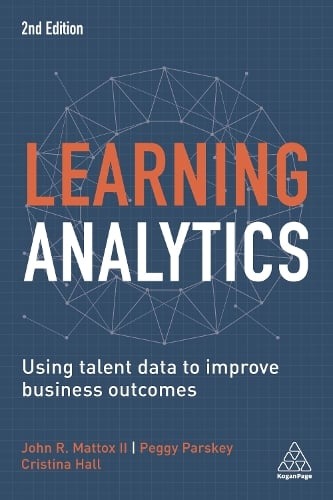
Learning Analytics : Using Talent Data to Improve Business Outcomes
Effective evaluation and measurement of learning and development initiatives is critical to maximise the impact of training, identify gaps for improvement and ensure that efforts are aligned to the business' needs. Learning Analytics outlines how analytical approaches can respond to these challenges, the types and benefits of technological solutions and how to ask the right questions of organizational data in order to build a learning organization that boosts performance and competitive advantage.
Leading Pharmaceutical Innovation : Trends and Drivers for Growth in the Pharmaceutical Industry
Pharmaceutical giants have doubled their investments in drug development in the past decade only to see new drug approvals remain constant. This book investigates and highlights a set of proactive strategies aimed at generating sustainable competitive advantage based on value-generating business practices. We focus on three sources of pharmaceutical innovation: new management methods in the drug development pipeline, new technologies as enablers for cutting-edge R&D, and new forms of cooperation and internationalization, such as open innovation in the early phases of R&D. Our findings are illustrated by cases from Europe, the US, and Asia.
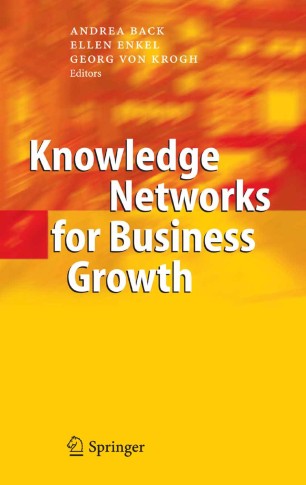
Knowledge Networks for Business Growth
Companies are constantly searching for new ways of creating higher profit and a larger market share. Growth seems to be the most appropriate tactic for surviving economically in difficult times. New instruments and methods as a support to a company’s growth strategy can be essential in gaining a competitive advantage. Knowledge management is one of the answers to this challenge. It can support strategic goals such as the improvement of efficiency, the minimization of risk and an increase in innovation, but also has inherent potentials which have not been leveraged yet.
Competitiveness in the Tourism Sector : A Comprehensive Approach from Economic and Management Points
International tourism is expected to be a major vehicle of economic development in industrializing countries in the 21st century, especially for Asia. To generate long-term growth, countries with tourism-based economies must develop strategies for employing their comparative advantages to achieve competitive advantages. However, competitiveness in the tourist industry is multi-dimensional and complex. This study evaluates the competitiveness of the Taiwanese tourism sector by a multi-dimensional framework. The theoretical model proposes that the competitiveness of tourist destinations should be composed of Ricardian comparative advantages (like the conditions of natural endowments and the degree of technological change); Porterian competitive advantages; tourism management, i.e., providing high quality education and job training, public goods, support services and reduced transaction costs to enhance comparative and competitive advantages; and environmental conditions.

Business Plan: Telepherique Du Bludan
Telepherique Du Bludan is one of the most prominent tourist attractions that targets tourists and visitors from all over the world and it’s a unique and unconventional experience. Bludan area has a strategic location and we should give it more spotlights since it has a wonderful weather in the winter and in the summer, In order to stimulate domestic tourism, we have implemented a project to construct a cable car in the Bludan area in an entertainment complex, and this is something that does not exist in Syria and encourages tourism in the winter to transport people to heights for the possibility of enjoying snow and practicing snow activities, and in summer it can be used to transport people to the top of the height and get a beautiful view in great weather And enjoyment in outdoor activities that are not found in Syria, and this adds a competitive advantage to our project.
Business Ethics of Innovation
Firms that operate in a market economy often depend upon innovations in order to achieve competitive advantages that sustainably secure their survival. Business ethics is thus largely concerned with questions about the decisional freedoms involved in innovation processes. Innovations oftentimes raise novel questions about the role of the state or the structure of society. Business ethics needs to provide a framework for balancing the different perspectives, values, and interests at stake. This balance must be achieved at the level of the firm in order to facilitate adequate long term decisions, but it should also be sought at higher, including regulatory, levels. Achieving this balance will require an ethical framework for entrepreneurial action.
Antecedents of venture firms' internationalization : A conjoint analysis of international entrepreneurship in the net economy
With the continuing dispersion of the global digital network and performance improvements of information and communication technologies, resource-poor start-ups with online business models have emerged in large numbers. These firms are able to deploy their competitive advantages across their country borders early in their life-cycle and engage in international commerce at a fast pace. An increased immediacy between the firms and the globally accessible customer is observed. Julia Christofor’s study aims to analyze the conditions of the initial internationalization decision in the Net Economy. Based on Information Systems, International Entrepreneurship, and Entrepreneurship literature, factors, which constitute the internationalization propensity, are derived. The results of this study suggest that a holistic perspective including the founder, business model and the firm level should be considered when explaining the internationalization propensity of entrepreneurs.
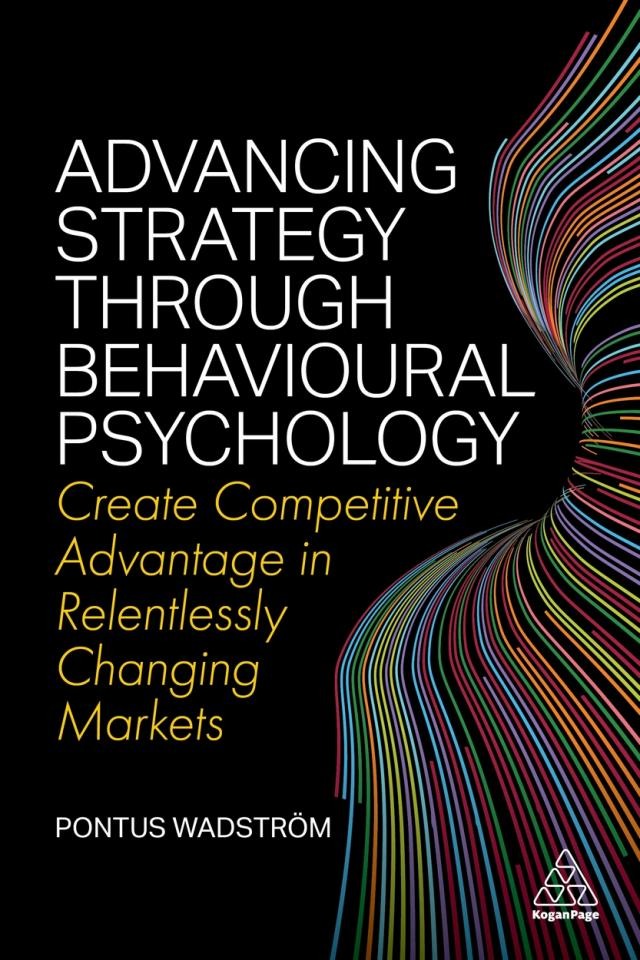
Advancing Strategy through Behavioural Psychology : Create Competitive Advantage in Relentlessly Changing Markets
The realisation of strategy is entirely dependent on employee behaviour, so in order to achieve business results it is vital that managers and leaders develop an understanding of human behaviour. Advancing Strategy through Behavioural Psychology shows that by identifying which behaviours should be measured and encouraged, organizations can succeed in implementing strategies for continuous adaptation in a rapidly changing business environment.
Accounting and auditing small and medium-sized practices : Transformative capabilities in a rapidly changing society
Addresses recent trends, developments, and future of accounting and auditing of small and medium-sized practices (AASMPs) in the public and private sectors.the book has three main objectives: firstly, to provide an analysis of how different societal trends, including digitalization, impact AASMPs and what role education and training play in proactive adaptation to those trends; secondly, to outline major scenarios for global AASMP development by 2035; and thirdly, to offer a conceptual framework for better understanding of AASMPs' dynamic and transformative capabilities that are necessary to create sustained competitive advantage in a rapidly changing society. beyond presenting a conceptual framework, this book also offers a discussion of future scenarios for AASMPs' development and their role in the global economic development.
